


A short and hasty interview with Musab Iqbal, a political analyst and an independent researcher
What do you think about the recent uprisings in Egypt?
Like all the other analysts I am also very keenly reading the situation and resisting any verdict, which is dominated by rhetoric or haste. Still, I would say that it was desperate attempt by the Anti-Morsi protestors, this desperation may cause more damage and the day military ousted Morsi, it was clear that its going to stay longer and things will not be easy. Democratic transition is never easy specially for a society which is not democratic internally. Democratic culture is not just about election but it requires certain history to function and things to learn from past and from experiments of other.
Egyptian Revolution…Arab Spring….Is it not often seen as an Islamic revolution, a ray of hope for many Islamists? Also for many it was seen as the advent of democracy in the land of Arab?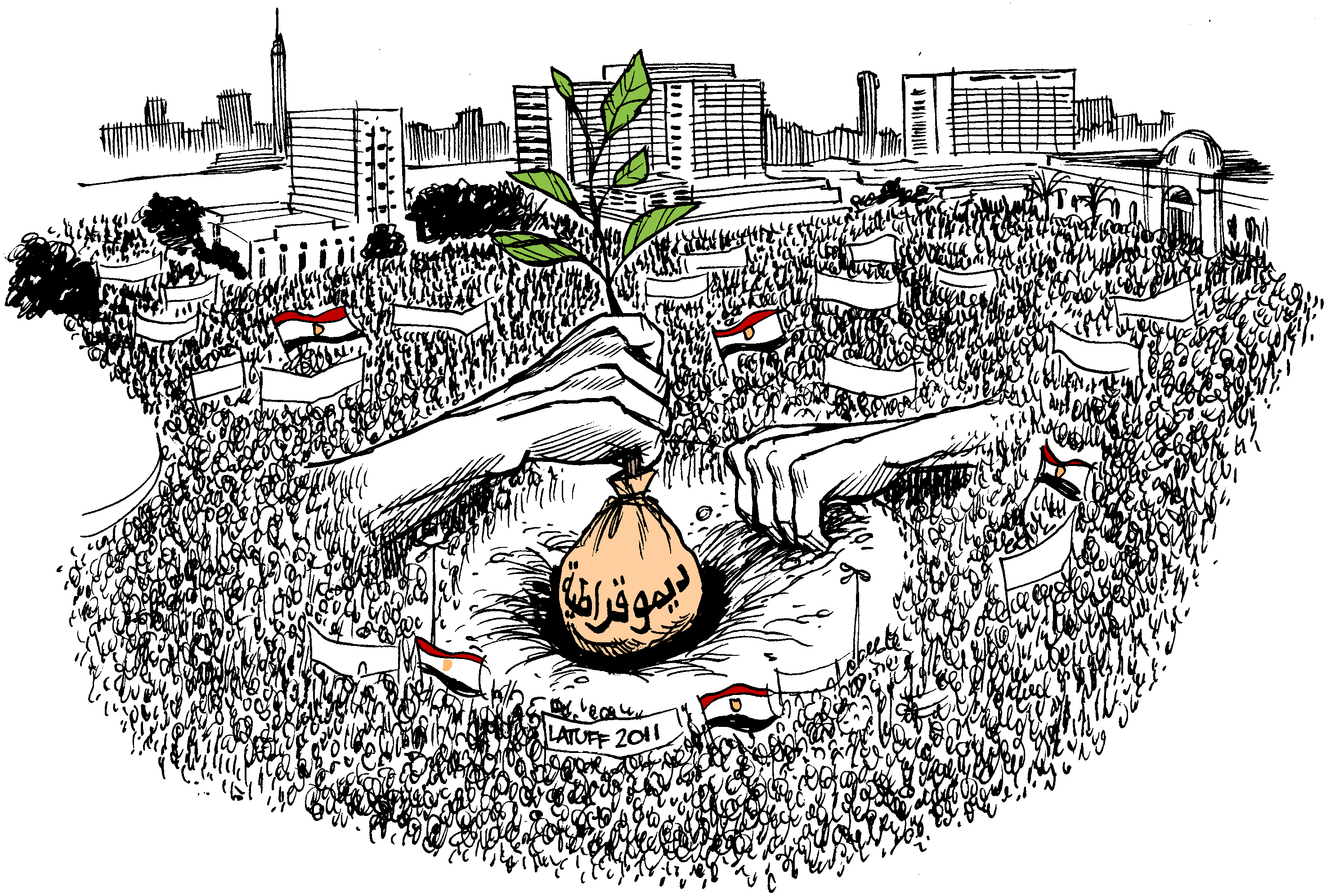
Few facts we cannot ignore includes that ‘Egyptian revolution’ was never an Islamic revolution nor the election mandate was for Islam. This is an interesting revolution which can only be classified as ‘unique’ or close to ‘anarch’ [not completely anarchist, and the term anarach am borrowing from Ernst Junger]
People occupied space and stayed there, the energy was largely harnessed by youth and still youth is very central, although least represented in electoral scheme of politics (which is an important reason of desperation then and now)
It was not lead by one leader or one party not by one ideology or one factor.
Morsi had the mandate then why such a mass reistance against him? There are so many people supporting the military coup.
The problem with Morsi and MB was that they miscalculated lot of things and they failed to be inclusive. It was an extraordinary election in the sense that it was not a well mature democratic election rather a pre-democratic election which implies that an election which will help democracyto grow in system and in society, so, the question was not to make government but to take everyone on board which they lately tried with few individuals and those individuals denied (obviously because of their own political interest).
Another important fact associated with it is that Morsi was since beginning guided by some ‘misguided’ element, he use to listen to everyone but at last there were few select advisors on whom he use to lean and trust, which all the time backfired in last one year.
But Morsi was including various political parties?
The question of inclusiveness often fails to see that to take political parties was not the actual question of inclusion but to those ‘anarch’ group – the general ‘revolutionary’ youth which is not direct into politics but most important instrument of revolution and post-revolution mobilization. There was no serious space or channel to go in dialog with them. Engaging them was very crucial and Morsi absolutely failed to do it.
Recent oppositions against Muslim Brotherhood’s shows its failure to get the public support. Why did it happen even after getting 52% vote share in the elections?
One cannot at the same time deny the fact that there is certain amount of ‘Ikhwanophobia’ which is present since long (may be since Ikhwan’s formation) and lately it was overblown since they came into power and the “fear production” was amplified that one day or other they may apply sharia, this was then as well when I was there and there was no government. As Ala al Aswani (important intellectual and novelists) said to me that ikhwan is committed but very tactical so we never know what they do. And apparently Ikhwan failed to address that phobia (I assume) and 52 % who voted in favor were not all ideological and it must have by now gone down. Ikhwan’s relation with Salafis is also interesting thing to look and how the image of Ikhwan was produced with salafis. For example if a salafi leader is saying that shia is more dangerous than a naked woman and Ikhwan not criticizing it severely and taking it as a serious problem then there is a problem

What do you think about this military coup? Many people are saying that this was the only way to oust the Morsi government as they were not inclusive, were not acting democratically and were going to forcefully implement their own interpretation of Shariah law.
The threat is military now, as military has economic interest, which I have very often written about, and second threat is of confrontation and conflict which means deep division in society, more production of radicalism and hindrance into deepening of democracy. Algeria can be an example of that.
As far as take is considered I am overwhelmed by euphoria but as I am cynical about “revolution” and “revolutionaries” I don’t have much to say at the same time intervention of military may worsen the situation also I think Morsi’s last speech backfired.
Rober Fisk has criticized the action and wrote in only Egypt a coup is not coup. As it is clear that throwing an elected candidate in “mob pressure” can be much more problematic.
Thank you so much for your insights
Thank you.