


Once, a banter took place between two of my friends, both economists but not exactly examples of ‘birds of the same feather flock together’, which is nothing surprising considering they are human beings. Let’s see what these folks have to covey to us from their wisdom.
Harry: Did you ever understand what we have all been learning as a part of economics?
Bobby: What do you mean? I completely understand the concepts of economics. Ask me anything and I will explain it to you right away.
Harry: Here goes then. Tell me about one of the basic concepts in economics- ‘Homo Economicus’.
Bobby: That is so simple. ‘Homo economicus’ or “economic man” is the characterization of man in some economic theories as a rational person who pursues wealth for his own self-interest. The economic man is described as one who avoids unnecessary work by using rational judgment. The assumption that all humans behave in this manner has been a fundamental premise for many economic theories.
Harry: Come on man! I’m also an economics student and I too can tell the dictionary meaning of the terminology. But do you think this kind of postulation is right?
Bobby: Yes, Harry, it is. Because it had been proposed and used by all the renowned economists. Adam Smith and David Ricardo considered man to be a rational, self-interested economic agent and so did Aristotle, who discussed man’s self-interested tendencies in his work ‘Politics’. But John Stewart Mills is considered to be the first to have defined the economic man completely.
Harry: I think you have not brushed up on the details of cutting-edge economists like John Maynard Keynes. The theory of the economic man dominated classical economic thought for many years until the rise of formal criticism in the 20th century from economic anthropologists and neo-classical economists. One of the most notable criticisms can be attributed to famed economist John Maynard Keynes. He, along with several other economists, argued that humans do not behave like the economic man. Instead, Keynes asserted that humans behave irrationally. He and his fellows proposed that the economic man is not a realistic model of human behaviour because economic actors do not always act in their own self-interest and are not always fully informed when making economic decisions.
Bobby: Ok! So what do you propose?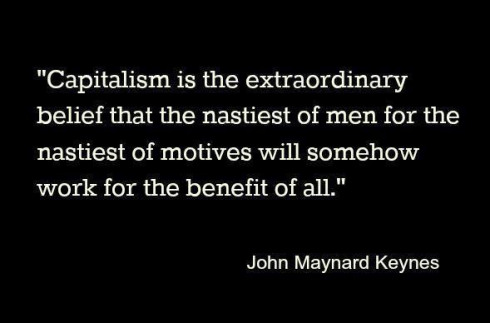
Harry: Have you heard about the concept of ‘Homo Reciprocans’?
Bobby: Yes, ‘Homo Reciprocans’, or reciprocal human, is the concept in some economic theories of humans as cooperative actors who are motivated by social and moral obligations to be supporting towards other fellow beings and their environment. This concept stands in contrast to the idea of ‘Homo Economicus’. The human beings will compromise in order to achieve a balance between what is best for them and what is best for the environment they are a part of. Homo reciprocan players, however, also are motivated by justification. Let me also mention to you that the society built on these differing ideologies will have different worldview on the production and exchange relations, the concepts which we often talk of in economics.
Harry: Now we have our base for argument. So which assumption, do you think, is closer to reality? Which should be incorporated in our models?
Bobby: Let me think! I think the Homo Economicus. Rather than thinking of some unknown people, it’s better to maximise my utility, consumption and production.
Harry: Don’t you think you are being too selfish, if you always think about yourself? Let me tell you that for the same subject, we have circumstances where Homo Reciprocans enhance the results.
Bobby: I don’t get what you are trying to say.
Harry: Let me explain. Garrett Hardin famously described a group of herders whose pursuit of self-interest leads to overgrazing of a pasture, driving it to ruin. His term for the process, the ‘tragedy of the commons’, underlined its inexorable nature. But herders, fishers and other users of common resources frequently avert the tragedy, devising ways to pursue common objectives and to curb free riding. Indeed, it is a distinctive characteristic of humans that we cooperate in large groups of people to whom we are not related — giving to charity, participating in political movements, and conforming to social norms.
Bobby: But this is the case of common property rights which can be solved using the provision of property rights which would put a constraint on the amount of usage of the resource.
Harry: Ok I agree with you on that. Let me give you another event. This is also a basic concept of economics but it is dealt in the section of Game theory. The ‘prisoner’s dilemma’ is a canonical example an analysed game that shows why two purely “rational” individuals might not cooperate even if it appears that it is in their best interests to do so. It is implied that the prisoners will have no opportunity to reward or punish their partner other than the prison sentences they get, and that their decision will not affect their reputation in the future. Because betraying a partner offers a greater reward than cooperating with them, all purely rational self-interested prisoners would betray the other, and so the only possible outcome for two purely rational prisoners is for them to betray each other. The interesting part of this result is that pursuing individual reward logically leads both of the prisoners to betray, when they would get a better reward if they both cooperated. In reality, humans display a systematic bias towards cooperative behaviour in this and similar games, much more so than predicted by simple models of “rational” self-interested action.
Bobby: This kind of makes sense. And in this type of cases, no prior information or restriction can solve this problem. In Economic solutions what we get to the ‘Parato Optimality’ condition is obtained by pre-set assumptions which are fabricated and do not envisage the reality of the situations.
Harry: And there are lot more problems which cannot be solved with the persuasion of self-interest rather than collective interest.
Bobby: Hmm …now I’m able to get a clear picture of authenticity of the assumptions. It is the failure of the market forces to fetch us equilibrium which calls for the intervention of the Public sector or the Government. If all production is left to laissez faire (free market economy) economy, the products with positive externalities and which create social welfare are under-produced or not produced at all.
Harry: You are absolutely right! And the poor people who have very little purchasing power are not heeded by the capitalists. And they are never given the opportunity to go up on the ladder of economic growth.
Bobby: We will definitely need the government to provide these people with opportunities like free education, health care, unskilled employed opportunities etc., so they can engage themselves in healthier and improved subsistence.
Harry: I’m happy that you got the essence of it.
Bobby: Yeah! It was such a wonderful and fruitful discussion. We should keep interacting more on these kinds of themes.