


The Indian higher education system is one of the largest in the world with 713 universities, 36,739 colleges, and 11,343 diploma-level institutions. Despite that, the percentage of educated persons is falling progressively with higher levels of education. The economic survey 2014-15, shows a doubling of gross enrolment ratio in higher education from around 11.6% in 2005-06 to 21.1 %in 2012-13. However the problem is of increasing dropouts among secondary and primary students, consequently leading to less educated and less skilled job seekers at the bottom of the pyramid. There is also a problem of low employability level owing to the poor quality of education which is accentuated by the fact that fewer students opt for higher education. Therefore, there is a need to make the higher education system to be futuristic by envisioning areas that will generate employment opportunities.
On the bright side, the economic survey 2014-15 , as per census 2011 shows an increase in literacy rate. The increase in female literacy rate is higher than male literacy rate, 10.9% in females compared to 5.6% in males , yet the male literacy rate continues to be higher at 80.9% while female literacy rate being not more than 64.6%.This increase in literacy rate can be attributed to government of India’s scheme “Beti Bachao, Beti Padhao” and the the Right of Children to free and compulsory Education (RCE) act 2009 , while the former aims to generate awareness and improve the efficiency of welfare services meant for women, the latter is aimed at increasing the quality as well as accessibility of elementary education in India.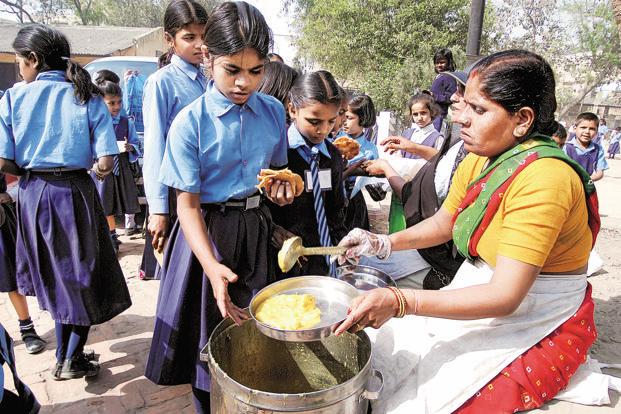
The “ Padhe Bharat Badhe Bharat” launched by Union Minister for Human Resource Development to improve quality of schools in the country, focusing on early reading, writing and comprehension and early grade mathematics is a good step in this direction , but this can only be effective if the local administration is fully involved and sensitized to it.
Despite these measures, Economic Survey points out that total enrolment in primary schools has declined in 2013-14 while upper primary enrolment has grown. This is in line with the demographic changes in the age structure. The “ Padhe Bharat Badhe Bharat” launched by Union Minister for Human Resource Development to improve quality of schools in the country, focusing on early reading, writing and comprehension and early grade mathematics is a good step in this direction , but this can only be effective if the local administration is fully involved and sensitized to it. In order to build capacity in secondary schools on par with expanded primary enrolments, several schemes like the Mid-Day Meal scheme, Rashtriya Madhyamik Shiksha Abhiyan, Model School Scheme and Saakshar Bharat/Adult Education are also being implemented in the country.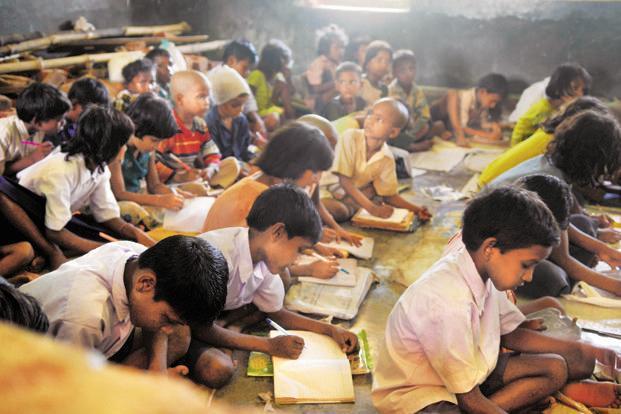
However, the overall standard of the Indian education system is well below global standards. According to the Annual Status of Education Report (ASER) the learning levels across the country, whether in public or private schools, have not improved. Thus, there is a need for shift in policy prescription attention away from inputs to outcomes and focus on building quality education and skill development infrastructure.
There was a marginal reduction in the overall allocations towards education but an increase planned higher education by nearly 22%, indicating a shift in focus from school to higher education in the national budget 2015. The finance minister announced more institutes of excellence. The setting up of additional central education institutes such as IITs, IIMs and AIIMS combined with financial aid under the Pradhan Mantri Vidya Lakshmi Karyakram, are aimed to benefit not only the young population of the country but also India inc. as the quality of workforce will improve significantly with such measures. The Minister also announced setting up of Institutes of Science and Education Research in Nagaland and Orissa, A Centre for Film Production, Animation and Gaming in Arunachal pradesh and Apprenticeship Training Institute for Women in Haryana and Uttarakhand. A National Skills Mission was announced to be set up under the Skill Development and Entrepreneurship Ministry, which will help consolidate skill initiatives across several ministries. It is primarily aimed at increasing the employability of rural youth, in line with the vision that “India is one of the youngest nations in the world with more than 54% of the total population below 25 years of age. Our young people have to be both educated and employable for the jobs of the 21st century.” To ensure that there is a senior secondary school within five km reach of each child , upgradation of over 80,000 secondary schools and 75,000 junior/middle to the senior secondary level was proposed. Under the department, the Sarva Shiksha Abhiyan (SSA) — a flagship programme to achieve universalization of elementary education in a time bound manner —was allocated Rs 100 crore as compared to Rs 93.14 crore last year.
The Budget faced criticism that very little focus was given into basic education. There is a need for the government to focus on the problems of primary education and improve retention of students at the school level. Also improvement of existing institutions is more important, than announcing new ones, as none of India’s universities figure in the top universities abroad. There is also the fear that more number of IITs and IIMs will dilute the value of existing ones. The government should look at allocating funds that can help research grant to institutes and encourage young students to take up research. Also steps should be taken to bridge the gap between male and female literacy rates.