

It is not only alarming that the JNU administration is planning to implement the UGC Gazette notification dated May 5th 2016, which asks to deny reservation in the written level for M.Phil/Ph.D admissions and makes interview as the sole criteria for selection, but the admin has also decided to suspend the students who protested outside the academic council meeting, demanding the reduction of already high Viva Voce marks, minority deprivation points and implementation of OBC reservation in faculty appointments. More than enough evidences show that discrimination happens in viva voce throughout the universities in India, and this level of discrimination is targeted highly against the Dalit, OBC and Muslim students.
The Abdul Naffey Committee which was formed by the JNU Administration itself has already stated that the discrimination against SC/ST, OBC and minority students is high in all the Schools and Centres. It is in this context that there is a long standing demand for deprivation points for minority students. It is not only that the administration has denied this demand in all the previous academic meetings, but now it has specifically targeted and suspended the students from this very deprived background.
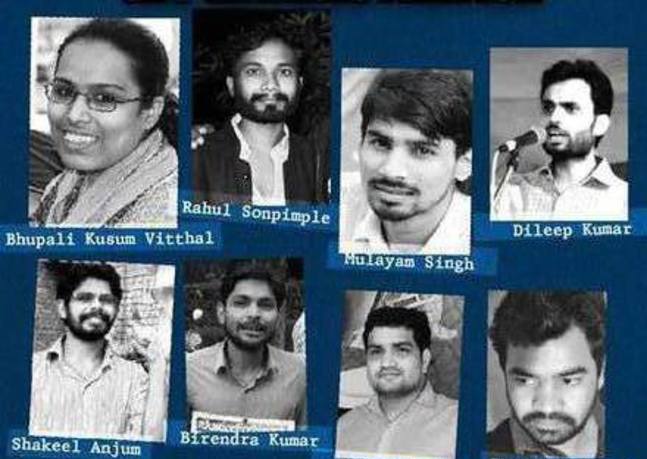
The administration’s decision to suspend students from BAPSA, United OBC Forum, DSU and other concerned students clearly points out at their Brahmanic character, which even doesn’t allow the provision for protests. They have also ordered to debar these students from using hostel facilities and that strict actions would be taken against other fellow students who would provide them stay and other facilities. This act, which is nothing less than the social boycott, which happened last year against the five Dalit students of Hyderabad central University, clearly shows the continuing pattern of hegemonic Brahmanic forces in this country. At the same time, the suspicious stand of JNUSU, which calls the protest by BAPSA, United OBC forum, DSU and other concerned students as undemocratic and illegitimate, is highly unfortunate, and they are actually playing a comrade role with the administration. Also, the recent incident of a former JNUSU representative slandering the demands for deprivation points in front of AC meeting is quite unfortunate, and it actually raises questions regarding the sincerity of ‘left progressive forces’ regarding the issues of minority representation.
While the movements for Justice for Rohith and Justice for Najeeb are going on, it is indeed an occasion to strengthen our fight against the brahmanical forces, as they are clearly aiming at newer targets. It is not only that the murderers of Rohith are not punished, but the perpetrators of violence on Najeeb are roaming free in the campus. It is not only the students who are being targeted, but the present Vice Chancellor is even trying to hijack the democratic norms of functioning of an Academic council meeting. Apart from misrepresenting the minutes of the last AC meeting, the VC also declared that those minutes and some other decisions as passed without any discussion in the AC meeting.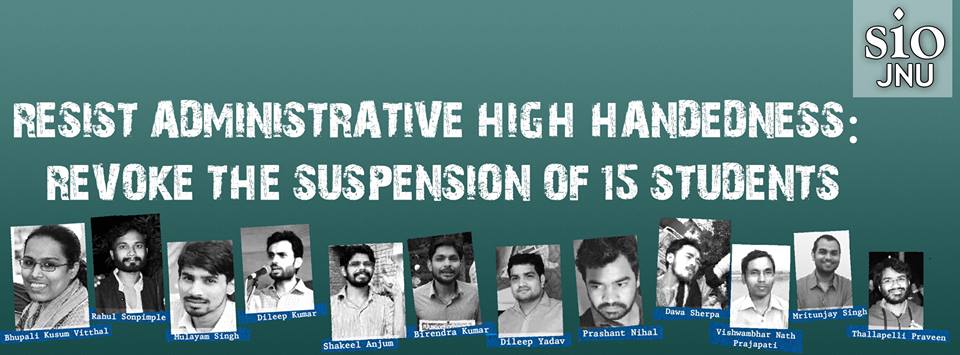
It is not only alarming that the VC is crossing all the limits of anti-student attitudes, but he is also making the entry for students from deprived background much tougher into the campus. Since it is a UGC regulation, the issue is far more serious, and it is going to affect the future of many students from deprived background throughout the country. While it is 75 days since Najeeb is missing, the urgency shown by JNU administration to suspend the protesting students is far more shocking, as they are still lagging to take any action against the perpetrators of violence against Najeeb.
There is a long history where procedural and institutional mechanisms are widely used against the Dalits, Muslims and other deprived sections in this country. Starting with the cases of violence and atrocities against Dalits, Muslims and Adivasis in this country, where the Police officers and administration often play the role of perpetrator, this can be seen in the example of the demolition of Babari Masjid where the Karsevaks were assisted and aided by the police officers and other officials present there. As is pointed out by Gyanendra Pandey, violence against Dalits and Muslims has become a routine in this country, and one can clearly see its resonances in the campuses of India. Just like the socio-economic life of Dalits and Muslims in this country, the lives in the campuses have also become vulnerable.
Starting with the under representation of Muslims in schools of JNU expect in some language centres of Urdu, Arabic and Persian, to the denial of OBC reservations in faculty appointments, the grave nature of discrimination in JNU is more than evident. Instead of offering more positive measures to ensure the representation of Muslims, the administration is planning to curtail even the existing inclusive mechanisms. When it comes to the campuses, the violence on Dalits and Muslims take up a different nature, where they are gradually excluded from the academic spaces as was evident from the various examples of the past up to the more recent experiences of Rohith and Najeeb. At this juncture, it is more than important to strengthen our fights to make our campuses more inclusive and friendly to the students from deprived backgrounds.