

” What is this life if, full of care,
We have no time to stand and stare?
No time to see, in broad daylight,
Streams full of stars, like skies at night:
A poor life this if, full of care,
We have no time to stand and stare.” Leisure, W.H.Davies
“…while it is true that literature and history contain heroic, romantic, glorious, even triumphant episodes in an exile’s life, these are no more than efforts meant to overcome the crippling sorrow of estrangement.” Reflections on Exile and other Essays, Edward Said
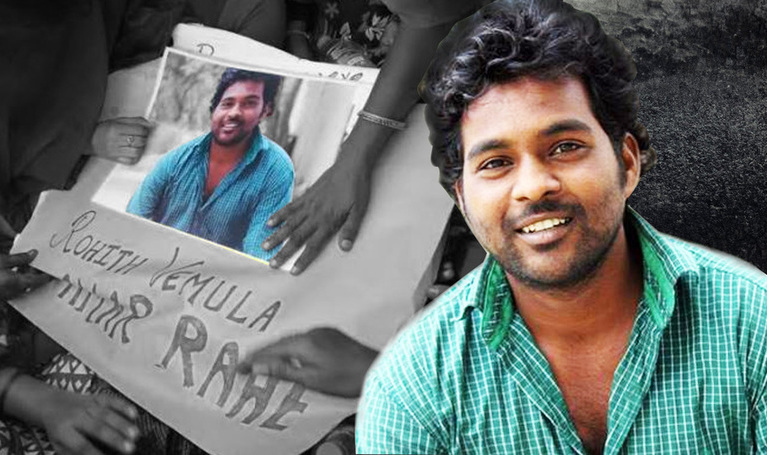
“ I feel a growing gap between my soul and my body.” Rohith Vemula
The Personal is the Political but where is the Person? This statement within political circles is spitting in the wind, often. Leisure and solitude are essential for the formation of our lives. Especially for the health of our inner lives when modernity’s demands on our daily life require a vigorous spirit, a need which gadgets and apps can rarely fulfil. To sustain this life of the inner self, a community is inseparable and inevitable to our life within the campus. A life of solitude and contemplation precede a robust political outlook in the public. Whether we choose to partake in a community or work apart from the community, the community will claim the self, at some point in time but often during birth and death. Campus politics represents a politics of contingency, which is why the danger of shallowness, bereft of content after a point of time is ever present. Rhetoric and slogans alone do not promise a revolution that we so much anticipate, on the contrary, it affects a vibrant life of the self which is so much necessary for a healthy community and for a meaningful campus politics. In this piece, I am thinking what it is to live a life of the self, not away from the community, but a life before the self embarks into the community.
The lives of Rohith and Muthu Krishnan are to be seen as part of the continuum, the self and the community. Self and Community, seem poles apart but mirror one another’s desires and vulnerabilities. Loss of invaluable lives on campus need to alert us and question our politics of contingency which tends to make the inner person empty. Shifting from one immediate engagement to the next appears so much programme-driven and the personal element is lost and this status quo in the campus takes a toll on your (my) self eventually. The presence of a community does not prevent the inevitable loss of a person we loved and cherished as a brother, as a sister, as a friend and as a confidante. The pricking scars that make the wounds come alive are not replaced with time. Time is an ointment that soothes the surface and seldom heals the core of a person. This emptiness of a life of the self can be felt in the essay Myth of Sisyphus and in the life of the persons we should have saved point to the neglect of our responsibilities. We assumed that the community saves the self at points of despair. We were proved wrong. The curse of modernity is its contingency and a lifeless living. As the modern man tries to fulfil his mundane duties, it only feeds the void and the university life is occupied with completing one assignment after another and reading a classic in a week. Such activities, aimed at enriching our creative life turns it into a routine, a boredom worth repeating. The texts we read must make us more human by reading stories of survival, resilience, pain and victory not to gloat in our ability to master them and forget the suffering of the person next to us. If that is so, the text is dead and we the murderers survive on its leftover flesh.
Mainstream and progressive student politics address the body, and the spirit is neglected. Enlightenment, in a way, kicked off this detachment of the spirit and the stress on Reason only made us more shallow, delaying our care for our loved ones for the funerals alone. Our right to food, our dressing preferences and reacting to the right-wing gibberish continue to occupy the agendas of Velivada in HCU, Freedom Square in JNU, the Arts Faculty gate in DU and other political sites. Neither do I intend to reproduce the ”matter is evil” notion. I am appalled towards myself for often overlooking Rohith’s last words as if it was/is only a political polemic, am re-reading the letter to respect the life of the mind. As readers and well-wishers, we are complicit in committing the horror, the horror he wished will not happen, reductionism. Our campus is blessed with reductionist tendencies, a curse. The deaths of fellow students in the campus, especially suicides must wake us to the reality of reducing everyone to her/ his last name, colour, gender, caste and class. Our radical student politics must bite a slice of the blame and not nail the responsibility on the doors of the present theocracy alone that is masking itself as a democracy.
I am preoccupied with the self because it is the part we so much disregard but that which we hold as ‘ours’. How can we recover this emptiness of the soul and the emphasis on our bodies in our busy campus life? That’s the question Rohith, Senthil, Muthu and students who committed suicide and left the campus half-way asked the world in general and their friends in specific. Rohith in his fifty plus heart-rending sentences reserves 44 sentences that refer to the self — Myself, My, I, I am and interestingly only 4 sentences refer to the community/collective — Our. He also begins and ends with a reference to the self. It is so explicit that he could not afford a life for his inner self and that absence flows through as a bitter-sweet self-eulogy. “I would not be around when you read this letter.” and “Do not trouble my friends and enemies on this after I am gone.” It was a day back, I became so melancholic, after spending 4 years in Delhi, I felt the loneliness of estrangement from family and the countable friends back home. This was surprising as I was in my uncle’s home. We do miss our home even if we find ourselves in a second home.
Said’s observations on exile and our condition in the campus point to its universal and unbearable nature of estrangement. Exile is mine and yours, No Exit. We are pilgrims in search of the home, the home will haunt us every evening only to be satisfied with a look-alike home. I keep hearing from my friend that HCU will not be replaced by JNU and once heard from a hostel mate who wanted to return to DU because he cannot put up with the daily rice diet in HCU. Such is the pull at our heartstrings, thank home. Rohith and Muthu were offered a look-alike home when they needed a proper home, however minor it might be, we played our respective roles in refusing them a life of the mind and a flourishing self through our politics of reductionism. Often, we confuse the emphasis on person and end up reducing one’s identity to fit our political gains. The last words of Rohith is a mirror that shows our adamant refusal. We are unable to reconcile the loss of home and an empty self as simultaneous realities, the loss of the home is made worse by the presence of a fragile reality that is too daunting. The estrangement that we often sense, with the soul and the body or in Said’s words, “the unhealable rift” shall be lessened only if we come together and put the person at the center of our political scheme and move towards a renewed vision of politics. Politics that will not be driven purely by party agendas but an equal emphasis on the soul and the body. When the individual is healthy, the party will reflect the same and play a constructive role in the public sphere.
I badly want a community but I also neglect a community because it looks so lifeless. Communities on campus and in real life can turn into a collective of egotists assembling and leaving when it is done. I resist such moments of denying myself a community and it looks strange to me, in a world that celebrates extroverts. Not to belong is okay but to think of the same and to be ashamed is not. Delhi has enforced this bitter timeless truth lesson in me, time and again. I hope communities like ASA will continue to act as a microcosm fostering the imagination of community and self for the Christian, the Muslim, the Sikh and the Buddhist will be feasible. Religious expressions are becoming rare and extinct and a radical politics must work to reclaim the same for the students from religious minority backgrounds. Reading religious texts and listening to stories of the religious communities on campus would push the political in becoming more personal. For instance, confessions in the Bible might add to the democratic ethos of our community life. When Muthu shared his issues with me, I felt spaces like Naga Christian Fellowship in HCU did offer him the much-needed hospitality but I also sensed the Christian fellowship in JNU was not as much effective. Churches in multicultural cities emphasize on identity-driven groups, like politics, and is an area of concern and religious spaces of minorities need to care for the students in its fullest sense and offer them avenues to enrich their self, regardless of creed, colour, and ideology.
Rohith’s efforts through Ambedkar Students Association, HCU emphasised a thriving life world for the religious minorities for self-expressions, we shall listen to his silent cries if we claim to follow his values. The challenge for organizations and campus communities in the age of lynch mobs is in sustaining the rationale for the Minorities. Rohith wanted to be a writer of science and Muthu’s yearning was a thriving intellectual life. Our slogans, banners and posters and rallies are necessary for our political functioning, they are not the end in themselves. They point to a reality that all of us yearn for, Liberation. Yet, liberation does not happen without individual liberation.Behind the slogans, there are minds that crave for a deeper life of meaning. Disconnecting the body and the soul is a painful reality that most of us live through and cannot be fixed with our political manoeuvring.
If Community is the soul, the person is the body. For a Protestant, at times, it was strange for me not to attend church in Delhi, the bonding of the community was thereby lost. On one sober Christmas evening in Delhi, I was rambling towards church for the evening celebration but returned to my room after reaching half the distance. This disregard of community injured my spirit coupled with the scourge of plastic platonic relationships. This loss of a self can be seen in Rohith’s exhaustion and also in Muthu’s absence of space to articulate his anxieties. Muthu lost speech, he was brimming with smiles when he arrived from HCU but JNU crushed his soul and threw his body into destiny’s cruel arms. I dare to think that the suicide of the spirit was the primary loss before it became social, a public pronouncement. They dared to flirt and balance the life of the self and the life of the world. We, the world, let them down and the self followed its logical end; death. What made sense for a temporary phase was the meanings the community offered till their soul got tired and said goodbye. Towards the end, there was no community to act as a life-giving force and it is the tragedy of our modern lives, to both crave and reject a collective existence. In the era of Aadhar surveillance, we need to shy away from the undue stress on identity as the basis of our politics, what we need urgently is a human/e vision for a politics that hinges around the person, otherwise, our identity-centric politics can evolve into a nationalism of its own. Yes, the personal is the political but where is the Person ?
Texts Referred
Myth of Sisyphus, Albert Camus
Reflections on Exile and Other Essays, Edward Said
http://indianexpress.com/article/india/india-news-india/dalit-student-suicide-full-text-of-suicide-letter-hyderabad/