

The whole Middle East region passed through an upheaval and transformation for two weeks in the middle of July 2017. The event, now called “The uprising of al-Asbat Gate,” not only took place in the heart of Jerusalem, one of the most important cities in the world, but also in the heart of al-Aqsa Mosque, one of the most heated and sensitive spots on the earth. Those two weeks could be indeed considered as a milestone in the ongoing clash in the Holy Land.
Reports say that Israel has killed four Palestinians and injured over 500 since 14 July 2017. This has not attracted international attention any more than the condition of structural violence wrought by apartheid and settler-colonialism has. Worse, Palestinians have literally had to smuggle corpses out of morgues to prevent them from being confiscated by Israel for use as political barter. Israel’s apartheid regime dehumanizes Palestinians and diminishes the value of their lives in both life and death.
The humanitarian situation in Gaza continues to dominate headlines as if it were the result of a natural disaster and not the outcome of political collusion. Last week marked the third year since Israel’s most devastating military offensive against the coastal enclave. In the span of 51 days in the summer 2014, Israel killed nearly 2,200 Palestinians including 534 children. Though unprecedented in degree, the 2014 offensive was Israel’s third onslaught in six and a half years; the fourteenth since unilateral withdrawal in 2005; and the twenty-second since announcing withdrawal in April 2004.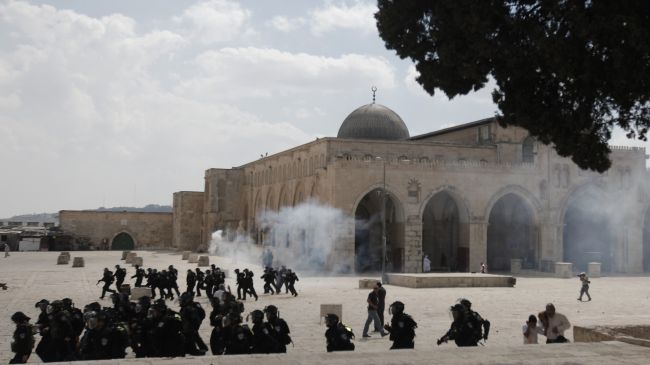
Counterinsurgency warfare together with a comprehensive land blockade and naval siege has become the norm, rather than the exception, of Israeli policy towards Gaza’s 2.1 million Palestinians. There is nothing normal about Israeli policy, which ensures that Palestinians can survive but not thrive. Moreover, even under its meticulous calculations, including a 2000 calorie/day diet, survival is coming under risk as the UN reports that the Gaza Strip will be unlivable by 2020.
Rather than challenging these conditions, the international community is normalizing them. As a partner in the Gaza Reconstruction Mechanism (GRM) the United Nations has not only accepted Israel’s imposition of conditions on goods that can enter the coastal enclave, it has also absolved Israel of responsibility for the devastation caused by war and siege.
Anti-BDS Legislation in the United States
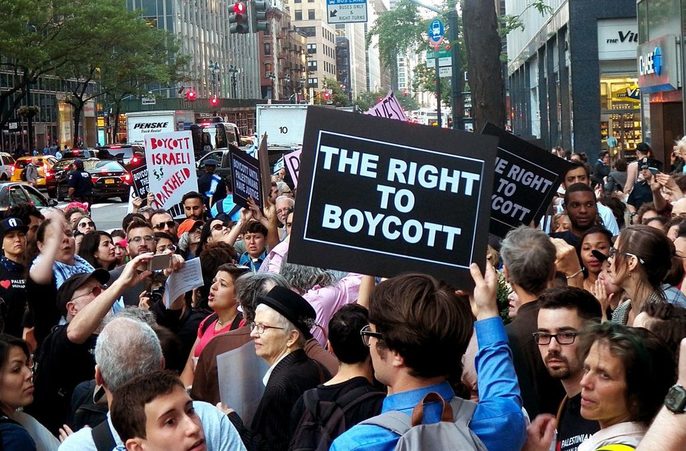
As the Gaza Strip teeters on the edges of an unprecedented humanitarian crisis and as Israel embarks on indelibly transforming the status quo in Jerusalem, lawmakers in the United States are contemplating making non-violent protest against Israel a felony.
Glenn Greenwald and Ryan Grim writing for The Intercept explain:
…a group of 43 senators — 29 Republicans and 14 Democrats — wants to implement a law that would make it a felony for Americans to support the international boycott against Israel, which was launched in protest of that country’s decades-old occupation of Palestine. The two primary sponsors of the bill are Democrat Ben Cardin of Maryland and Republican Rob Portman of Ohio. Perhaps the most shocking aspect is the punishment: Anyone guilty of violating the prohibitions will face a minimum civil penalty of $250,000 and a maximum criminal penalty of $1million and 20 years in prison.
Dena Takruri of AJ+ provides a three-minute summary of The Intercept’s investigatory report.
Several months ago, Josh Ruebner wrote about the controversial bill for The Electronic Intifada. Ruebner describes how the proposed legislation broadly refers to the boycott of settlement products as well by describing those industries as being in “Israeli-controlled territories.” He writes,
The bill seeks to amend two laws – the Export Administration Act of 1979 and the Export-Import Bank Act of 1945 – to accomplish its aim.
The Export Administration Act is the primary law which makes it illegal for US corporations to comply with the Arab League boycott of Israel. The Department of Commerce maintains an Office of Anti-Boycott Compliance to ensure US corporations do not participate in the Arab League boycott and to fine those that do.
The Israel Anti-Boycott Act would amend this law to encompass “restrictive trade practices or boycotts fostered or imposed by any international governmental organization against Israel or requests to impose restrictive trade practices or boycotts by any international governmental organization against Israel.”
Even if a corporation was not responding directly to a call from an international governmental organization to boycott Israel or even settlement products, it could still run afoul of this bill if its actions are perceived to “have the effect of furthering or supporting” this boycott.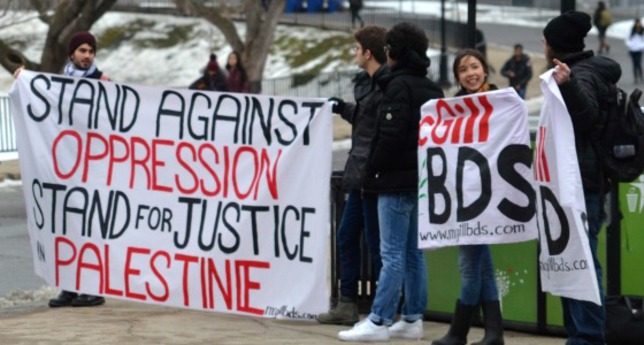
The legislation is a stated policy goal of AIPAC’s (American Israel Public Affairs Committee) in this year’s agenda. That helps to explain the lack of scrutiny involved in reviewing the bill despite its flagrant infringement on First Amendment rights.
In response to media coverage and pressure by the ACLU (American Civil Liberties Union), Congressional sponsors of the bill have vowed to amend the legislation. While the amendment will likely remove the criminal penalties associated with boycott, it will maintain the provisions applying prohibitive civil penalties. If the bill were amended to clarify that no criminal penalties could be applied, violators would still face a $250,000 civil fine or more.
The staff attorney of ACLU Brian Hauss, in an article reminded the First Amendment of the Constitution upholds the right to boycott. He also pointed out the history of boycott in USA emphasizing that the right to boycott is one of the brightest stars in the USA constitutional firmament.
“The American Revolution was founded on boycotts against British goods to protest excessive taxes. John Jay led a boycott against New York merchants who engaged in the slave trade. And the Montgomery bus boycott of 1955–1956 was a major turning point in the struggle for civil rights in the Jim Crow South.
In the 1970s and 1980s, colleges and universities led a widespread campaign to boycott and divest from South Africa, in protest of apartheid. In 2015, football players at the University of Missouri went on strike until the school addressed acute racial tensions on campus. And North Carolina’s law prohibiting transgender people from accessing restrooms and other facilities consistent with their gender identities sparked massive boycotts by businesses and individuals”, He added.
The previous cases in American courts related to right to boycott also refute the forthcoming legislation.
“Boycotts are a form of collective action that allows ordinary people to make their voices heard. For precisely this reason, the Supreme Court has held that the First Amendment protects the right to boycott. The court’s landmark decision in NAACP v Claiborne Hardware Co.affirmed the constitutional right of NAACP activists to hold a mass economic boycott of white-owned businesses in Port Gibson, Mississippi, to protest the community’s persistent racial inequality and segregation. In ringing language, the court held that the boycotters’ exercise of their rights to “speech, assembly, and petition . . . to change a social order that had consistently treated them as second-class citizens” rested “on the highest rung of the hierarchy of First Amendment values.”He added further.
Meanwhile, as the Congress tries to criminalize BDS, the Democratic Socialists of America, which gathered at first week of August in Chicago for its biennial convention, passed a resolution on Saturday to endorse the BDS movement. The vote in favor was so overwhelming,more than 90 percent supported the resolution. It marked the first time in the group’s 35-year history that it has taken a position on the issue.
Set Back for UK Government over Anti-BDS Legislation in court
In UK , On 22nd of July, Government suffered a major setback in court by Palestine campaigners over boycott, divestment and sanctions. The embattled minority Tory government suffered a new blow as parts of its guidance governing investment by Local Government Pension Schemes (LGPS) were struck down as unlawful.Administrative Court judge Sir Ross Cranston granted the judicial review,determining that the Government had acted for an improper purpose.
The court held that the Government has acted unlawfully by attempting to restrict local councils from pursuing boycott, divestment and sanctions (BDS) against the state of Israel through their pension schemes.
Palestine campaigners hailed the triumph the ruling represented for the BDS movement, stating “Today is a victory for Palestine, for local democracy, and for the rule of law.”. War on Want, Campaign Against Arms Trade and the Quakers supported the legal challenge with witness statements. PSC was represented in the proceedings by Bindmans LLP, Nigel Giffin QC and ZacSammour.
Here is the key development of the case
- The Department for Communities and Local Government issued guidance on LGPS in September 2016 declaring ‘divestment and sanctions against foreign nations and UK defence industries are inappropriate, other than where formal legal sanctions, embargoes and restrictions have been put in place by the Government.’
- The main aim of the guidance was to curtail divestment campaigns against Israeli and international firms implicated in Israel’s violations of international law, as well as to protect the UK defence industry.
- Pension holders would have been forced into investing in companies that are complicit in human rights abuses contrary to their conscience and beliefs.
- This guidance came in despite a public consultationon the issue in which 98% of respondents vehemently disagreed with the plans.
- The Palestine Solidarity Campaign(PSC) applied for judicial review of the new government measures for LGPS in December 2016
- On 22nd June 2017 The Administrative Court held that the Government had acted for an improper purpose by seeking to use pension law to pursue its own foreign and defence policy. Accordingly the relevant parts of the guidance were held to be unlawful and no longer restrict LGPS in their pension decisions.
BDS campaigners have been calling for councils to consider divesting from companies complicit in human rights violations in the occupied West Bank, such as Hewlett Packard (HP). Various local councils had responded to the Palestinian call by passing motions to boycott goods from illegal Israeli settlements. New YouGov polling on British public attitudes to Palestine shows that 43% of the public consider the BDS movement to be reasonable.
Right to Boycott campaign attracts mainstream support
On June 30, 2017 the Spanish parliament had unanimously passed a motion recognizing the right to advocate for Boycott, Divestment and Sanctions (BDS) as protected under the right to freedom of expression and association. This bill was introduced by the progressive parliamentary coalition “UnidosPodemos-En ComúPodem-En Marea.” This is the second time within a short period that Spanish state institutions have affirmed the right to boycott.
In late April, the Spanish foreign minister also affirmed that the right to advocate for BDS in solidarity with the Palestinian struggle is protected by laws guaranteeing freedom of expression.
In 2016, the European Union and the governments of Sweden, Ireland and the Netherlands upheld the right to advocate for BDS to support Palestinian freedom, justice and equality as protected by freedom of speech and freedom of association principles.That same year, more than 200 renowned lawyers and legal scholars from 15 European countries, including a former Supreme Court judge in Spain, issued a declaration recognizing BDS as “a lawful exercise of freedom of expression.”
In the month of June this year ,The upper house of the Swiss parliament had blocked efforts to criminalize BDS and ban government funding for organizations committed to promoting Palestinian human rights. These failed efforts were led by Swiss right-wing parties lobbying for Israel.By refusing to restrict support for the legally protected right to advocate for BDS to end Israeli violations of Palestinian human rights, Switzerland now mirrors similar positions in Europe.
More over, Amnesty International, the International Federation for Human Rights (FIDH) and the American Civil Liberties Union have all spoken out in response to Israel’s attacks on the BDS movement. More than 23,000 people signed an appeal to the UN High Commissioner for Human Rights organized by the Palestinian BDS National Committee. The BNC and several other Palestinian organizations made an oral statement at the UN Human Rights Council in June 2016.
July 9 2017 marked 12 years since the Boycott, Divestment and Sanctions (BDS) movement was born. The BDS movement was founded in July 2005 by a swath of Palestinian civil society as a peaceful movement to restore Palestinian rights in accordance with international law through strategies of boycotting Israeli products and cultural institutions, divesting from companies complicit in violations against Palestinians, and implementing state sanctions against the Israeli government. . It is modeled on the successful South African anti-apartheid boycott of the 1980s.
The Israeli government, meanwhile, has grown increasingly concerned about the growth of the BDS movement, as the movement’s support base has expanded to include companies, universities, and religious institutions around the world divesting from organizations complicit in Israel’s violation of Palestinian rights.
In January 2016, the Israeli Knesset held a conference to discuss ways to combat BDS, and dedicated 100 million shekels ($26 million) of the government’s 2016 budget to the issue.The Knesset had also passed an amendment into law in March forbidding entry into Israel and the occupied Palestinian territory to any foreign individual who “knowingly issues a public call for boycotting Israel that, given the content of the call and the circumstances in which it was issued, has a reasonable possibility of leading to the imposition of a boycott.”
Israel has also started the implementation of the above said law as last month, five members of an American interfaith delegation to Israel and the occupied Palestinian territory were prevented from boarding their flight from Washington D.C. to Tel Aviv allegedly due to their activism with the BDS movement.
Having failed to stop the rise in worldwide support for the Boycott, Divestment and Sanctions (BDS) movement for Palestinian freedom, justice and equality, Israel is now launching a desperate and dangerous fight back. At Israel’s request, governments in the US, UK, France, Canada and elsewhere are introducing anti-democratic legislation and taking other repressive measures to undermine the BDS movement. In France, one activist was arrested simply for wearing a BDS t-shirt. Israel is using its security services to illegally spy on BDS activists across the world.
In May 2016, Israel imposed an effective travel ban on BDS movement co-founder Omar Barghouti. Israel has confirmed that it is considering revoking Omar’s permanent residency status. Following threats against Omar by Israeli ministers, Amnesty International had expressed concern “for the safety and liberty of Palestinian human rights defender Omar Barghouti”. Israel’s huge campaign of repression against human rights defenders and the BDS movement is designed to shield it from being held accountable for its violations of international law.
It is very important to note that this year marks the 50th anniversary of Israeli military rule and nearly 70 years of Palestinian dispossession and ethnic cleansing.