

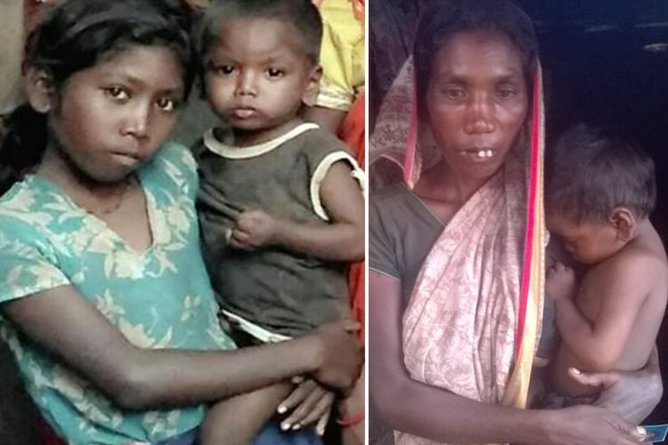
The pain that a mother goes through while giving birth to her child can’t be measured. But the pain when a mother loses her child is much worse than it. And the pain is more if the reason for the death is starvation or a minor disease. In the largest democratic country with 70 years of independence, if a child dies of starvation then it is a disgrace to all of us.
An 11 year old girl of Karimati village in Simdega district of Jharkhand died of starvation on September 28. This happened after her family’s ration card was cancelled for not being linked with Aadhaar number. The girl’s mother had said in a statement that the girl died due to starvation as the family did not have food grain. Government sources are however claiming that Santoshi Kumari died due to suffering from malaria rather than hunger.
According to reports, Santoshi had not eaten anything for eight days before her death. Her school was closed due to Durga Puja holidays and because of this she was unable to avail mid day meals. Santoshi was from a very poor family with no land, jobs or steady income. Her father is mentally ill and unable to work, while her mother Koyla Devi and 20 year older sister struggle to get work of cutting grass on others’ field with earnings of Rs. 80-100 per week.
The family is eligible for subsidized rations under the National Food Security Act. However, activists from Right to Food campaign and NREGA watch, who went to Kumari’s village to find facts, have said that local ration dealer refused to grant the family ration for the last six months as the ration card was not linked to Aadhaar number.
The same dealer is responsible for supplying ration to other 700 households in and around Karimati. As per Scroll.in reports, ten families were removed from public distribution list because of not linking of Aadhaar number with ration card. According to fact finding team, the block development officer of Simdega’s Jaldega block confirmed that Kumari’s family ration card was deleted because of not being linked to the Aadhaar.
Several activists raised the issue in a public meeting held on September 1, and official complaint was also sent to the district supply officer along with a copy of Koyla Devi’s Aadhaar card, asking for a new ration card. However, no ration card was issued for the rest of the month and was only issued after two weeks of Kumari’s death.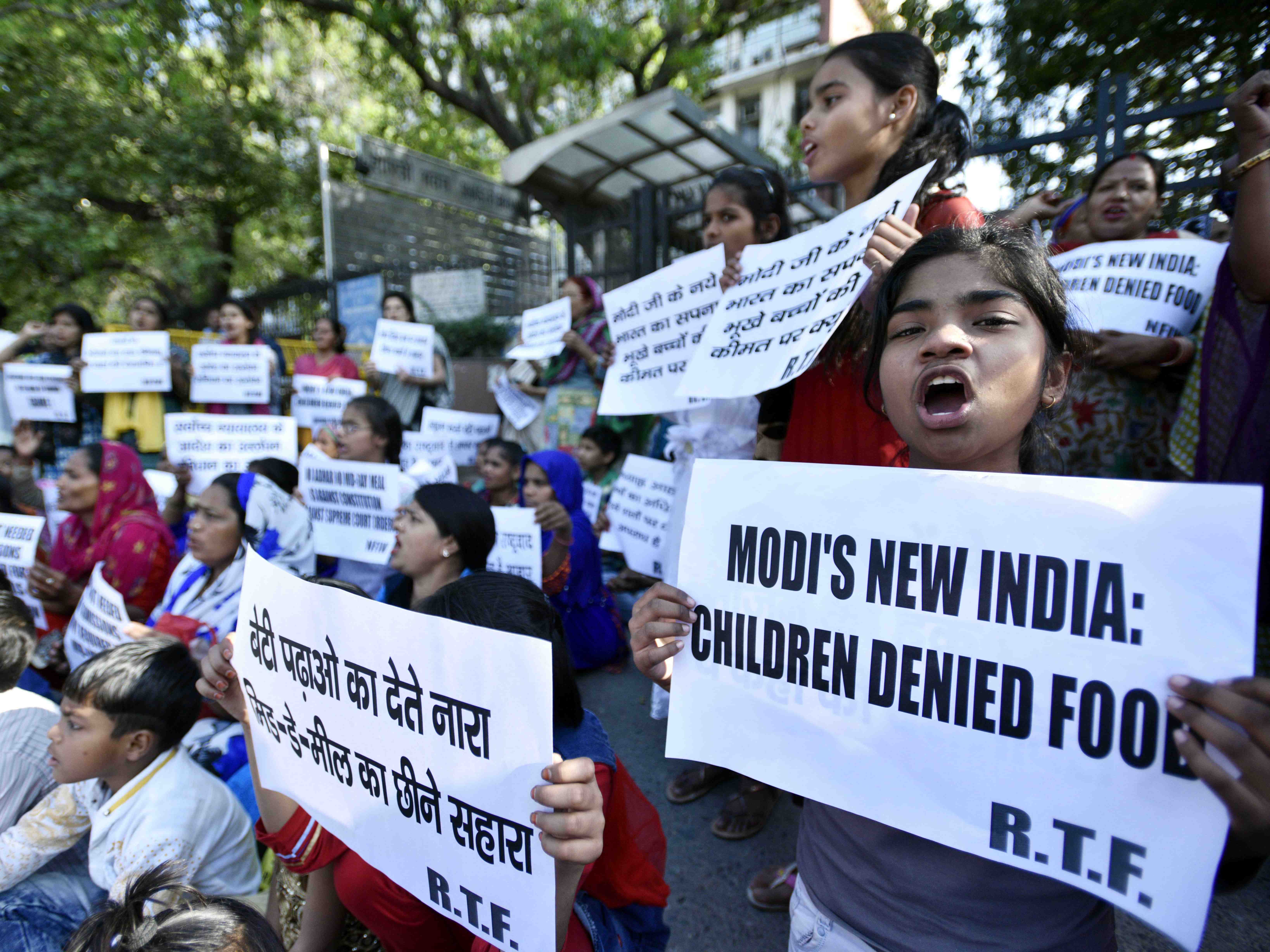
This year February, the centre made it mandatory for families to link their Aadhaar and ration cards for further using of public distribution system. The Jharkhand government, between August to September 2016, moved towards adopting paperless public distribution system by linking to Aadhaar numbers. Activists have questioned against the government’s move of implementation of the welfare schemes. Supreme Court guidelines of March 27 of this year makes it very clear that Aadhaar card can’t be made mandatory for government welfare schemes.
On September 7, the Jharkhand government announced that its entire population had Aadhaar cards. However, out of the 2.3 crore people who are covered under PDS in Jharkhand, only 1.7 crore have linked their aadhaar with ration cards as per government’s own record.
“This is a common problem of people in Jharkhand- people having Aadhaar card finds it difficult to link it with ration card because of bad internet network, server down, absence of technical operators, portal not working on some days of the month,” Dheeraj Kumar, an activist with the Right to Food Campaign and also part of the fact- finding team, told Scroll.in .
On Tuesday, Jharkhand CM Raghubar Das expressed his grief over the sad incident and vowed to not spare anyone found responsible for misconduct. He directed the Deputy Commissioner to meet the family and submit a report within 24 hours.
Jharkhand Minister of Food and Public Distribution Saryu Rai has questioned the state government’s order to cancel ration cards that are not linked with Aadhaar. He said that even though there may be doubts about the cause of death in this case, the government must ensure that no ration card is deleted because of non- availability of Aadhaar.
The incident of a girl losing her life and not getting food for continuous eight days is seriously painful and alarming. She died by asking for rice to her mother. This clearly is a loophole and failure of implementation of government welfare schemes for the poor. The government move of making Aadhaar mandatory for beneficiaries to avail welfare schemes is a direct violation of Supreme Court guidelines.
The public distribution system was made for the poor to get benefit of the welfare schemes of the government. The sole purpose of it was to reach the needy person. But in this case the needful family was made to wait for more than six months. This is one of the examples of many failures of such government schemes. After getting Aadhaar available, it took more than a month to get a new ration card. We all know about the speed with which our government officers and policies work. There is a bigger problem of internet connectivity, government website sever problem, officers attitude of working and many others in the way of the implementation of government plans and policies.
The government we elect must ensure that every issue is solved for the implementation of such welfare schemes before making Aadhaar mandatory. The government must not play with the facts and numbers while hiding the bitter truth behind the numbers. The government must be more focused on the implementation of plan, policies and welfare schemes rather than projecting more new schemes. It shall ensure that no more girl dies saying ‘Bhat- Bhat’ (demanding rice) to her mother.