

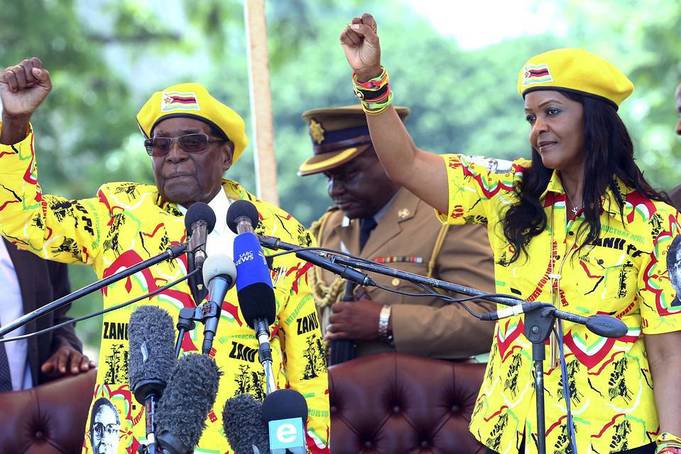
The news of ‘unofficial’ military coup in the African nation of Zimbabwe, which resulted in the sacking of its long running de-facto leader Robert Mugabe, has been dominating the headlines of national and international media.
The staging of military coups and sacking of civilian governments by the military is neither a new phenomenon nor something whose precedents don’t exist. But the various coups which have occurred in different parts of the world had their own reasons and causes. Sometimes the military overturned the civilian government to satisfy their hunger for power or sometimes they had to do it in view of the larger public sentiment. Every coup teaches us a new and varied lesson regarding the political sciences, human tendencies, social life and so on.
The Zimbabwean coup is a peculiar one and different from the other coups in more than one ways. The incumbent president was not deposed immediately and the military refrained from taking control of the administration, officially. There was an outburst of celebrations and jubilation as the military takeover was announced, unlike other coups which were met with mixed reactions, if not totally negative.
In contrast with other coups where the military prefers to appoint a puppet head of the government instead of the army chief assuming the charge of head of the state, in this coup a powerful and political heavyweight, the ex-vice president was announced to take over the government.
But what’s special about this coup is that it was staged against a person who had claimed the highest office by popular mandate four decades ago, but the sacking of the same person was met with great jubilation and celebrations.
This dramatic end of a popular figure contains many lessons for the students of political sciences and the organisations and agencies working for democratic values.
The sacked president Robert Mugabe had acquired the power, not by any mischief or an act of pure luck. He had earned the post by virtue of his long struggle against colonialism and racism. But even those who struggle against injustice are prone to committing injustice if someone stands against them.
The whole life of Mugabe is a testimony to the fact that if allowed to go unbridled, man could go to any extent to consolidate his power, and probably that’s the reason why Islam instantly debars anyone from the position of power who wishes or nurses any hopes of getting a position of power.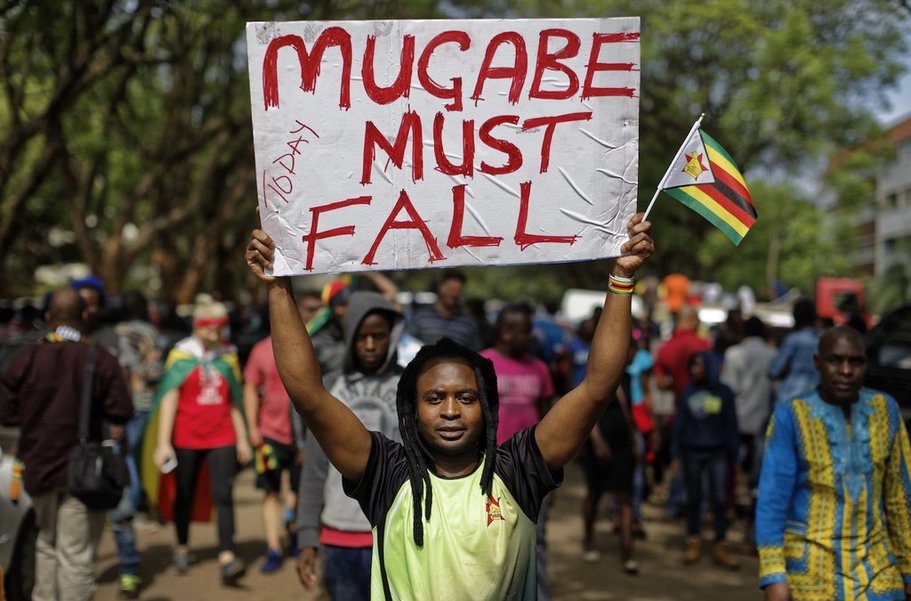
Some may hail Mugabe as the person who took on the might of colonial powers and brought down the racist minority rule of the white people, but what happened next…? He turned the line of fire against his own fellow countrymen who dared to oppose his moves or policies. The bitter and bloody rivalry of ZAPU(Zimbabwe African People’s Union) and ZANU(Zimbabwe African National Union) bears testimony to this. In general we could just conclude that he was a person of enthusiasm and talent who fell into the trap of power and authority, and got deviated from his path.
Today it is Mugabe, tomorrow there may be someone else and it goes on. But if we reflect on the history and background of this episode and extract lessons for us, history would be kind to us, otherwise we shall go down into the history as those who saw it happening but still didn’t do anything to save themselves from it.
To prevent the occurrence of such blots in our democracy it may be advised to work on the following three points:
1. No scope for personality cults: when the masses start adoring and blindly following a particular leader, autocratic tendencies are bound to take birth. Public support and mass following is such a toxin that could derail the minds of the best of grass root leaders.
Thus the future of democracy lies in annihilation of personality cults and devotion towards principles rather than personalities. Sadly, in our country of late we have been seeing the propaganda machineries of the government and the ruling party alike in creation of a personality cult.
Temples are being constructed in his name, his life story being included in the syllabi, and the administrative protocols being sidelined to suit his rhetoric and style of working.
Its high time we rise up to the occasion and enlighten the masses about the perils going on this path leads to.
2. Greater emphasis on principles: Institutions which have a formal doctrine of policy and principles have less chance of running into dictatorship rather than those which don’t.
The emphasis of principles bridles the ambitions of a person aspiring to gather resources and acquire power center. Absence of policy documents leads to chaos and the virtual implementation of “might is right”, the mightier one holds the sway over decision making.
3. Robust opposition: Every democratic institution must have a system of counter checks and dynamic auditing.
The constant presence of opposing force not only keeps the train of democracy on the tracks, but leads to better and inclusive decision making. Weak opposition indicates not the popularity of the government, but the weakness of democratic institutions itself.
It is hoped that we take lessons on preventive methods from the Zimbabwean episode and always be alert as to not allow the democracy express to derail from its track.