

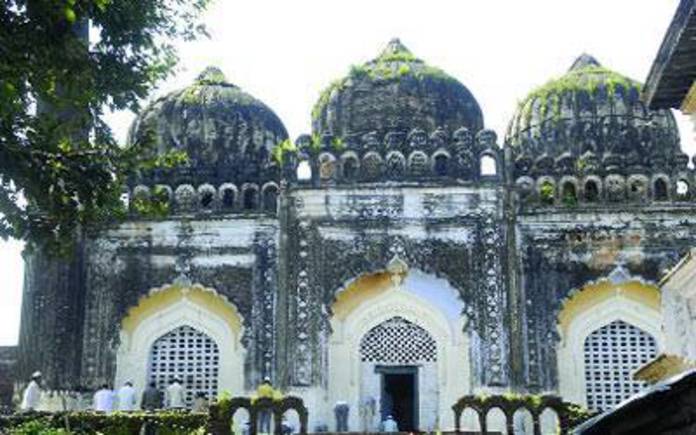
Built in 1528, Babri was still a mosque in 1992 – a social place of ibadat (worship), a sanctuary of Allah. It stood symptomatic of Muslim identity and physical existence – their right to be there; in Ayodhya, as in India. The epoch of a pandemic social media culture and desensitized audiences has engendered a profound shift and implied crises in witnessing, even rendering the Babri Masjid a media spectacle, reducing it to hackneyed photographs taken 25 years ago, which obscures the gamut of what people endured and their lived histories of the genocide that unfolded at the time. Two-thousand lives were lost. I wonder about navigating and negotiating through trauma to foster an engaged, yet critical, topography of reception that defies escapist modes of consumption of the Babri Masjid demolition. 1992 deformed us together even as it transformed us together.
I had turned 4 that winter. My fragmented memories of that winter, twenty-five winters ago, are dream-clear – not scrapbook-able, document-able and say-able. But, they aren’t forgettable, either. In retrospect, I am not so convinced where my individual recollections of those painful days and curfewed nights end, and that of those whose lives were lived alongside mine, begin. Our complex memories, like our complex lives, have fused. And, some of the interstices and discontinuities between the lived experience and its traceable memories are bridged by imaginative identification, projection, and inception. That is how memory works and we remember things.
I am told that was a zamana (era/time) when the then luxurious cable TVs were unhurriedly making their way into upper-middle class, metropolitan homes in Calcutta. In our ancestral home in central Calcutta, it wasn’t till about five years later, that the cable TV (no longer a status symbol) would make its advent and create a new ‘imagined community’ out of us (the cultural exclusions notwithstanding). Sixth of December was a Sunday morning, like any other Sunday morning, mamujaan (maternal uncle) tells me, and he had been flying kites, when the khabar reached them from neighbours living in other parts of the city, whose voices over the telephone kept breaking, “Babri Masjid ko Shaheed kiya jaa rha hai…” (Babri Masjid is being demolished). It was not a rumour, after all. BBC (looked upon as the only reliable informant about happenings not only the world over but in our own country) had first flashed the news in India. We didn’t get BBC, back then, on our TV set which came in a wooden box with beetle antenna. The only channel we did get was state owned Doordarshan (DD) and the Narasimha Rao-led government had resorted to censoring every little news associated with the demolition, having failed to prevent it from happening.
Communal violence rocked the country. News and rumour mill travelled – of incidents where people were being butchered by menacing mobs, of bombs being thrown on individual Muslim homes, of the arsoning of shops owned by Muslims – and these had a way of finding us each day, and showed no signs of ebbing. It was for the first time, at the age of four, that this cartography of khauf (fear) came to inform my life, though it wasn’t the first encounter with fear for those in my family who were survivors and witnesses of the unspeakable horrors of 1964. For them, there were many quieter warnings triggered by survivor memories of riots past. (In time, recounting of the trauma of 1964 would leak into our being, into our spaces of remembrance, even displacing, I suspect, some of my own belated, conscious memories). Our fearing, as it were, came to be augmented because we lived in isolation in a place where no other Muslim families lived. It was not a densely populated Muslim ghetto where insularity would mean some semblance of safety, but an old Waqf estate with a mosque and Imambara on its precincts. Its religious identity, its Muslim-ness was in your face. Any violence against us in the realm of our now ‘unsafe’ home wouldn’t shock anyone!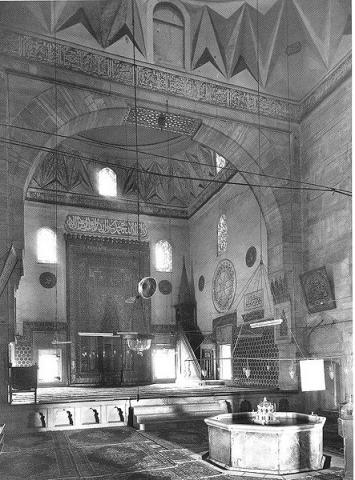
So, in search of that elusive security of our lives in those volatile days, we fled our home leaving behind almost all our belongings. But, it wasn’t possible to leave together. Only the women and children would leave, and the men would stay behind. It was decided. Nannan (maternal grandmother) and khalajaan (maternal aunt) who had brought me up, were to go stay with a relative living in Muslim quarters of the city who could only accommodate them, and Ammi (mother), Zahra (my sister) and I were sentenced to go live in a ghetto indefinitely, with a relative who would take us in. I remember having trouble falling asleep when it was time to sleep. I remember filling the night with my weeping, burying my head into someone else’s pillow while lying in someone else’s bed, for my Nannan and khalajaan into those cold, curfewed nights, when lights were turned out, till the wee hours of the morning. I remember Ammi trying (and failing) to comfort me or calm me down, separated from her mother and paralysed with fear, as she herself was. I remember Ammi praying, and encouraging us to send prayers for the safety of those we had been separated from. When I was inconsolable for days on end, Nannan was informed over phone, “Firdaus bohot zidd kar rahi hai.. betahasha ro rahi hai aur ek hi ratt lagaye baithi hai ke Nannan ke paas jana hai, hum ko le chalo…” (Firdaus is insisting constantly…she is crying recklessly and is endlessly repeating that she wants to go to her Nannan (grandmother), take me to Nannan). Soon after that we were reunited. We could finally return home where the men had risked their lives to keep vigil. We had survived 1992.
When December comes, our eyes focus on the old wound. The turbulence and violence of those days infuse our psyche, our history. Our existence wades through entangled traumas: a personal trauma, familial trauma, and a collective trauma precipitated by Hindu communalism and nationalism. And so we keep our eyes, our breath as acts of witnessing, of testifying, of living. And we keep alive the affective memory which has adopted us as witnesses and claimed us as its own.