

A procession of ruthless policies from New Delhi, hardly finding any passing mention in the conveyer belt of critical media discussion, have left already sterile minorities in India to a sullen despair. From amendments in NIA to NRC in Assam, governments foiled bid to orchestrate the populace on socio-political-economic cleavages have left the minority, namely the Muslims in thrall to the McCarthyism of the “police state’.
More alarming has been how “exclusionary extremist narratives” have driven the wedge deeper between the largest minority and the dominant religion. While Muslim marks and cultural artefacts quickly follow the suit of evanescent elements in the national makeup, the Muslim individuals and organizations in a desperate bid to take recourse in nationalist discourse scruple at the very ideas of that nation hardly represent them. Muslims, caught in a sheer absence of pluralistic discourse in the national platform have thus stooped to a situation that Salman Kurshid has better articulated, “Visible Muslims and Invisible citizens”. These “invisible citizens” are outlandish to the perceived figments of the “Hindu Raj”, in M.S. Golwalker’s notion; they are slaves, “deserving no privileges… not even citizen’s rights”.
In fact, such loopholes are something that befalls the whole pageant of nationalist narrative worldwide, with a deep sense to demarcate and subsequently subside minor elements. Amir R Mufti perceptively reminds us:
The “minor” term within the national faces the burden of representation in a way radically different from the manner in which it falls upon the “major.” (1995)
What could count for these ambiguities in representing Muslims? How far the Muslim reformers reconciled their inherent communitarian particularism and nationalist narratives? Can we rekindle the hope of a national development that stands cheek to minority reforms? while these cussed questions could possibly heighten tension in our tandems, it opens before us innumerable pathways trailed down by reformers, leaving to us a hefty task to engage with them, decode the surroundings and evolve a possible antidote.
A thousand storms, a million tornados passed but!
Your chandeliers are aglow in the darkness until now.
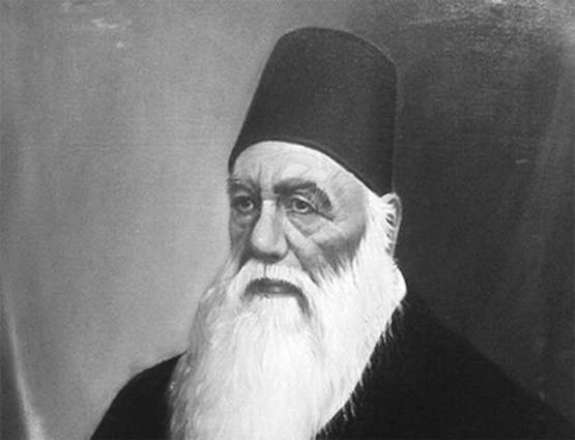
This soothing couplet from the work “Sir Syed Ki Ruh Se” of poet Ehsan Danish portray, how among a plethora of Muslim reformers in the annals of subcontinent, Sir Syed have himself pencilled as an overarching persona to have engaged with in present times. An odyssey through his dilemmas, ways by which he has taken recourse to them, leaves us but to pay obeisance to his ability to grasp the shrill litanies of time. However, a mere showcasing of hisoutputs, movements and detached events hardly does justice to how great personalities perceive their failures with an enchanting uniqueness. Trimmed and filtered versions of Syed, disproportionately privileging the ‘output’ invariably misses the verve of his unrelenting pursuits and risky adventuresnot in sync with one another. Thus, given that the logic of his ‘output’ were superimposed on then discourses, differing strikingly from the contemporary currents, the placental cord running between his solutions and complexities amount to his colossal contribution.
For Sir Syed, born in 1817, who for half of his life shared their sense of deprivation and injustice, but not fatalism and pessimism, the bitter sweet plea was threefold: to inform the British of the imminent bleakness within their educational system, to enliven the already plagued relationship with British, and to unpack a new morphology of modernism tailored to suit the Muslims, much of which still remains today, but in new forms, against new powers.He broached the issue of education in his memorandum, “Structures upon the present educational system in India “in 1869, basing his claims on his own paradigm of progressive education. “Loyal Muhammadans of India” and his review of H.W Hunter’s “the Indian Muhamamdan “were sincere attempts to invalidate the existing mistrust.
Though a modular phenomenon that permeates the world, the way communities reacted to modernity has never been in a unified fashion. ParthaChattergee reminds us of how the way we cope with it may and must vary. Whether you call it “incomplete”, “derivative”, or with a more fitting rubric of multiple modernity, the central plank of Syed’stahrik was fundamentally apologetic, as has been the ubiquitous perception of Muslim modalities of modernity elsewhere. As Faisal Devjiputs, this mode has the luxury of being modern “in curious and not quite European ways”. His compiling of Aine-Akbari and Asar-Al-Sanadid during his initial years reflects a deep retrospection on the lost glory of Muslim civilization, only to have argued in his mature years that while west is undoubtedly the citadel of contemporary modernism, Islam engendered it in the first place, and thus sought a modernism recuperated from the west.
The AMU, blending the scientific trends with traditional wisdom metamorphosed into a nerve centre of this pragmatic modernity in 1875. Though it kept tenuous links with Macaulay’s dictum with a heavy dose of English in pedagogy, the overwhelming presence of ethics, diniyyat, Urdu and a strong stress on religious observance precluded any sense of disjunction with the basic philosophy of socio-cultural reality. And the fact that many of its prodigies now and then were much nuanced in their political outlook clasps to this indigenousness of Aligarh.
Syed’s panacea for the Muslims reeling in post-1857 era rally around western education, heaping contempt on meddling with the charged politics then, unfolding between the Hindu and the British. This in fact betrays a sequential theory of stages of human progress ostensibly employed to perpetuate imperial rule. The theory predates the subordinated to crack some tests so that they could eventually participate in politics and international relation from being a mere social presence. While the theory on imperial parlance did restrict what Indians could think and do, Sir Syed had his own transitionary conditions plausible for Indian situations. And never was that notion peculiar to Muslims, as Sir Syed had often critiqued uneducated non-Muslims nominated to the council. His “politics of not doing politics” stemmed from the realization that with the appalling condition of Muslims in education, they could never stand cheek to Hindus and would end up losing by ratio of 3:1 in the representative politics.
Under such conditions in which religion and caste were chief props of Indian social system, Syed’s reservation on congress as a progeny of Hindu revivalism, patenting parameters moulded for western-homogenous societies into heterogeneous atmosphere does struck a chord, and continues to do so when present government at New Delhi dubiously borrowed territorial nationalism of Europe in NRC and the language controversy.
While Syed’s community particularism is often underscored to cast a sharp relief to his personality, few points to the reality that this wasn’t the differentia specifica of him alone, as it was there to halo all reformers of 19th century currently held in high esteem. Nationalistic historiography is replete with many such instances in which the Muslims of the reform trajectory are unduly designated as communal, while even hard-core communal outputs of many, the anti-Muslim storyline in Bankim’sAnandamath for instance, are credited as “moments of departure” in nationalist history.
Moreover, showcasing this particularism with the onus of having initiated the Pakistani movement gloss over the specifities of the imperial world in which he dwelled, a world Anil Seal characterize as “there was not nation at all”. It was only in the years following the first world war, in the aftermath of what was called ‘ the Wilsonian moment” by ErezManela , did national self-determination as an American sponsored principle took the space vacated by Empires. Pro-Pakistan movements in 1930s benefitted immensely from this new international consensus for nation-state as a preferred form of politico-territorial organization. Notwithstanding how Syed would have confronted the two nation theory if he were to live that day, his distinction of religion and politics least favour such an idea. To him, as to quote, Nehru, “the religious difference should have no political and national significance”.
While it goes without saying that demand for electorates (1906), founding of all Indian Muslim league (1906) and Pakistan movement (1940) somehow lingered around the MAO campus, its equally true that the college which is founded “to preach the gospel of free enquiry of large hearted tolerance and pure morality” did indeed imbibe a potpourri of contrasting opinions and still remains in the 21st century to be creative turmoil of genuine civilization.
Equally, his beacon for Hindu-Muslim unity on many occasions did receive scant recognition in contemporary discourse. Beneath the veneer of community particularism, Syed believed that Hindu-Muslim harmony was a “living experience” and “order of the day”.The existence of historical and sociallinksbetween themand their common subject hood vis-a-vis the colonialists, were never so alien to Syed’ project.The comprehensive strategy and inclusiveness of Patriotic Association, Scientific association and a host of initiatives as a member of viceroy council, ilbert bill and Surendranath Banerjee’s civil service movement clasps to his concern for a wider spectrum of Hindu-Muslim reform, a replica of how a contemporary Muslim reformer could also take up the issues of other communities to fore. In the words of SardarDayal: “the remarkable feature of the Syed’s public career had been his liberal attitude towards sections of the country “other than his ‘ co religionists’. Thus even after being convinced that something communally sinister was in store for Muslims, he never compromised Hindu interests, as to him and his counterparts in our times “if one nation were to advance in the scale of civilization and the other to lay behind, India would be no better than a one eyed beauty”. Syed himself awarded a gold medal to Hindu students who passed BA from the college in the first division and even tolerated a ban on cow slaughter inside the campuses, rightly crediting with what former president; Zakir Hussain called “the laboratory of Indian Pluralism”.
Barring few exceptions in the southern part, the socio-political-economical condition of Muslims have largely remained abysmal to this day, not an iota better than their ancestors. Rather, the empirical data furnished by Sachar committee (2006), Misra commission (2007), India exclusion Report (2013-14) all but showcase Muslims lurching at the bottom of SC and ST in many states, let alone Syed’s much caressed dream to be on par with the Hindu majority.“Ways of being Syed” in today’s trance like state is thus twofold:
1) Syed’s highly pragmatic personality as a reformer that credits us with the most aspiring qualities in the most unsparing circumstances.
2) Secondly, though numerically minuscule it may be from the sweeping panoply of his oeuvre, some of his core reform ideas are still applicable today. For instance, his majestic scorn for politics sans education literally speak to the political edifice of our times, when political expediency and opportunism are poignantly yielded to lopsided policies, when expert advice and nuanced details fall on deaf ears, wrecking total havoc on whole matrix of the country. For the more downtrodden sections of Muslims, the question of education still reigns superior to mainstream politics, which can otherwise stir them into the whirlpool of populist politics and post truth, the hard truth of present Indian scenario.
Such instances didn’t count much because we are simply shorn of his circumstances and underpinnings, and he being a champion of his age, it ought to happen that way because the history he had made, to quote Karl Marx , he did not make it under circumstances chosen by himself , but under circumstances directly encountered , given and transmitted by past.
But the former, his pragmatism, save his circumstances, remains impervious to the ages. The way he took heed to changing circumstances -from the passive pomp of Mughal patronage to more secure haven of British civil service, from a mere apologist for bygone glory to a seeker of promising future prospects under British- bespoke a prerequisite of a 21st century reformer.
His careful attempts to keep internal fissures at the back burner of community concerns hold true to this day, when religious and organizational divisions cast numbness upon more important socio-economic questions. Syed himself kept aloof from articulating his theological difference with Ulama at his eventide, as it had already cost him a many a number and refrained from inculcating them in AMU owing to plethoric conservative elements in society who would otherwise desert his political-economic initiatives. At the locus of his reform project is his policy of reconciliation. The sublime images of a voracious advocate of Muslim interests banning cow slaughter in MAO campus and often evoking the common legacy to Christians and Muslims delineate a common thread that must run along each of our acts, words and decisions. Finally, the unflinching and resolute commitment that was sufficiently paid off, having no religious platform as his Ulama counterparts had, swallowing their critique, at odds with all the forces around him- send us falling through a contemporary Muslim reformer’s way of life.