

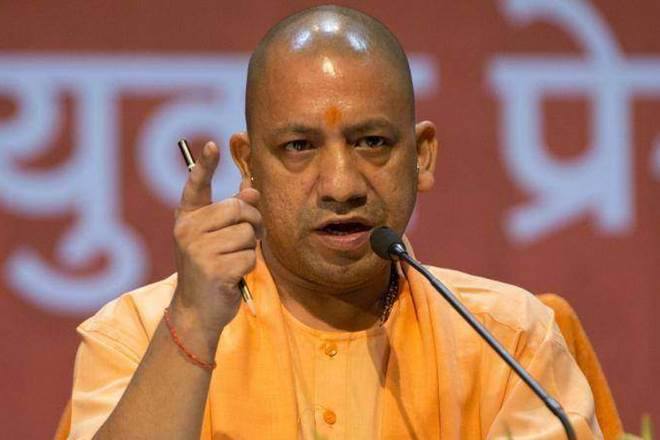
The offence of Sedition occurs under Section 124-A of the Indian Penal Code. Mr. Gandhi had termed this section as “[a] prince among the political sections of [the] Indian Penal Code designed to suppress the liberty of the citizen.”[1] Justice Deepak Gupta had, in a speech delivered in September last year, called for examination of the law of sedition, noting that the law gets misused more often than not. This examination of the use of law, becomes important in the wake of UP Chief-Minister Yogi Adityanath’s statement threatening protesters who chant ‘Azaadi slogans’ with sedition charges, delivered at Kanpur recently.
For a person to be charged under Section 124-A, a person must, by words, either oral or written, signs, visible representation or otherwise, bring or attempt to bring into hatred or contempt, or excite disaffection towards a government established by law in India. Further, this is a ‘cognizable’, ‘non-bailable’ offence, which means that a person charged under this section can be arrested on the basis of a mere FIR and he can’t get bail as a matter of right, and such bail is subject to the discretion of the sessions Judge.
The wording of this section gives a signal to the reader that one can be charged under this law if they bring disaffection, hatred or contempt towards a government established by law in India through words, signs, representations or otherwise. This was the position of this section until Sir Maurice Gwyer CJ of the Federal Court of India in the case of Niharendu Dutt Majumdar v. King Emperor [2]watered this section down to mean not just any abuse but abuse against the Government established by law that incites public disorder or causes reasonable anticipation or likelihood of public disorder.
This interpretation of the Federal Court was adopted by the Supreme Court of India after independence to uphold the constitutionality of this law vis-a-vis Article 19 of the Constitution.
This was a five-judge Constitutional Bench decision of the Supreme Court in the case of Kedar Nath Singh v. State of Bihar (1962)[3]. While holding Section 124-A of the IPC to be constitutionally valid, the Apex Court had remarked that this section will be applicable only to such acts that involve intention or tendency to create disorder or disturbance of law and order situation or incitement to violence and not to legitimate dissents which are protected under Article 19(1)(a) of the Indian Constitution.
The Apex Court had reaffirmed this position, in the 1995 judgement of Balwant Singh v. State of Punjab[4] in which the accused had raised slogans of “Khalistan Zindabad” and “Raj Karega Khalsa”, by ruling that the slogans did not invoke any response from people either of the Sikh community or any other community and hence, without any accompanying act, it did not justify prosecution for sedition and invocation of Section 124-A.
Therefore it is clear that to be charged under this colonial era-law, incitement to violence is essential and anything said, does not matter how outrageous it may sound, if it is not accompanied by violence or reasonable apprehension of violence or public disorder, then this section can’t be applied.
In the NCRB report, the number of sedition cases registered across the country doubled from 35 in 2016 to 70 in 2018. Most cases under this section however, reached nowhere. While the number of sedition cases filed in the past four years since 2015 stood at 191, of which trials were completed in 43 cases. However, the prosecution managed conviction only in four cases. while Fifty-six persons were arrested of which 46 were charge-sheeted. [5]
Hence, this report suggests that while there is an increase in the number of people charged under this section, the conviction rate remains poor, with investigation not being completed and charge sheet not being filed on time in most cases.
This section today is used by the ruling government to change public opinion by slapping sedition on people opposing the government in power, creating a ‘Us v. Them’ narrative in which the ‘Us’ is the government representing the larger State – India and ‘Them’ being anyone who opposes the government or its policies. This gets aided by the presence of a subservient media and IT cells that successfully declare such accused ‘anti-national’ or ‘urban-naxal’ through media trial even before the real trial begins[6].
Further, it is nobody’s case to seek Azaadi from India. The protesters, while chanting ‘Gandhi wali Azaadi’ or ‘Nehru wali Azaadi’ only seek freedom from the ideas that our founding fathers were opposed to. They also seek Azaadi from social evils such as poverty, inequality, casteism, communalism, etc. By threatening to charge the protesters under this law, the Chief Minister of U.P. instills fear in the minds of citizens exercising their Constitutional right and this results in a chilling effect on the protesters’ freedom of speech and expression. Senior Advocate, Rajiv Dhavan goes one step further, and aptly calls such state action, KICKS—K[C]riminal Intimidatory Coercive Knockout Strategies. Or simply, using criminal law for unlawful intimidation or action against a dissenting other.[7]
The misapplication of this law becomes problematic also because the accused put under this section is deprived of his right to life and personal liberty as he is put in prison until a sessions Judge grants him bail, which again, he can’t ask for as a matter of right. While the State may get away from misapplication of this law by fulfilling the due process requirement under Article 21, such action strikes at the heart of liberty and freedom of speech and expression.
To quote Justice Billings Learned Hand, who said, in a famous speech delivered at the height of World War II, “liberty lies in the hearts of men and women; when it dies there, no constitution, no law, no court can save it; no constitution, no law, no court can even do much to help it.”[8]
It is in this endeavour of protecting this spirit of liberty that had emerged from French Revolution, enshrined in the preamble of our Constitution, that we should support the protesters’ right to express themselves by preventing the misuse of such draconian law.
References
[1] https://thewire.in/rights/abolishing-sedition-law-would-be-a-befitting-tribute-to-gandhis-150th-birth-anni versary
[2] AIR 1939 Cal 703
[3] AIR 1962 SC 955
[4] 1994 SCC (2) 30
[5] https://www.deccanherald.com/national/only-4-sedition-cases-saw-conviction-in-4-years-ncrb-793187.
[6] https://scroll.in/article/805353/we-faced-a-trial-by-media-the-umar-khalid-and-anirban-bhattacharya-int erview
[7] https://caravanmagazine.in/vantage/democracy-must-not-distrust-suspect-dissent-disagre e
[8] https://www.indiatoday.in/magazine/cover-story/story/20191118-the-guardians-of-civil-liberty-1616600 -2019-11-08