

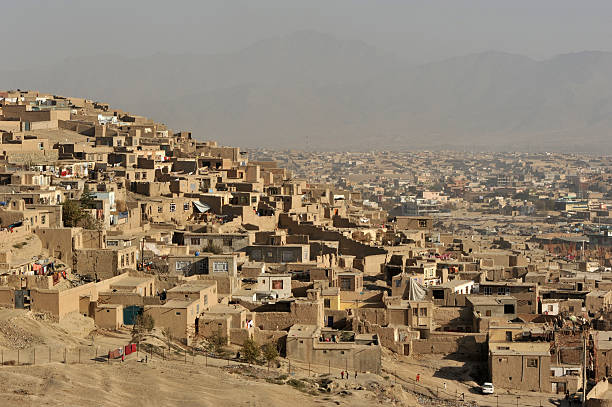
August 15, 2021, marked the end of the 40 years long deadliest war in the world. The new(Taliban 2.0) regime took over Kabul with the whole of Afghanistan under their command. There is no doubt that this was a surprise for the whole world to digest this event. This created panic among the people both inside and outside Afghanistan. As the war troops left the lands of Afghanistan, President Ghai fled from the country.
A council was created to facilitate a peaceful transition to a Taliban government. Then the Taliban government started making policies and imposed some strict rules related to women. Women have to cover themselves and should not go out in public unless they are with their brother or father. Women are not allowed to work in public sectors with men. And girls are not allowed to pursue a secondary school education. Eventually, after some time, this rule was lifted. Now girls can pursue their education completely. But before making their policies public and imposing some strict rules.
The new regime was facing some issues as the U.S and other countries didn’t recognize it as the form of the Taliban government after these rules were imposed in Afghanistan. The United States refused to recognize it as a government and called it a “shameful act” that violated human rights. All these events led to the actions taken by the U.S. and other European countries. They froze $10 billion of Afghan sovereign assets and stopped funding and aid. Sanctions were also cut off.
These actions led to a drastic fall in the Afghan economy. In no time, 98% of the Afghan population will fall below the poverty line. (According to U.N reports). Only humanitarian aid is received in Afghanistan, which is not enough to calm the situation. After the pressure put on by the humanitarian council and other political members of the U.S., the US decided to unfreeze the assets and give only $3.5 billion to Afghan reserves and half of the remaining $3.5 billion to 9/11 families, with the remainder coming from Europe. These unfrozen assets will not bring a significant change in the economy or in the current situation in Afghanistan, but they can ease the Taliban’s burden to some extent. It’s not directly given to the government or the public, but to the reserves of Afghanistan.
It’s really important to understand why and how this worst collapse came into the Afghan economy. Why is hunger in Afghanistan at its peak? And why have nearly a million people lost their jobs, and when are salaries due? The following answers to these questions can help you understand the back and forth of things happening in Afghanistan and can give you a broad idea and a transparent picture of Afghanistan.
As of the early years of the 1980s, 70% of Afghanistan was in poverty. And the major sources of income were agriculture and mining. And they depend highly on imports. Back then, the situation was similar to what it is now. But it has gotten better in the past 20 years. The Islamic Republic of Afghanistan (I.R.A) was elected in the first democratic elections on October 9, 2004, with the help of the U.S., which means it was a U.S.-backed government (basically it was a U.S.-puppet).
This helped Afghanistan to stay dependent on international aid for the past 20 years. which was $4 billion every year (OECD). 75% of government spending was foreign aid, which kept the country running. In total, international aid contributed 40% of Afghanistan’s GDP and 75% of public expenditure. But this government failed to develop or stabilize the country The funds and aid that were received to run the country were misused by the government in the following aspects: the income distribution that became skewed heavily in favor of officials, the military, government contractors, and a small group of elites; extraordinary levels of inadequate civil governance and corruption.
Even in the United States, the Pentagon has spent up to $14 trillion on the 20-year war. 30% to 50% were government contractors. They nearly made $5 trillion out of it. It is shocking to know how some “white” people make millions and billions out of wars. Despite neglecting the facts of these horrific tragedies, children, women, and every event of war. They still make money out of it. Here are some names of government contractors in the U.S. who made billions and millions out of this war. (Robert Stevens-$75 billion, Stephen Orenstein-$5.5 billion, Erik Prince-$2 billion, David Parkowz and Efraik Diverol-$300 million, even the members of Congress of the U.S., etc.) Many are off the list and unknown, and even this war didn’t pay off, either for Afghanistan or for the U.S. to succeed in its mission.
In August 2021, the Taliban assumed power in Afghanistan, with immediate repercussions across an economy already facing daunting development challenges. Rapid reductions in international grant support, loss of access to offshore assets, and financial linkage disruption result in a significant contraction of the economy, increased poverty, and macroeconomic instability.
This led to nearly 900,000 people losing their jobs, and inflation accelerated gradually over the first half of 2021. Energy prices increased by 12% in the first half of the year, in line with global trends. Prices for basic household goods, including food and fuel, There is a disturbance in international trade. The liquidity of both commercial banks and the central bank was substantially eroded in the lead-up to the Taliban takeover, due to a high volume of cash withdrawals from commercial banks and intensified U.S. dollar auctions. Banks that ceased operating or reopened have faced major difficulties in processing international transactions due to the central bank’s restrictions on capital outflows and the reluctance of offshore correspondent banks to engage in transactions due to concerns associated with sanctions with strict limits imposed by the central bank on the withdrawal of U.S. dollars and local currency.
The constrained ability to process international transactions has undermined the formal sector and international trade, with firms unable to transfer funds overseas to pay for imports. Humanitarian aid is not enough to feed the hungry and fulfill their basic needs. The Taliban have to devise new methods and solutions to overcome this crisis and start building the country. They need to develop unique plans so that the country can no longer rely on international funds and aid, which will take time and effort.
Economist Paul Collier (Oxford professor) describes in his book “The Bottom Billion” how countries get rich and why economies are stuck or in poverty traps
1) landlocked trap
2) Conflict trap
3) Resource trap
4) Bad Governance trap.
Can Afghanistan escape from these 4 traps? The answer is likely yes. even though they are an unrecognized government. The Taliban government is trying to negotiate and make ties with other countries. These Taliban, who were known as extremists, are now trying to minimize their extreme thoughts and interpretations in governance They are trying to consider and cooperate with the world.
As the minister of foreign affairs, Abdul Qahar Balhhi. He said in an interview that Afghanistan wants positive relations and engagements, people-to-people, diplomatic and economic engagements to tackle common challenges that are not only affecting them but also wider international communities that are related to Afghanistan. And he further adds that they need time by quoting “Rome was not built in a day,” and expressing how the Taliban envisioned Afghanistan. Afghanistan is a country that serves as an economic corridor between the East and the West, a country of prosperity, and a country that is at peace with itself and the world. They are committed to reconstructing and developing a self-sustaining country. On the other hand, the world wants the Taliban to be genuine about forming an inclusive government.