

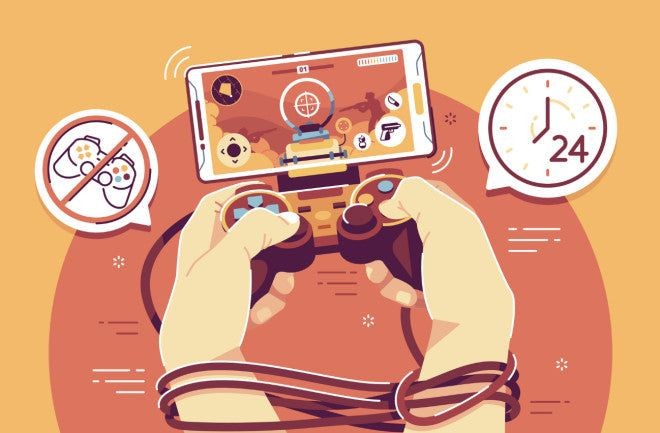
The media plays a crucial role in the development and deterioration of society. While it provides education, training, reform, preaching, and cultural awareness, it also contributes to the decline of faith, beliefs, and moral values.
Evolution of Sports and Gaming
The 21st century has seen numerous changes, and where sports once evoked thoughts of healthy physical activities, technology, and capitalism have altered the concept of sports.
The video gaming industry has existed since the early stages of mobile phones and computers when people would go to PlayStations to play games. As access to computers and mobile phones became widespread, the gaming industry soared. The advent of the internet revolution made home and online gaming more accessible, with the Play Store on Android and Apple offering countless new games for free.
Rise of the Gaming Industry
The gaming industry has now transformed into a mega-industry, comparable to real estate and other sectors, especially with the rise of Massively Online Role-Playing Games (MMORPGs). This transition from offline to online games marked the Era of Convergence, significantly increasing the number of online gamers and fostering addictive behaviors.
In India, particularly during and after the COVID-19 pandemic, the gaming industry’s economic growth has been continuous over the past decade. Some predict that if semi-lockdowns had continued, by 2028, three-quarters of the world’s population would be involved in video games. Alongside the gaming industry, the music, film, and television industries have also become major earners in the current era.
Where television and film once advertised games, the situation has now reversed. Moreover, countries in the Middle East and North Africa (MENA) have been investing in e-gaming companies, creating new games, advancing and promoting existing ones, and generating job opportunities.
The MENA region is increasingly incorporating data analytics and artificial intelligence (AI) in e-gaming to analyze player behavior, enhance gaming experiences, personalize content, and detect cheating or fraudulent activities. AI-powered chatbots and virtual assistants are becoming popular for resolving players’ queries and providing real-time assistance, enhancing engagement and satisfaction, and contributing to the industry’s competitiveness.
Psychological and Social Effects of Gaming
Modern games often convey imaginative environments, positive ideals, and emotions, directly influencing players’ psychology. However, the World Health Organization (WHO) has linked digital games to mental health disorders, coining the term “Gaming Disorder” to describe a condition where gaming behavior significantly impacts a person’s life. This can lead to issues like loss of contact with family and society, time mismanagement, irritability, and sleep disturbances.
Violent action games have affected children’s thoughts and perspectives, contributing to intolerance and the normalization of crime. These games can lead children to attempt criminal behavior, such as disobeying traffic signals, committing theft, vandalizing property, and engaging in fights, which they may perceive as acts of pride. Such games often promote negative behaviors like smoking, drug use, theft, obscenity, materialism, and the rejection of non-Islamic culture, contributing to societal decay.
Interactive media is used for both constructive and destructive purposes internationally. Video games are being utilized as effective tools for brainwashing, damaging the image of opposing nations, spreading obscenity and nudity, and destroying the moral fabric of societies. They create divisions among individuals and distract from real issues, showcasing the negative role of some Western media companies.
Islamic Perspective on Gaming
From an Islamic perspective, online gaming can be viewed through three human perspectives:
- excessive selfishness,
- negligence, and
- the pursuit of evil desires.
“Yet no sooner than they saw some trading or amusement, they flocked to it and left you standing by yourself. Tell them: “That which is with Allah is far better than amusement and trading. Allah is the Best Provider of sustenance.’ ” (Qur’an, 62:11)
Allah Almighty knows all aspects of human life, and these tools can deceive people and make them heedless of Allah’s commands. Prioritizing trade (sports and gambling) and its profits can lead to a significant loss, though people may not realize it.
“So serve, apart from Him, whomsoever you please.” Say: “Behold, the real losers shall be those who will have lost their own selves and their kith and kin on the Day of Resurrection. Behold, that is the obvious loss.” (Qur’an, 39:15)
This verse clearly states that addiction likens a person to the object of their addiction, as they invest a significant part of their soul in it. Online gamers often prioritize their addiction over fulfilling divine commandments, straying from Allah’s path and neglecting their souls.
Allah Almighty has said in the Qur’an:
“The present life is nothing but sport and amusement. The true life is in the Abode of the Hereafter; if only they knew.” (Qur’an, 29:64)
Indeed, the Hereafter is the eternal life.
Online gaming enthusiasts perceive the virtual world as real and become engrossed in it, viewing worldly life through a materialistic lens. They consider this attractive and admirable, elevating their status.
“People simply know the outward aspect of the worldly life but are utterly heedless of the Hereafter.” (Qur’an, 30:7)
Neglecting Allah’s command leads people to seek only material benefits, making them heedless of the true life in the Hereafter.
“And certainly We have created for Hell many of the jinn and mankind; they have hearts with which they fail to understand; and they have eyes with which they fail to see; and they have ears with which they fail to hear. They are like cattle – indeed, even more astray. Such are utterly heedless.” (Qur’an, 7:179)
Online gaming addicts fail to restrain themselves, becoming excessively engrossed and seeking praise and approval from others.
“Keep yourself content with those who call upon their Lord, morning and evening, seeking His pleasure, and do not let your eyes pass beyond them. Do you seek the pomp and glitter of the world? Do not follow him whose heart We have caused to be heedless of Our remembrance, and who follows his desires, and whose attitude is of excess.” (Qur’an, 18:28)
The Quran reminds us of Allah’s greatness and warns against degradation.
“O people, assuredly Allah’s promise is true. So let the life of the world not delude you, and let not the Deluder delude you concerning Allah.” (Qur’an, 35:5)
Analyzing these circumstances reveals that humanity in general, and the Muslim Ummah in particular, are facing increasing losses:
- Lack of character building (bravery, hard work, perseverance, etc.)
- Lack of respect for humanity (mocking, criticizing, taunting, etc.), turning someone’s dignity into a source of entertainment
- The purpose of promoting virtue (enjoining good and forbidding evil, spreading truth and honesty) has been lost
- The protection of private life has lost its significance
This long-term addiction is particularly conflicting for Muslims, as it wastes time on purposeless activities and leads them away from observing Islamic laws and divine boundaries, making them heedless of Allah’s remembrance.
“Every action in which Allah’s remembrance is absent is either futile or a cause of heedlessness, except for four actions: walking between the two marks (in archery), training a horse, playing with one’s family, and learning to swim.” (Sunan al-Nasa’i, Hadith 303:5)
Promoting Positive Alternatives and Social Responsibility
Social groups, Muslim communities, parents, teachers, and responsible citizens must protect children and youth from this turmoil and guide their social discipline, psychological development, and emotional upbringing. They should make them aware of the purpose of life, educate them about social respect, issues, and rights, enlighten them about balanced nutrition and health, engage them in purposeful physical and mental activities, and clarify Islamic and scientific perspectives on health preservation and sports. They should use the language of understanding and comprehension instead of religious decrees to foster a religious temperament.
Additionally, there is a need to launch campaigns against e-games that are becoming a silent killer of society’s health. Alternative games should be developed that are free from addiction, integrating features that help children learn social ethics and values and assist in learning genuine scientific, technical, and artistic disciplines.
The above article was translated by Afzal Malik from Rafeeq-e-Manzil, an Urdu monthly magazine primarily focused on engaging with students. (visit: https://rafeeqemanzil.com/ )