

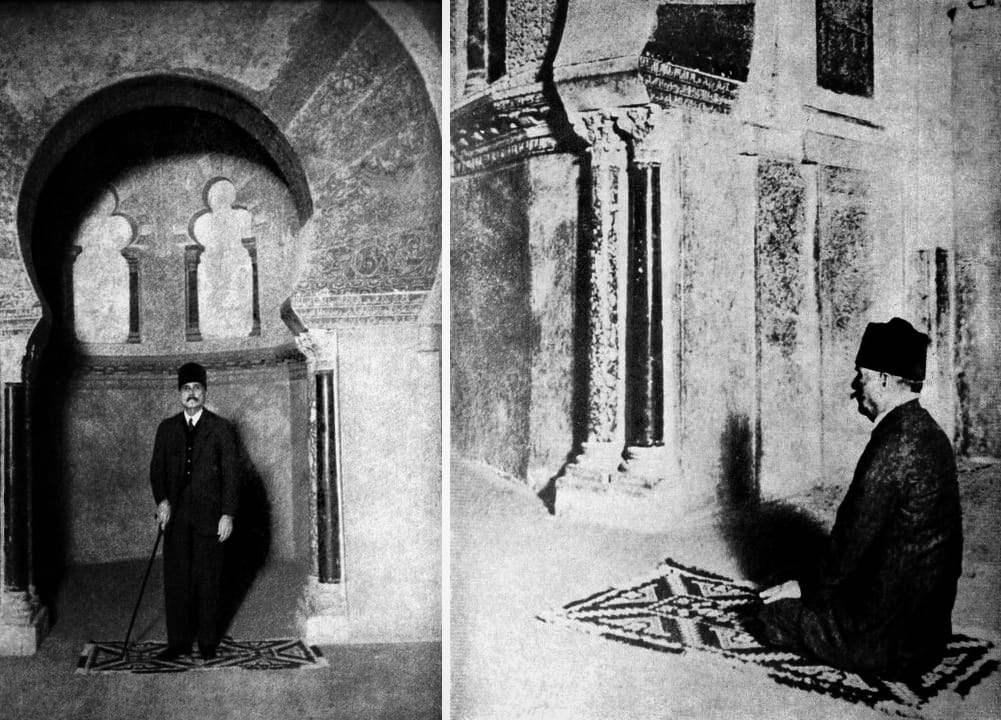
Allama Muhammad Iqbal is a prominent thinker, poet, and philosopher of the modern era. He embodies intellectual, spiritual, social, political, and ethical sensibilities. While maintaining a connection to traditional values, Iqbal paved a creative path in poetry, addressing both personal emotional conflicts and broader individual and social issues. His poetry reflects deep philosophical insights into human existence and life’s purpose, aiming to awaken and inspire humanity toward higher ideals.
Background
Muhammad Iqbal was born on November 9, 1877, in Sialkot. His father, Sheikh Noor Muhammad, was a merchant by profession. Iqbal’s ancestors were originally Kashmiri Pandits who later converted to Islam. They eventually settled in Sialkot for trade, where Iqbal was born and raised.
Early Education and Teachers
By the late 19th century, Christian missionary schools were established across major cities in India, and Iqbal was enrolled in one such missionary school in Sialkot. In addition to formal education, Iqbal’s intellectual development was significantly shaped by Maulvi Mir Hasan, who mentored him in traditional Islamic scholarship. Another influential figure was the British Orientalist Thomas Arnold, who cultivated Iqbal’s interest in modern philosophy and education.
Iqbal’s Intellectual Foundation: Poet and Philosopher
Iqbal’s legacy can be explored through two major dimensions:
• Iqbal as a Poet
• Iqbal as a Philosopher
- Iqbal as a Poet: Iqbal occupies a central place in Urdu poetry, much like the heart that keeps the body alive. A key trait of a successful individual, according to Iqbal, is dynamism and continuous movement. His poetry, particularly in the early phase, reflects a national and universal outlook. However, after his exposure to European modern education, Iqbal’s worldview shifted—he transcended the confines of nationalism, embracing a broader universalism alongside a sense of Muslim solidarity. His poetry, especially aimed at the youth, employs metaphors like ‘khudi’ (selfhood) and ‘shaheen’ (falcon) to awaken young minds. His goal was to empower the youth of oppressed nations, particularly Muslims, to break free from mental slavery.
Iqbal’s philosophy of khudi is so profound that it has been the subject of extensive scholarly research.
- Iqbal as a Philosopher: Though Iqbal’s poetry is infused with philosophical thought, his core philosophical ideas are encapsulated in his lectures later published as The Reconstruction of Religious Thought in Islam. This seminal work consists of seven lectures, addressing the revival of Islamic thought with the aim of reforming Muslim societies and promoting intellectual awakening. Delivered in English, these lectures were later translated into Urdu by Nazir Niazi.Iqbal was invited to deliver these lectures by the Madras Muslim Association in 1929. Out of the seven, three were presented in Madras and three in Aligarh, with subsequent presentations in Mysore and Hyderabad. His seventh and final lecture, titled “Is Religion Possible?”, was delivered in 1932 at the Aristotelian Society in London during the Third Round Table Conference. This lecture left a profound impression on intellectual circles in England, leading to its publication by Oxford University Press.
A Gist of Iqbal’s Lectures
Iqbal’s lectures delve into multiple dimensions of religion, philosophy, and social transformation. Below is a brief overview of the key themes:
1-Knowledge and Religious Experience:
Explores the nature of the universe, humanity’s relationship with it, and the duties that arise from this relationship.
2-The Philosophical Standards of Religious Experience:
Discusses the philosophical dimensions of revelation, arguing that religious experiences rooted in revelation and observation align with reason.
3-The Concept of God and the Reality of Prayer:
Engages in philosophical discussions on the existence of God, the significance of prayer, and its underlying reality.
4-The Self, Free Will, and Life After Death:
Emphasizes the positive aspect of khudi, noting that a negative self can be destructive. Social justice and the recognition of others’ rights are essential to nurturing a healthy self.
5-The Spirit of Islamic Culture:
Asserts that Tawhid (monotheism) forms the essence of Islamic culture, shaping both individual and collective life.
6-Ijtihad (Efforts made for Interpretation) in Islam:
Highlights the dynamic nature of Islam, stressing the need for reinterpretation of Islamic principles in light of contemporary challenges. It calls for resolving modern issues through Islamic teachings while remaining faithful to core values.
7-Is Religion Possible?
At a time when material progress in the West had reached its zenith, skepticism and atheism were prevalent. Iqbal, through his philosophical insights, argued for the relevance of religion, asserting that without religion, human life remains incomplete.
Iqbal’s lectures, though philosophical, carry significant practical implications and were, therefore, delivered primarily in intellectual forums. Their language reflects deep academic rigor and profound thought.
Prominent Commentators on Iqbal’s Philosophy
Two eminent scholars have provided significant commentary on Iqbal’s philosophical works:
Annemarie Schimmel
A renowned German orientalist, Schimmel spent much of her career studying the cultures of the Indian subcontinent. Her scholarship on Iqbal and the Mughal period is considered highly authoritative.
Seyyed Hossein Nasr
An Iranian-American philosopher, Nasr is widely recognized for his work on Islamic thought and has offered profound insights into Iqbal’s philosophy.
Both Schimmel and Nasr have compared Iqbal’s work to Al-Ghazali’s masterpiece Ihya Ulum al-Din, acknowledging the intellectual parity between the two.
Conclusion:
To understand the essence of Iqbal’s thought, one must engage with both his poetry and his philosophical lectures. However, his magnum opus, The Reconstruction of Religious Thought in Islam, holds special importance. Without studying this work, a complete comprehension of Iqbal’s ideas remains elusive.