

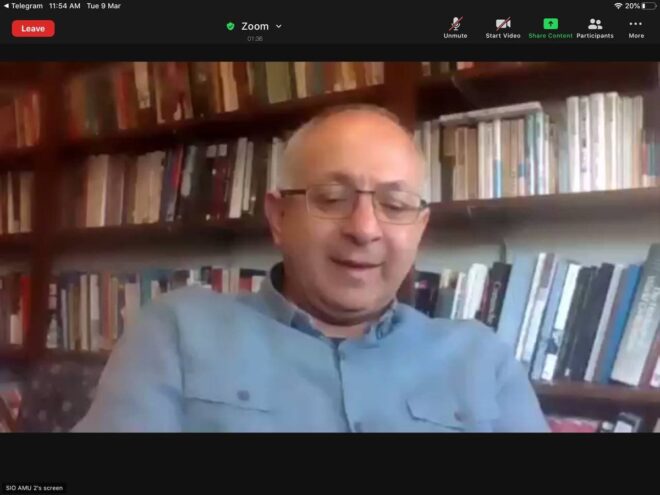
Jamia Millia Islamia, a prominent central university with a distinct Muslim character, is facing a critical juncture. Struggling under the governmental crackdown, the university’s autonomy and future are in question after the recent appointment of a new Vice-Chancellor, just four months ago. The new Vice-Chancellor, Mr. Mazhar Asif, originally from Bihar and a former professor of Persian language at JNU, has been alleged to have exacerbated the concerns of the minority institution. Critics as well as student leaders allege that the VC acts as a puppet of the central government, employing dictatorial tactics that have brought the university to its knees. This perceived control from the center raises fears about the erosion of JMI’s unique identity and its ability to function as an independent institution.

(Photo Credits: jmi.ac.in)
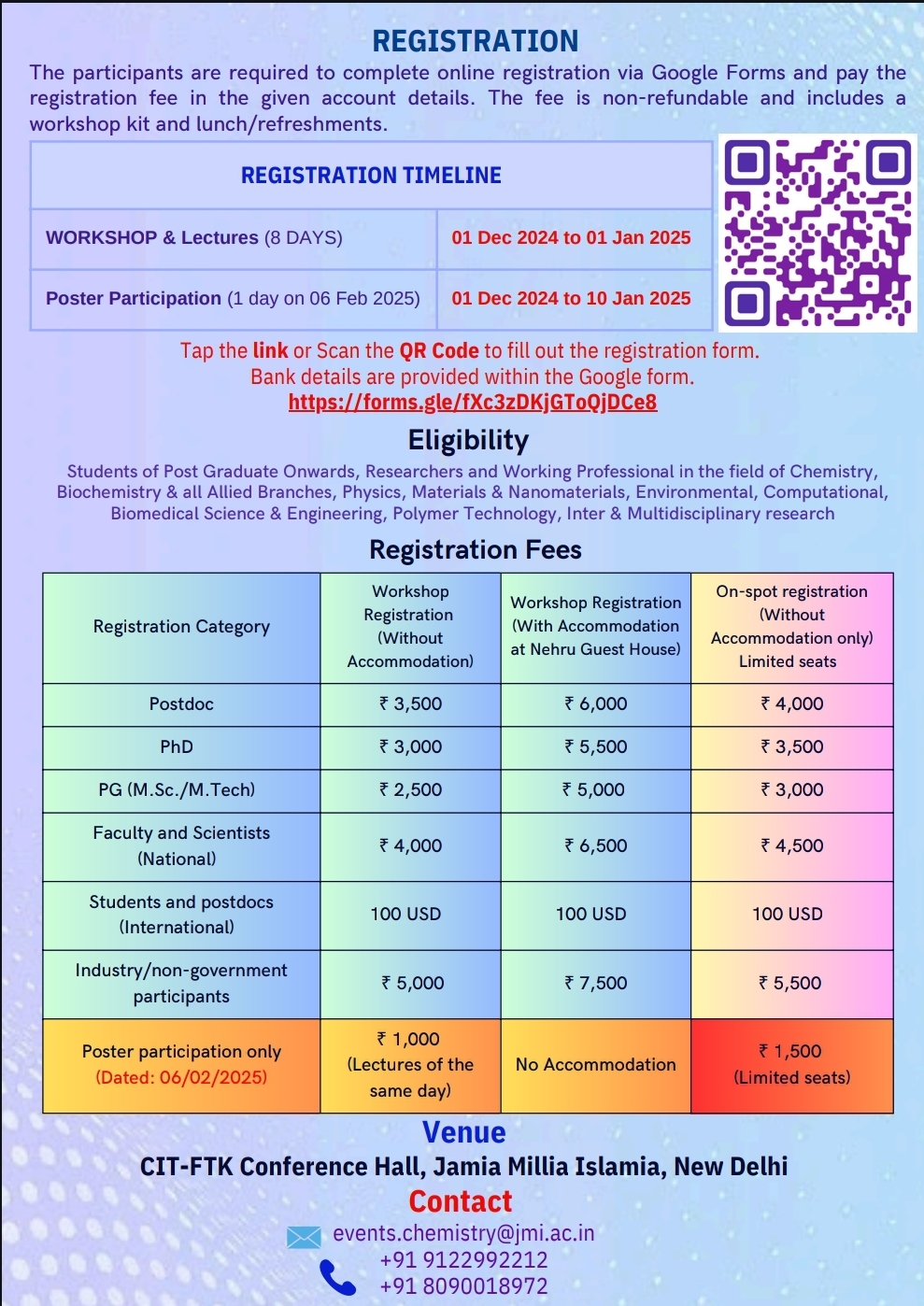
Jamia has shifted from a place of open inquiry to one where critical thought is stifled. The once vibrant intellectual climate at Jamia has been replaced by one of suppression. Departments reportedly self-censor, avoiding programs that might invite scrutiny from higher authorities. Critical voices are conspicuously absent from departmental programming, which favors speakers aligned with the government or those who maintain a neutral stance. Apart from this, the budget cuts of JMI have led to key academic events being alternatively funded through collaborations or via student (registration) fees, placing a financial burden on students, many of whom come from disadvantaged backgrounds.
(Photo Credits: jmi.ac.in)
Another concern in Jamia is the student organizations, which face significant obstacles in organizing their own events. Permissions are frequently denied, and even informal gatherings, such as in lawns or tea points for educational or recreational purposes are dispersed by security, citing a prohibition on assemblies of five or more people (considered as unlawful assembly). This restriction on independent student activity stands in stark contrast to the administration’s own programming, including events like the one organized by the Sanskrit department in collaboration with YUVA—an organization based on Hindutva ideology—on ‘Mahakumbh’ dated 11th February 2025. The university’s apparent embrace of such groups to host such programs within the campus raises concerns about the institution’s direction.
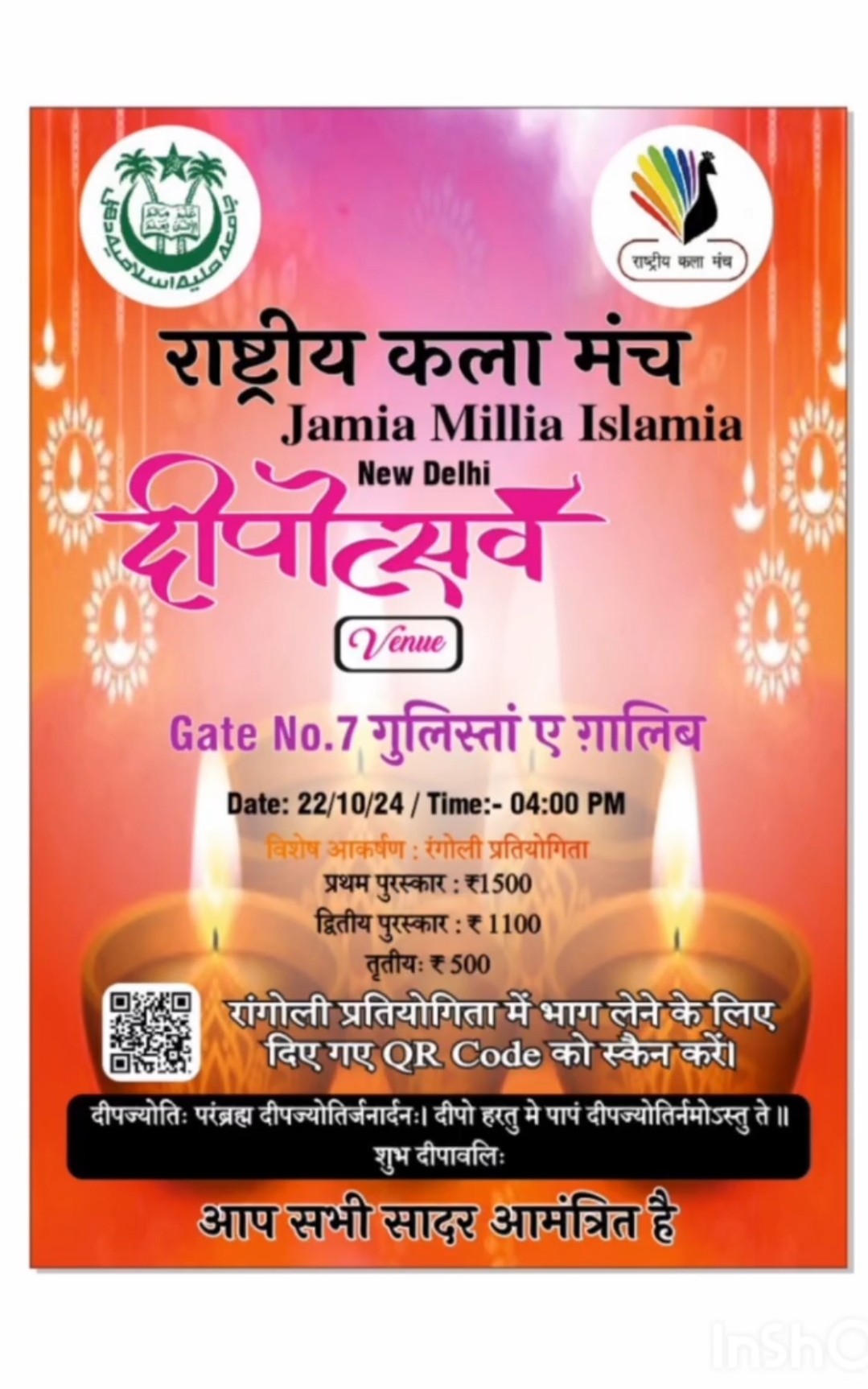
The influence of Hindutva groups, particularly the ABVP, has grown significantly under the current administration, raising serious concerns. ABVP cadres are alleged to actively monitor protests, passing information about participants directly to the administration, which then initiates targeted crackdowns. Beyond this nexus between the administration and the ABVP, these groups are granted unusual leeway in organizing events on campus, as cited above. Another event, which also landed into a controversy (though organized just before the appointment of Mr. Asif), was YUVA’s Diwali celebrations in 2024. YUVA was granted permission to hold a Diwali celebration near Gate 7, JMI with minimal scrutiny, in stark contrast to the difficulties faced by other student organizations in organizing events. The event, aimed to light 1000 diyas and featured prominent ABVP leaders such as Harsh Attri, Ram Kumar & Bhanu Pratap Singh (all out-siders) extended beyond the permitted time, culminating in a scuffle. The administration’s apparent oversight in allowing a Hindutva-affiliate group—unlike the left organizations who had been peacefully organizing Diwali celebrations earlier, allowing outsiders onto campus and failing to enforce time constraints raises questions about their commitment to impartial event management. Furthermore, JMI’s Badminton Championships 2025 organized at the Jamia’s Sports Complex under the aegis of “Khelo Bharat” is nevertheless an extension of ABVP’s nationwide initiative—Khelo Bharat—and underscores the extent to which these groups are now officially partnered with the Jamia administration, suggesting a clear endorsement of the Hindutva agenda and a troubling erosion of the university’s secular ethos.
(Photo Credits: YUVA Jamia, Instagram)
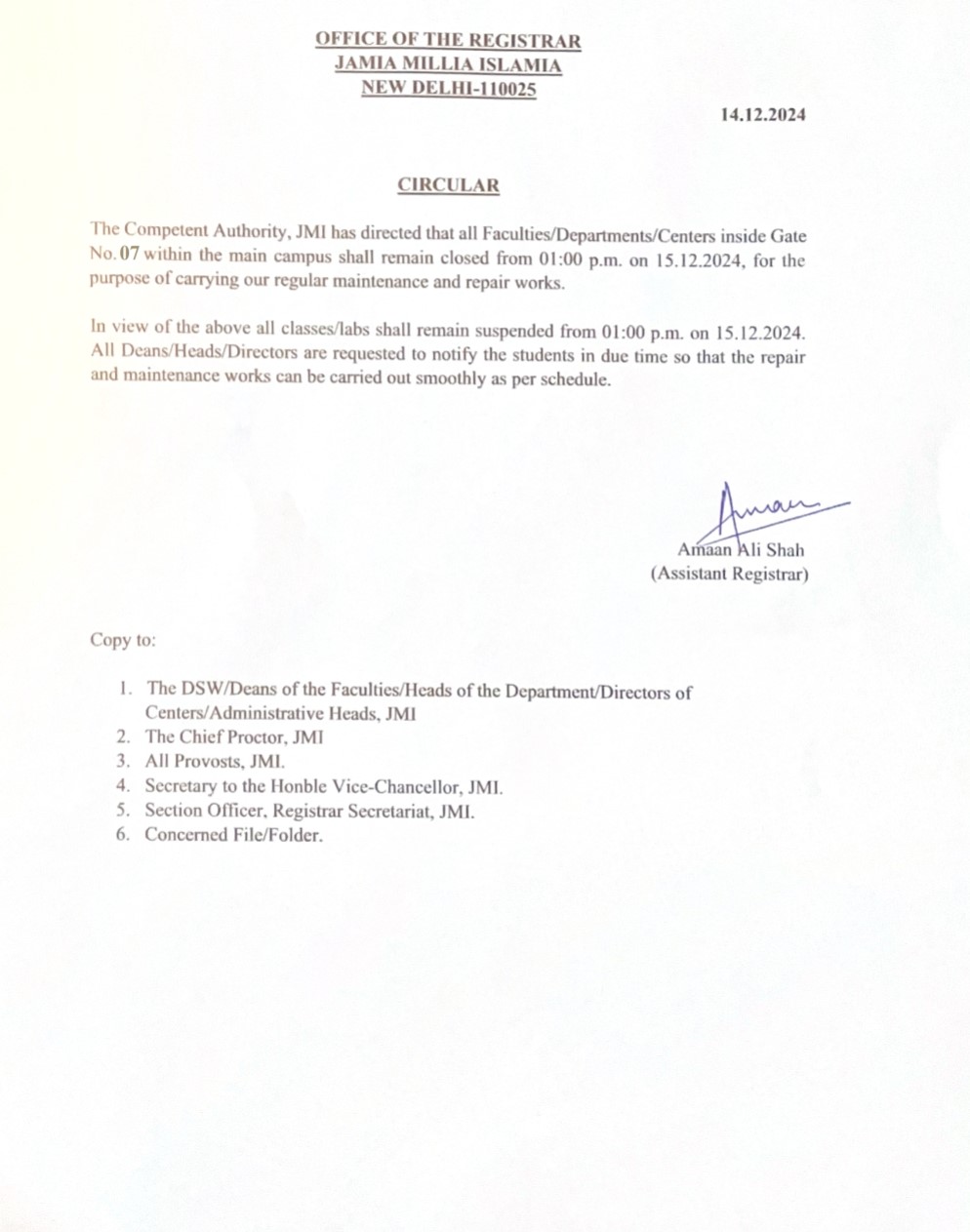
The new VC’s aversion to dissent has created a climate of fear and repression within Jamia. Protests, even small ones, are met with disproportionate force. Students allege constant surveillance, with the Proctor’s Office recording demonstrations and subsequently targeting participants through departmental warnings that carry implicit threats to their academic standing. The routine presence of Delhi Police, often in overwhelming numbers even when protests are peaceful, raises questions about the administration’s motives. Attempts to stifle dissent have become increasingly blatant, as evidenced by the university’s unprecedented closure on December 15th, 2024, ostensibly for ‘maintenance’, but widely understood as a preemptive measure to prevent commemorations of the 2019 Delhi Police violence in Jamia. Even expressions of solidarity with Palestine have been met with harsh reprisals.
(Photo Credits: jmi.ac.in)
More recently, students involved in a sit-in protest from 10th Feb 2025 were detained by Delhi Police in the early morning of 13th Feb, with the complicity of the Jamia administration, and held incommunicado. Their subsequent suspension by the University, coupled with the public posting of their personal information— including photos, contact details, and academic details—constitutes a gross violation of privacy and an act of intimidation. This heavy-handed approach, combined with the increased militarization of the campus, where ID cards are mandatory and surveillance is pervasive, paints a picture of a university less concerned with fostering intellectual discourse and more focused on suppressing any form of opposition.
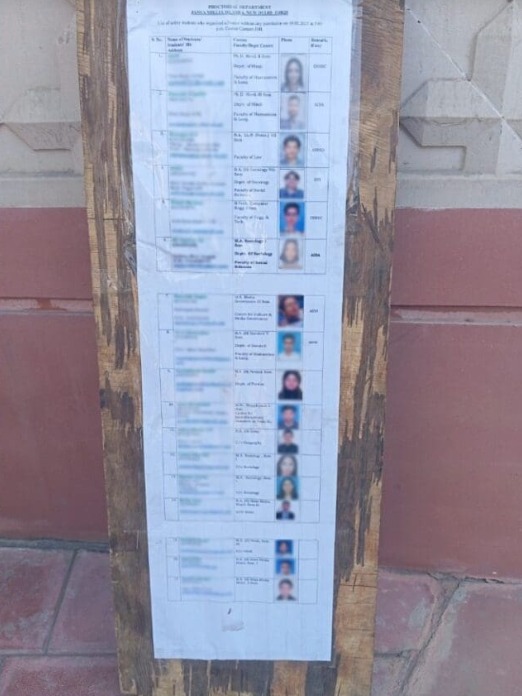
While regional tensions have long existed within Jamia, the current administration’s apparent indifference, and even tacit encouragement, has exacerbated these divisions, leading to disturbing incidents of violence and intimidation. The February 12th incident serves as a stark example. What began as a minor altercation between students and security guards escalated into a large-scale brawl, fueled by the intervention of a group of Mewati students. These students, known for their alleged loyalty to the administration, forcefully dispersed the crowd, sparking a prolonged and violent confrontation. This incident, along with others, suggests that the administration may be exploiting these regional divisions for its own purposes. The perception among students is that the Mewati group is deliberately cultivated to serve the administration’s interests, acting as a tool to quell dissent and disrupt opposing viewpoints. The conspicuous absence of any meaningful intervention by university security during such outbreaks further fuels suspicions of complicity, raising questions about the administration’s role in maintaining order and protecting its students.
Furthermore, the administration’s handling of dissent has been marked by what appears to be disingenuous claims. Following the controversy surrounding the posting of protestors’ personal information, the administration attributed the act to “miscreants,” denying any involvement of the Proctorial Office. This explanation is difficult to reconcile with the frequent reports of student activists and their parents being contacted by Delhi Police, suggesting a potential link between the administration (Proctor’s Office) and the sharing of student data. Additionally, lodging FIRs against politically active students with allegations of university disruption and property damage (during peaceful protests) raises concerns that legitimate dissent is being criminalized.
The Vice-Chancellor’s influence extends beyond mere policy, permeating the very structure of the university. The appointment of Mr. Naved Jamal, also from Bihar, as the new Chief Proctor, is considerable evidence of regional favoritism overriding administrative competence—given his performance earlier. While Jamal’s handling of administrative matters has been questioned, his perceived loyalty to the VC appears to secure his position. This pattern of preferential appointments extends beyond the Proctorial team to faculty and other staff, suggesting a calculated effort to cultivate a ‘compliant ecosystem’. The creation of a new Security Advisor position in December 2024, reporting directly to the VC and overseeing all security matters, further consolidates power in the VC’s hands. The subsequent appointment of Syed Abdul Rashid, a retired Additional DCP from Delhi Police, to this role reinforces concerns about the increasing centralization of control and the suppression of dissenting voices within the university
Mirroring the broader political strategies of Prime Minister Narendra Modi—where populism and religious symbolism are deftly manipulated for personal and ideological gains—the newly appointed Vice-Chancellor appears to be charting a similar course within the university. His tenure has seen a calculated blend of appeasement and symbolic gestures, aimed at consolidating his authority while neutralizing dissent. His name is affixed to every program organized at Jamia, a constant reminder of his authority and a tacit requirement for his blessing (regardless of his actual presence). A striking example of his symbolism is his now-widely-circulated image at Dr. Zakir Hussain’s Mausoleum, coinciding with the student sit-in protest demanding administrative accountability. The performative nature of this act, wherein he can be seen reciting the Qur’an, exemplifies a growing trend in which public displays of religiosity serve as tools of political legitimacy. His penchant for selectively quoting Qur’anic verses and peppering conferences and programs with Shayari (Urdu poetic verses) serves less as a genuine expression of faith or intellectualism, and more as a calculated tactic to cultivate a specific image and advance his own agenda.
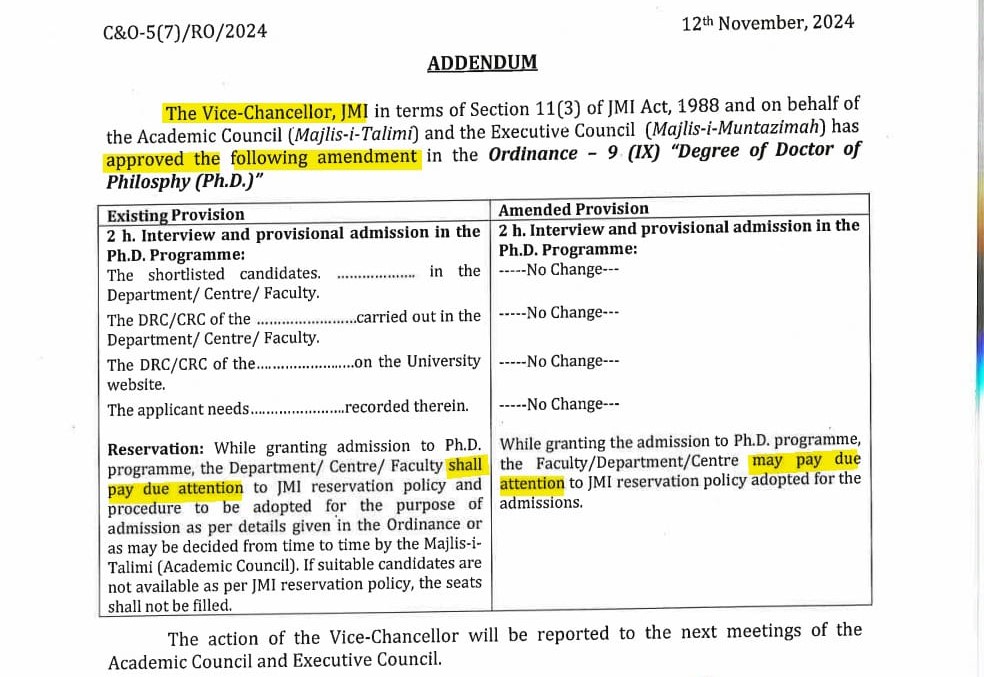
Under Mr. Asif’s administration, a pattern of disregard for Jamia’s own regulations and a troubling rise in deceptive practices has emerged. Ordinance VI (6), concerning reservations during admissions, mandates specific percentages for Muslim, Muslim women, and OBC/ST Muslim students. However, the 2025 Ph.D. admission process appears to deviate from these guidelines, as an Ordinance pertaining to the Ph.D Ordinance (Ordinance IX, Clause ‘h’—read in adherence with Ordinance VI) has been amended silently, diluting the doctoral seats’ reservation policy. The lists of provisionally selected students have no mention of their selection categories (quotas under which selection has been made)—as, only a cumulative list of selected candidates is released, and observations suggest that a significant number of admitted students may not be from minority groups, raising concerns about the adherence to 50% minority reservation policies.
(Credits: jmi.ac.in)
A pervasive sense of disillusionment has gripped Jamia’s faculty members. Driven by fear of repercussions, including denial of promotions or key positions, a significant portion of the faculty appears to have succumbed to uncritical obedience to the Vice-Chancellor’s agenda. It was seen in several departments that the faculty—given the call for a mass boycott of classes due to lodging of FIRs against university students—were reporting the administration about the conduction of classes (as usual) and the efforts by faculty towards the reversal of dissent through classes despite minimal attendance. This atmosphere of fear extends to students, who are cautioned by the ‘conforming faculty’ against expressing critical views—citing the ‘Muslim identity’ of the expresser, further eroding trust in the faculty and discouraging active engagement in campus life. While a few faculty members have reportedly encouraged student involvement in co-curricular activities and student activism, their numbers are dwindling, as they too become apprehensive of the VC’s increasingly authoritarian approach. The absence of a functional teacher’s union further silences dissenting voices within the faculty. Even those with reservations about the current state of affairs seem to have lost hope of effectively raising their concerns, leaving students feeling abandoned and disillusioned by the very individuals they should be able to rely on for guidance and support.
In just four short months, the new Vice-Chancellor’s tenure at Jamia has demonstrably served the interests of those who appointed him, but at a devastating cost to the university itself. His actions represent a profound betrayal of Jamia’s legacy as a crucible of intellectual discourse and a beacon of hope for Indian minorities. The systematic dismantling of institutional autonomy, the suppression of dissent, the erosion of academic justice and freedom, and the manipulation of communal tensions represent a grave threat to the very soul of the university. Jamia, a “dayar-e-shauq”, a place where the aspirations of minority students are nurtured, now finds itself in dire need of public intervention. This is not merely an internal matter; the decline of Jamia is a loss for all of India. It is a disservice to the vision of its founders and a chilling reminder of the fragility of academic freedom in the face of political expediency. Concerned citizens across the nation must recognize the gravity of this situation and raise their voices in defense of Jamia, lest this vital institution, and the values it represents, be irrevocably lost.