

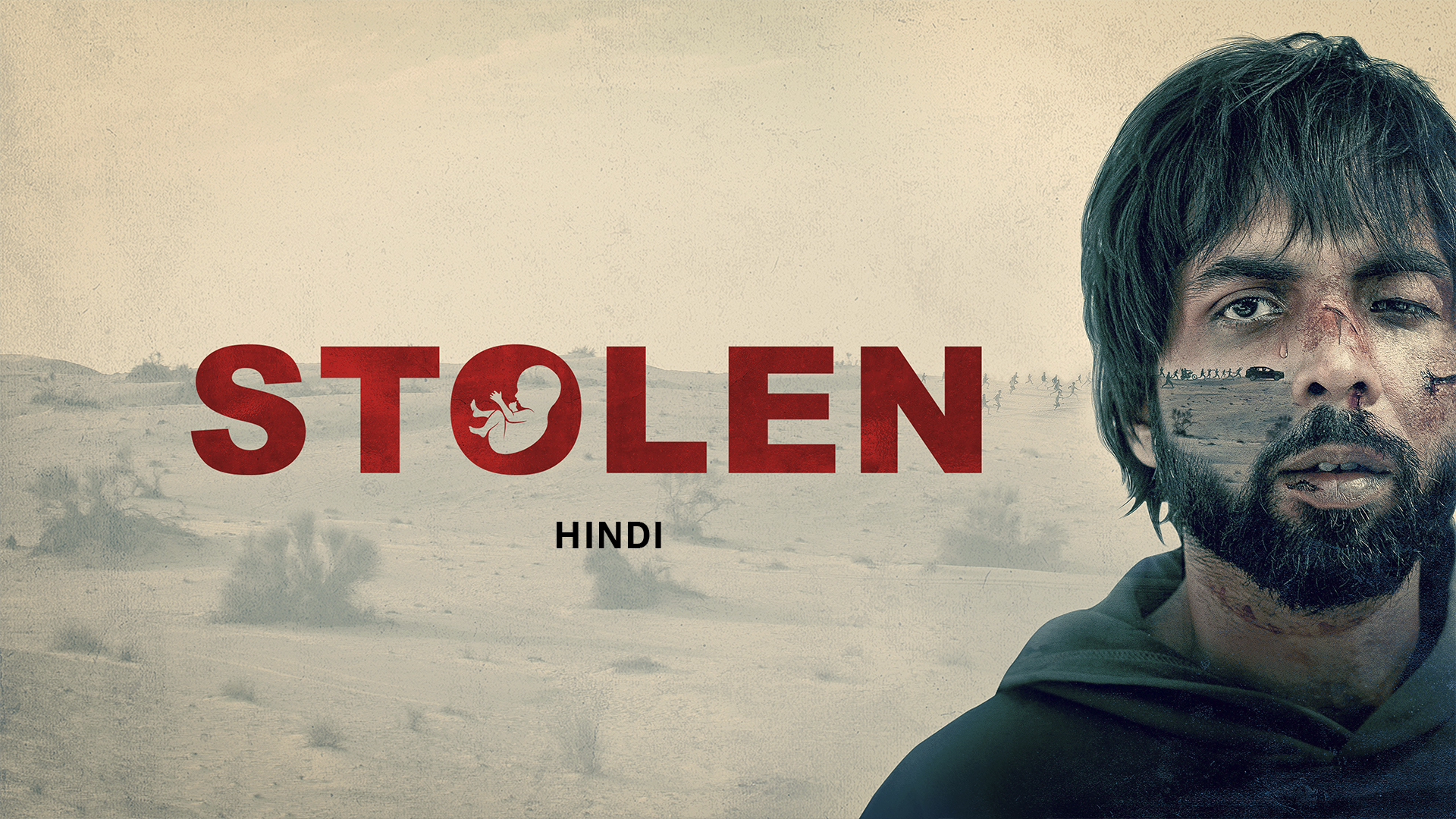
The question is pertinent in today’s India: has it become a rare business to avoid bloodthirsty mobs and the altar of misinformation and hate crime? Unfortunately, the possibility is not so rare. Karan Tejpal’s “Stolen,” his directorial debut, masterfully crafts a haunting story of mob lynching.
The movie’s dark themes of theft, violence, and inequality are set against a backdrop of uncertainty. Despite its short runtime of 93 minutes, the film’s razor-sharp plot lingers long after it ends. The movie catapults us into a survival mode where chaos invades our intimate spaces, and a video clip can unleash unknown forces.
An incident far from home can jeopardize one’s family, regardless of class or background; each attempt to solve or escape leads to a complex situation. The story begins with a kidnapping case at a railway station in North Central India, where a newborn is taken.
Raman, a photographer, disembarks from a train to attend his mother’s wedding, only to be accused by Jhumpa, a tribal woman, of stealing her baby. Despite realizing his innocence, the situation escalates. Raman’s brother Gautam, a businessman, tries to intervene, but Raman’s empathetic response to Jhumpa’s loss sets them on a darker path.
The two policemen, initially reluctant to pursue the case due to Jhumpa’s background, are pushed to action by Raman’s stern gesture. The brothers’ differing reactions to the situation – Raman’s idealism vs. Gautam’s pragmatism – drive the plot forward.
Exploring the Scene outside it
The movie explores the daunting question of disparity, the law and order system, but more subtly, it captures the frenzied mob riding and chasing the culprit with the batons and the “cluttered truth” they hold against Jhumpa and the two brothers. The abrupt chaos and embezzlement of justice by mobs represent a very real contemporary India, raising urgent questions about India’s social life. The cow vigilants and the cases of Dalit and Muslim atrocities, often fueled by fake news and misinformation, are a pressing concern.
From Junaid and Pehlu to recent lynchings in Aligarh, these incidents should haunt our conscience and prompt us to address the depiction of similar cases of violence. Why have these lynchings not been brought to an end? It’s not just due to systemic malfunctioning; there’s also a lack of effort to discourage the tendency to take justice into one’s own hands, bypassing the legal norm of “innocent until proven guilty,” which has proven to be a lengthy and far-reaching process for justice seekers. What has contributed to this growing impatience?
Quick Fix is not the Solution
Whether a frenzied mob or an individual from the upper class tries to fix the problem swiftly, both often circumvent the law and order system. Meanwhile, marginalized communities wait for justice, but what if justice is compromised or stolen along the way? The movie highlights Jhumpa’s struggle, a tribal woman, to secure herself against social biases that permeate even institutions where they should be absent.
The social embeddedness of bureaucrats, law enforcement officials, and police department personnel can influence their stance on cases if not properly addressed, potentially leading to biased decision-making.
Rippled Effect of Digitisation
The video recording of the post-crime incident at the railway station had an adverse effect on Jhumpa and the two brothers, who were presumed guilty by the crowd that pursued them to a remote location in northern India.
It depicted a dark side of the developing country of ours, where India’s way to fasten itself up with digitisation has unleashed a diverse effect on its massive population living in utter disparity. Given India’s vast size and diversity, the intensified media communication has fueled social categorization, making it challenging to seek nuanced truths. Instead, individuals often form their own versions of reality, which can lead to unpredictable responses to crime. A video clip with slight editing can easily distort reality, turning victims into culprits and vice versa.
It’s just a Film?
The movie plot is uniquely crafted with an original and innovative thriller script, yet it paradoxically remains both noticed and unnoticed. The entertainment industry and its various media have numbed us to the point where we often struggle to distinguish between fake and genuine stories. Rarely do we question the content offered by social media platforms, which can range from casual prank reels and AI-generated videos to intimate and active information.
Unhealthy consumption of these media has a topsy-turvy effect, disconnecting our sensibilities from the right context and priorities, and disturbing our conviviality with our natural ecosystem. Despite lacking conspicuous action scenes, the movie is nail-biting as it unfolds the multifaceted dimensions of corruption, whether in a remote medical clinic or in recent human inventions and advancements.
The movie’s ending brings a sigh of relief for viewers, but in real-life cases of violence, such narrow escapes are often a privilege. Junaid, Pehlu, and others didn’t have the luxury of time to manage their situations; they were caught off guard and thrown into the altar of mob rule in this age of anger. Abhishek Bannerjee’s character, Gautam, develops in parallel with the pursuit of the vengeful mob, driven by the idealism of his younger brother, Raman Bansal, who is moved by Jhumpa’s loss..