

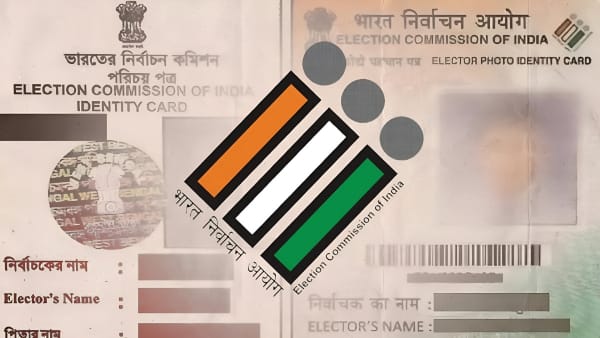
A bureaucratic clause buried deep within a government notification has become a flashpoint in India’s political theatre. In Bihar, often dubbed the rehearsal stage of Indian democracy, a fresh revision of the voter list, the first in two decades, has triggered protests, petitions, and unease.
At the heart of the controversy is Clause 5(b) of the Election Commission’s Special Intensive Revision (SIR) guidelines, which allows officials to mark individuals as “doubtful voters.” On paper, this sounds procedural. But for many at society’s margins, migrants, the poor, the landless, it doesn’t feel bureaucratic; it feels existential. It isn’t just a revision. It’s a test of belonging.
This is not just about documentation. It is a live conflict at the intersection of governance and everyday survival. As Hungarian playwright Lajos Egri once said, “Conflict is the heartbeat of drama.” Perhaps democracy, too, thrives on such tensions, not to break, but to evolve. But not to the point where common sense disappears, and the people democracy serves are asked to prove they exist.
In India’s political drama, the Constitution is the premise. It tells us every citizen matters. That rights to justice, liberty, equality, and fraternity are not mere poetics, they are promises. But when the voter list revision demands obscure documents and disregards widely held IDs like Aadhaar or ration cards, that premise begins to crack. Suddenly, equality isn’t just a word in the Preamble. It’s a question with urgency: Do I still belong?
Egri warned: “If your premise is weak, the story collapses.” Similarly, if democratic processes begin to exclude those they were meant to empower, the system itself starts to erode. The voter isn’t a passive extra, but the protagonist. And in any healthy democracy, questioning the system isn’t rebellion, it’s fidelity to the promise on which that system stands.
The Election Commission says the update is overdue, a necessary cleansing to restore accuracy. But Clause 5(b)’s ambiguity has sparked fear. Local officials, armed with unchecked discretion, now hold the power to exclude even those who have voted for decades. Opposition leaders have alleged voter suppression. They ask: Why now? Why this silence on the very documents most people actually possess?
The Supreme Court has so far stopped short of direct intervention but has emphasized that administrative rules must serve constitutional values, especially when rights hang in the balance.
And then there are the voters themselves, the real protagonists of this democratic story. In Bihar’s towns and villages, people stand in lines holding electricity bills, voter slips, Aadhaar cards, anything that proves they belong. Many can’t read the forms they’re asked to fill out, but they understand what’s at stake. Voting is not a formality. It’s a matter of identity.
The drama unfolding is dialectical:
Thesis: The EC argues that voter lists, long outdated, must be cleaned.
Antithesis: Citizens, lawyers, and civil groups argue that the process is opaque, exclusionary, and potentially unjust.
Synthesis: After hearings, authorities are reportedly reconsidering, exploring the use of common IDs like Aadhaar, voter cards, and ration cards. It’s a step, however small, toward restoring trust.
In the end, what matters most is not a perfect process, but a responsive one, one that listens when citizens raise doubts. The Bihar voter list controversy is not merely about paperwork. It’s about whether the right to vote is protected only in principle, or also in practice.
If democracy is a performance, then the voter must remain center stage. When the spotlight dims, when the stage seems tilted, the duty of every institution is not to defend the set, but to ensure the story still belongs to the people.