

zamāna baḌe shauq se sun rahā thā
hamīñ so ga.e dāstāñ kahte kahte
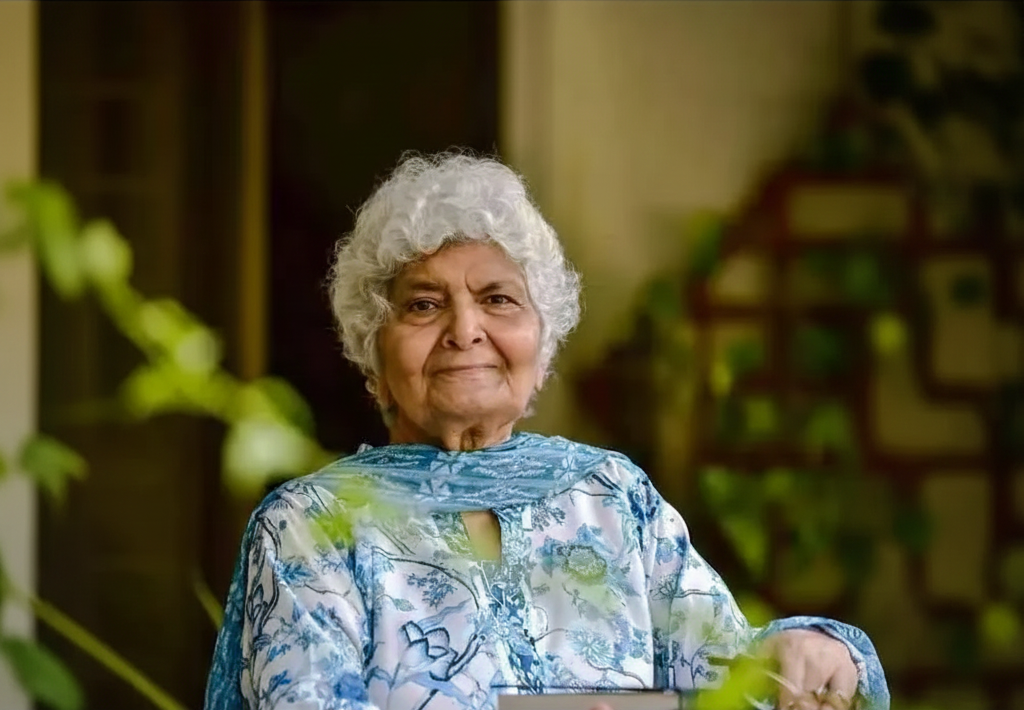
In every age, a select few individuals, through their unique personal abilities, become the forerunners of cultural evolution. Dr Syeda Arfa Zehra was one of those rare figures who harmonized the delicacy of the Urdu language, the depth of thought, the Sufi temperament, and a profound social consciousness within her personality. She was a radiant torchbearer of the subcontinent’s cultural tradition, one who gifted the younger generations with an awareness of language, history, humanity, and the dignity of women.
Born on 22 June 1937 in Lahore, Dr Arfa spent nearly half a century teaching people not only knowledge, but the art of becoming human. She lived her life in the grace of reading, writing, and teaching, and through every word and every action, she demonstrated how to love life and how to live it with poise and meaning.
Dr Arfa received her early education in Lahore. She completed her B.A. with Honours from Lahore College for Women University. She then earned an M.A. in Urdu from Government College University, Lahore. For higher studies, she travelled to the United States, where she obtained an M.A. in Asian Studies and later a PhD in History from the University of Hawai‘i at Mānoa.
Her academic journey spanned more than half a century. She served as a Professor of History at Forman Christian College, worked as Principal of Lahore College for Women University, and, as Chairperson of the National Commission on the Status of Women, remained an influential advocate for women’s rights. She also contributed as an advisor on education and national harmony. With her intellectual breadth and personal dedication, she devoted much of her life to public welfare and the education and moral development of the younger generation.
Dr Arfa Zehra often said that the purpose of education was not to secure a job, but to cultivate consciousness. In her own words:
“If, among my thirty-five students, even two truly grasp what I mean, I count that as my success. I have always tried not merely to teach lessons, but to awaken an understanding of life itself. Education is not for employment; it is for living”
In her speech, there was always a soft humming of whispers of life, and of new dreams taking shape. Her life was like an open book, each chapter filled with wisdom, insight, and a quiet, enduring brilliance. Throughout her years, Arfa Zehra spoke and worked tirelessly on children’s psychology, social values, historical consciousness, the depths of knowledge and literature, the sweetness of the Urdu tongue, and the rights and dignity of women. The gentleness of her tone, the calm in her voice, and the depth of her thought became her unmistakable signature.
Her being was a beautiful fusion of dignity, grace, and intellect. She was fluent in seven languages, and that diversity shimmered through her ways of seeing the world. A profound influence of Lucknow’s language and culture also ran through her scholarly and linguistic heritage. In her words, one could hear the refinement of Lucknow, the sweetness of Lahore, and the literary tradition of the subcontinent—woven so delicately that every sentence settled straight into the heart.
Recalling her student years, Syeda Arfa would often narrate an incident from her visit to Lucknow after returning from America. She mentions:
One day, I asked an elderly man selling bananas, “Baba jee, what’s the price today?” He replied, “Bitiya, today they’re three rupees.” With all the courtesy a Punjabi can muster in bargaining, I asked, “Won’t you give them for two and a half?” Baba jee smiled and said, “Bitiya, the ones who wanted them for two and three-quarters have already gone back with unfulfilled wishes.”
The dignity of any language is reflected through those who speak it. Dr Arfa’s remarkable representation of Urdu at various international linguistic and literary forums made her a living symbol of the language’s sweetness, subtlety, and grace. To her, the true essence of knowledge lay in the etiquette of words, the gentleness of tone, and the depth of meaning. Her speech carried the full beauty of Urdu; when she spoke, it felt as though her words descended into the gathering like polished, luminous pearls.
While she critiqued the contemporary state and disarray of Urdu, she also reminded the younger generation of the essential nature of a language, its forms, its styles, and one’s attachment to it for nurturing new thoughts and fresh ideas.
A reverence for books flowed through Syeda Arfa’s very blood. She was born into a time when the book was the sole fountain of knowledge, and perhaps that is why she granted it the same status in human and civilizational development that an architect holds in the act of building. As she often said:
“A man is a material being, but a human is a moral being.
When does a man become human?
When a book enters in between.”
She not only kept the Urdu language alive at the pedagogical level but also elevated it into an intellectual and moral movement. Her lectures, interviews, and speeches taught the youth to love language and remain devoted to thought. She also translated selected works of world literature into Urdu, among which Sultana Ka Khwaab, Ababeel, and Darya Bibi are well known.
Dr Arfa was not merely a writer or a teacher; she was a voice for social justice and human rights. She played an influential role in women’s education, autonomy, and dignity. As Chairperson of the National Commission for Women, she contributed significantly to legislation, reforms, and awareness campaigns for women’s rights. She also spoke extensively on domestic life, the ethics of social conduct, gender interaction, and a wide range of social issues. She often said that the two greatest afflictions of any society are arrogance and the absence of brotherhood. For her, intolerance was always contrary to the very essence of human dignity.
As a woman, Dr Arfa presented a new vision of dignity, intellect, and courage. She did not view women as a “weaker segment,” but as centres of transformation. Her words consistently carried the message of women’s strength, self-confidence, and intellectual independence. In numerous lectures available on social media, she guided women toward discovering their identity and purpose through education.
At the age of 83, on 10 November 2025, when Dr Syeda Arfa Zehra departed from this world, an entire era came to an end. Her passing left a void in the realms of Urdu literature, education, and social thought, one that will not be filled for a long time. With her gentleness, insight, and cultural depth, she will continue to live in the hearts of those who loved her. Even after her death, her ideas, statements, and lectures remain a beacon of light for the younger generations. With her departure, the sweetness of a language diminished, yet the lamp of thought continues to shine. Her funeral prayer and burial took place in Lahore, at her ancestral graveyard in Cavalry Ground.
Dr Syeda Arfa Zehra was not merely a teacher or a researcher; she was a living embodiment of knowledge, compassion, and culture. She taught us that language, literature, and humanity are three blossoms on the same branch. Her name will forever be remembered as the fragrance of Urdu, the radiance of thought, and the dignified voice of womanhood.