

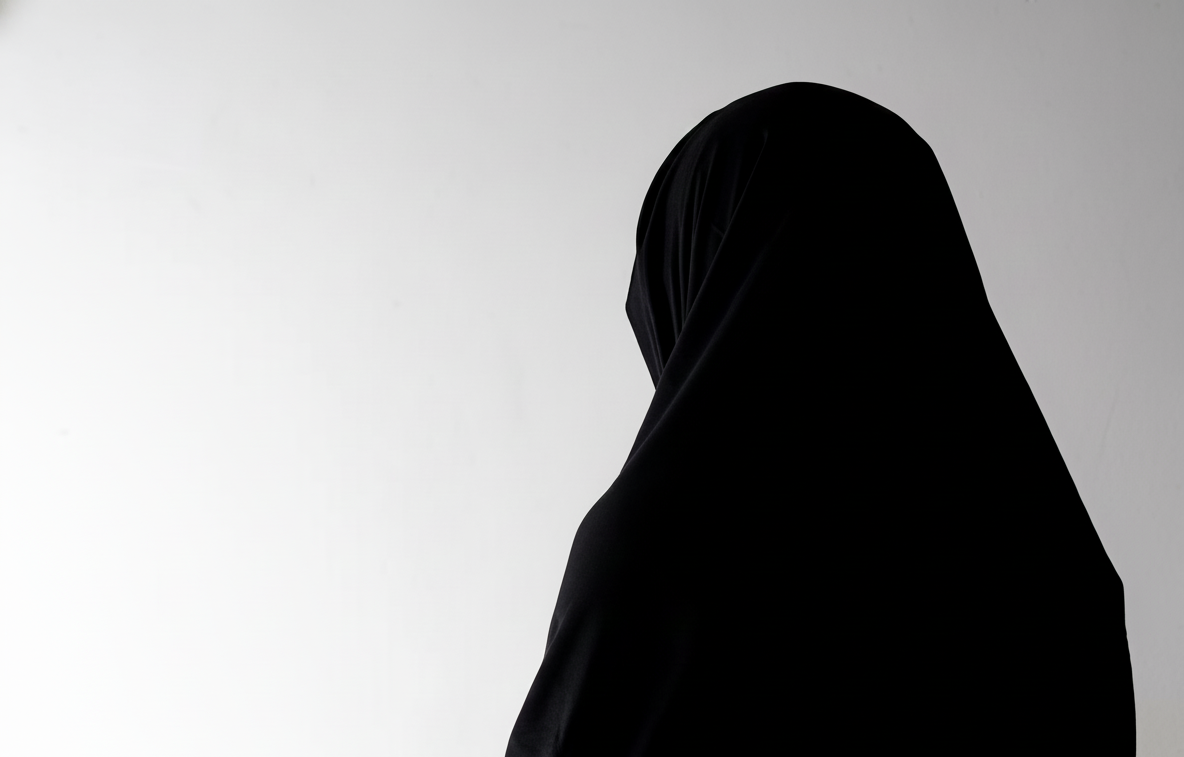
The response from public intellectuals and civil societies to an incident at a function organised to induct newly selected AYUSH doctors largely read Bihar’s Chief Minister Nitish Kumar’s act of pulling down a woman doctor’s hijab as a breach of bodily autonomy, dignity, and consent. Many located the gesture within everyday forms of patriarchy that normalise control over women’s bodies.
Others placed the incident within a longer history of majoritarian discomfort with difference, of policing Muslim women’s bodies, of paternalism dressed up as care. Some went further and described the gesture as a form of violence, i.e., symbolic, but no less real, enabled by the alignment of gender, power, and minority identity. These readings were important. They named the injury, exposed the distinct vulnerability of Muslim women, and drew attention to the post-incident troubling justifications by political leaders from the ruling party, both at the centre and in the state.
While going through these responses, a question slowly surfaced in my mind. What if Hannah Arendt were to see the incident and follow the discussion around it? Would she find something missing? Or, put differently, how would she look at the incident and at what unfolded in its aftermath?
Arendt might point to something that was rarely examined with equal seriousness, the nature of the power at work. Not who acted, but what kind of authority acted, and where. This distinction would matter to her because the incident did not occur in a private space, nor during an informal interaction. It took place at a government function, organised by the state, attended by ministers, and meant to induct professionals into public service.
In such a setting, gestures are never merely personal. They are institutional. The ‘body’ standing before authority is not simply a body; it is a citizen standing before the state. And it is here that Arendt would likely ask a different question, not why the Chief Minister did what he did, but what it means when state authority, acting in public, assumes the right to remove a muslim woman’s veil and reach for a citizen’s body against her will.
Arendt might be suspicious of moral reflexes that rush too quickly to judgment. She preferred to pause, to look carefully at the setting, to ask what a moment reveals about the political setting in which it occurs. She might first notice the ceremony itself—the choreography of authority, the symbolism of induction, the quiet rituals through which the state presents itself as legitimate.
And then she might stop at the gesture itself.
For Arendt, authority and violence were not the same thing. Authority, she argued, does not need to coerce. It does not need to intrude. It rests on recognition, on shared understanding, on restraint. The moment authority feels compelled to act directly upon a body, especially against her will, it signals something fragile beneath the surface. What appears as power often reveals its opposite: a loss of confidence in legitimacy.
To her, the act would begin to look different. The gesture is no longer only a violation of personal space, though it is certainly that. It becomes a moment in which authority forgets where it must stop. In reaching for the veil, the state crosses a boundary that democracies are meant to hold sacred. Not because the body is fragile, but because authority is.
Arendt might note that the danger here lies not only in the act itself, but in how easily it slips into normalcy. The explanations offered afterwards, claims of paternal care, casual dismissals, and jokes about intent, would not reassure her. They would deepen her concern. Authority, in her view, becomes most dangerous not when it is loudly tyrannical, but when it grows casually entitled, when it assumes that proximity grants permission, and when it forgets that distance is a democratic virtue.
She would also pay close attention to what followed, or rather, what did not. No apology. No acknowledgment. No attempt to restore the boundary that had been crossed. Silence, for Arendt, is never empty. It is a political fact. When authority refuses to speak after exceeding its limits, it communicates that those limits themselves are negotiable, that what happened does not require correction.
At this point, Arendt’s concern would likely shift from the individual act to the condition of public space itself. Politics, for her, depended on a shared world, a space where citizens could appear without fear of intrusion, where authority exercised restraint precisely because it recognised the plurality before it. A public space in which bodies are touched, and veils are pulled against will, is no longer merely public; it becomes precarious.
Many interpreted the Muslim woman doctor’s refusal to join the service after the incident as an unfortunate consequence of trauma, a loss to the healthcare system and a setback to women’s empowerment. These were sympathetic, but they carried an unspoken assumption that participation is always the preferred democratic response.
Arendt might hesitate here.
She often wrote about action, but she also wrote about judgment. About the moments when appearing in public becomes impossible without surrendering conscience. She might hold that withdrawal was not always apathy. Sometimes it was the last remaining form of responsibility. When the public realm is corrupted, refusal can preserve what participation would destroy.
In this way, the decision not to join the service could be read differently by Arendt. Not as fear alone, but as judgment. A refusal to appear before an authority that had already crossed its own limits. A quiet insistence that public service cannot demand the surrender of a Muslim woman’s personal autonomy as its price of entry.
This is not resistance in the heroic sense. It does not announce itself or seek recognition. It simply steps back. And in doing so, it restores a boundary that authority itself refused to honour. Arendt would likely find it troubling that such a refusal becomes necessary at all. Democracies should not force citizens to choose between dignity and participation. When they do, something fundamental has already gone wrong.
From this perspective, the incident stops being only about sexism or insensitivity, though it remains inseparable from both. It becomes a democratic question and constitutional concern. What happens when authority forgets restraint? When gestures replace justification? When silence replaces accountability? And when citizens, particularly from minority communities, are left with withdrawal as their only means of preserving autonomy?
Here, Arendt would remind us that democracy is not tested only in dramatic moments like in elections, judgments and crises. It is tested just as decisively in ordinary ones. In ceremonies, in gestures, in what is said and left unsaid. When authority reaches for a body without consent, and when a citizen responds not with noise but with absence, we are witnessing more than an episode.
We are watching the fragile line between authority and domination come into view.
And once seen, that line is hard to forget.