

In recent years, the term Indian Knowledge System (IKS) has gained unprecedented institutional legitimacy. It has been introduced into university curricula, supported through government grants, and promoted as a corrective to colonial epistemic dominance. IKS is projected as a framework to reclaim indigenous modes of knowledge that were marginalised under British rule. On paper, the objective appears commendable: to recover intellectual traditions rooted in the subcontinent and to decolonise education systems steeped in colonisation. Yet, beneath this seemingly inclusive ambition lies a far more troubling question: What, exactly, counts as “Indian” knowledge, and who gets to decide all this?
The official discourse surrounding IKS repeatedly defines it as “ancient,” “traditional,” and most often, implicitly or explicitly, “Hindu”—a fact also plainly obvious in the curation of its official reading list. This definitional narrowing has profound consequences. By equating Indian knowledge with a selectively curated Hindu past, centuries of intellectual, scientific, administrative, and cultural contributions made under Muslim rule are either marginalised or framed as foreign impositions. In this framework, Islam is not treated as a co-constitutive element of Indian civilisation, but as an external interruption—an invasion by the Outsider/the Other.
A closer examination of the official IKS reading lists and syllabi reveals the extent of this exclusion. Texts on Vedic mathematics, Ayurveda, Sanskrit grammar, Dharmashastra, and ancient Hindu cosmology dominate its curriculum. While these traditions undeniably form an important part of India’s intellectual history, their elevation to the status of the Indian Knowledge System creates a false continuity between “Indian” and “Hindu,” erasing the plural and layered nature of the subcontinent’s epistemological past. The absence is telling: where are the treatises produced in Persian and Arabic? Where are the administrative manuals of the Mughal state, the architectural theories embedded in Indo-Islamic monuments, or the medical knowledge systems like Unani that continue to be practised across India even today?
Even architecture, one of the most visible and enduring forms of knowledge production, does not remain safe from this selective behaviour. The Deccan Sultanates alone produced a rich architectural vocabulary that synthesised Persian aesthetics, Central Asian engineering, and local building traditions. Structures such as the Gol Gumbaz, Charminar, and the Bidar fort are not merely monuments; they are repositories of advanced knowledge in acoustics, urban planning, water management, and structural engineering. Yet, in IKS discourse, architecture is often discussed through the lens of ancient Hindu temple design, Vastu Shastra, and sacred geometry, while Indo-Islamic architecture is relegated to art history electives or heritage studies—if ever acknowledged at all. The message is subtle but clear: Islamic architecture may exist in India, but it does not quite belong in the Indian knowledge.
A similar pattern emerges in discussions of governance and administration. Pre-colonial India, particularly under the Delhi Sultanate and the Mughal Empire, developed complex systems of land revenue, taxation, record-keeping, and bureaucracy. Persianate administrative records such as farmans, nishans, and ain texts were tools of governance as well as intellectual artefacts reflecting sophisticated political thought and economic management. The Ain-i-Akbari, for instance, stands as one of the most detailed administrative documents of its time, offering insights into agrarian systems, demographics, and statecraft. Yet, such texts find little to no place in IKS syllabi, which often leap from ancient Hindu polities directly to colonial administration, bypassing centuries of Muslim governance as though they were an intellectual void. Simply the removal of the Mughals from the NCERT schoolbooks stands a prime example of this ideology.
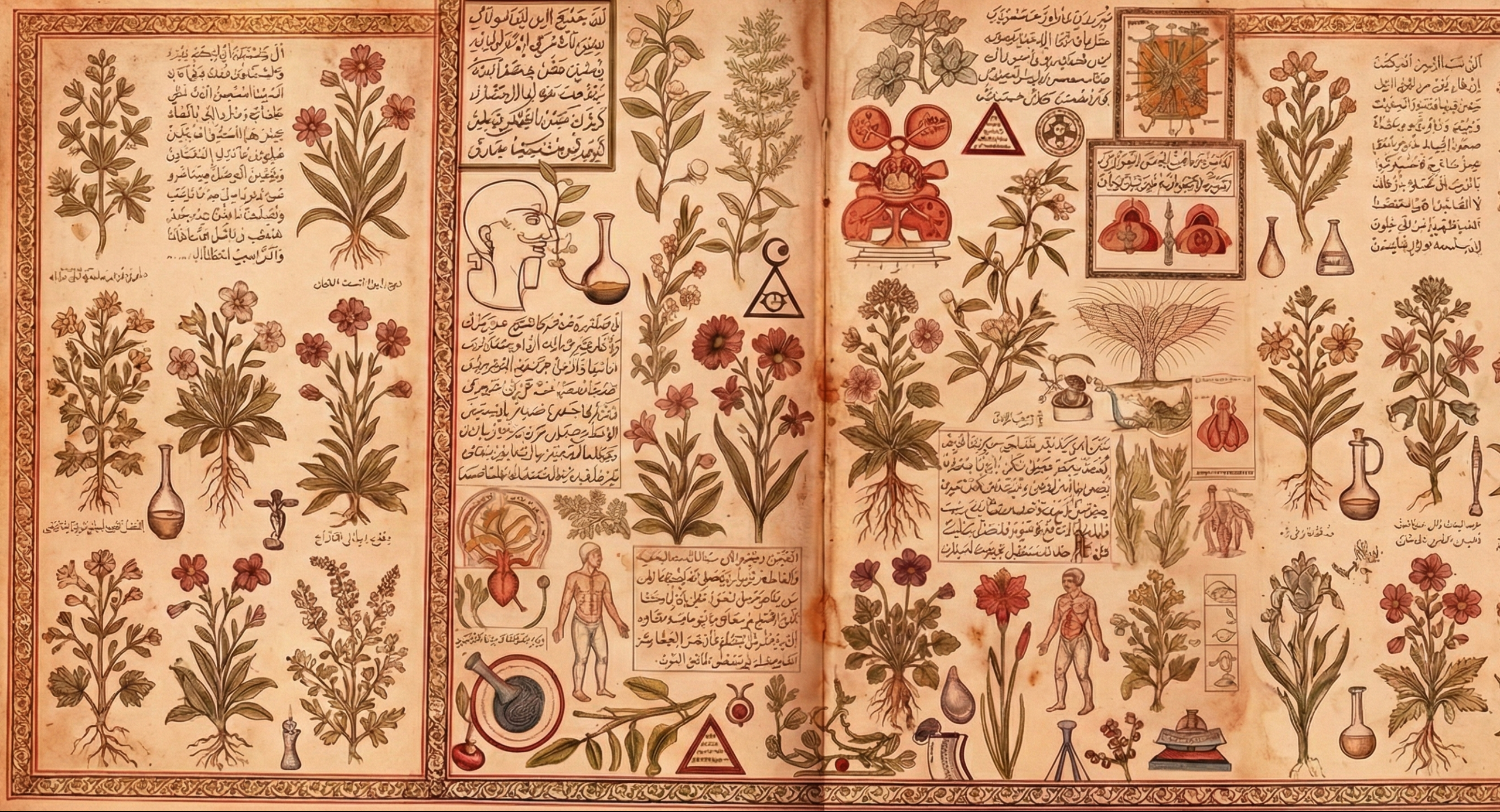
Medicine provides perhaps the most striking example of this selective amnesia. Ayurveda is rightfully celebrated within IKS as an indigenous medical system, but Unani medicine (introduced and indigenised through centuries of practice in India) is treated as an outsider tradition. This is despite the fact that Unani developed uniquely Indian characteristics, incorporating local herbs, climatic understandings, and diagnostic methods. For generations, Unani practitioners have served Indian populations across religious lines, contributing to public health in tangible ways. To exclude Unani from IKS is not merely an oversight; it is a deliberate act of epistemic segregation, where knowledge is not classified by its utility or historical embeddedness, but by its religious origin.
The problem, then, is not the study of ancient Hindu knowledge systems in themselves, but the insistence on defining “Indian Knowledge” as synonymous with them. Once Indian knowledge is framed as inherently ancient and Hindu, Islamic contributions are automatically cast as derivative or invasive. They become “foreign influences” rather than integral components of India’s intellectual ecosystem. This binary mirrors colonial historiography more than it challenges it, reproducing the same civilisational ruptures that British historians once used to justify imperial rule. Only now, the rupture is repurposed to serve a majoritarian nationalist agenda. Even within multiple competitive examinations, the applicants are expected to be well-versed in the Hindu knowledge system, in the name of studying traditional Indian systems, while no space is given to other multitudes of epistemic traditions present within the country’s lineage.
Ironically, the very idea of a monolithic, unchanging Indian civilisation is itself a colonial construct. Pre-modern India was marked by constant exchanges—of ideas, languages, technologies, and beliefs—across regions and communities. Knowledge was produced in Sanskrit, Prakrit, Persian, Arabic, and later Urdu, often in dialogue with one another. To privilege one linguistic or religious tradition as the sole bearer of Indian knowledge is to misunderstand how knowledge actually functioned in the subcontinent for centuries. It was never static, never pure, and never confined to a single identity.
The exclusion of Islamic traditions from IKS also raises deeper questions about the politics of knowledge in contemporary India. Who benefits from an Indian Knowledge System that selectively remembers the past? The IKS framework appears as a gatekeeper of legitimacy—deciding which forms of knowledge deserve state recognition and which can be quietly sidelined. In doing so, it distorts history and impoverishes the present, depriving students, researchers, and the general masses of a holistic understanding of India’s intellectual heritage.
If the stated aim of IKS is decolonisation, then it must first confront its own internal exclusions. A genuinely decolonised curriculum would recognise that Islam in India was an intellectual force—shaping science, medicine, architecture, language, and governance in ways that continue to resonate today. To deny this is to replace one form of epistemic domination with another, cloaked in the language of cultural revival.
Ultimately, the question is not whether there is space for Islam in the Indian Knowledge System, but whether the system itself is willing to acknowledge India as it truly was—and is: plural, entangled, and irreducibly complex. Knowledge, after all, does not thrive in silos. It flourishes through exchange, synthesis, and contestation. Any attempt to gatekeep Indian knowledge along religious lines risks reducing a vibrant, multifaceted past into a narrow ideological project.