

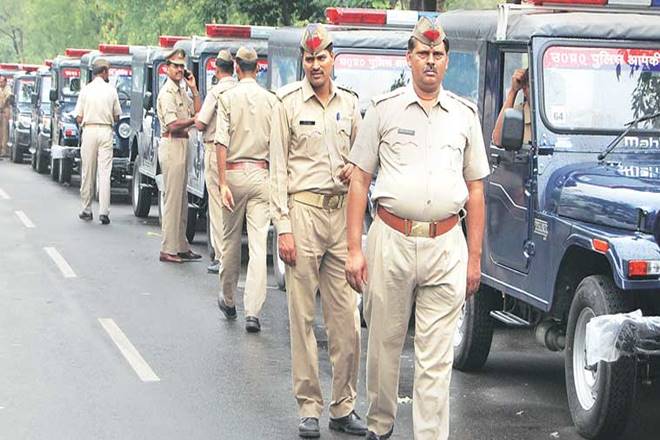
An extensive report named, Muslim Voices: Perceptions of Policing in India prepared after a qualitative research was conducted, has revealed and brought forth many unpleasant truths about how the Police in India perceive the Muslim community and vice-versa. A smaller, but significant, part of the report also documents the perceptions, experiences and challenges of Muslim police personnel from within. The research, began in 2017, was a joint endeavor of Commonwealth Human Rights Initiatives (CHRI, an independent, non-profit, non-partisan, international non-governmental organization, mandated to ensure the practical realization of human rights in the countries of the Commonwealth) and the Quill Foundation, an autonomous institution engaging in research and advocacy in India.
Focusing on the central question of the research, how do Muslim community members perceive the police, and policing more largely, the report produces ample documentation establishing police bias against Muslims. It also found numerous judicial commissions and civil society reports demonstrating targeted discrimination against Muslims by police in the contexts of communal violence. In the case of Babri Masjid demolition, the riots were not spontaneous, but were planned and engineered by the Shiv Sena, a right-wing political party, as concluded by B.N. Srikrishna Commission of Inquiry, which was formed to look into the December-January 1992-93 communal riots in Mumbai. Jyoti Punwani, a senior journalist who covered the full proceedings of the Commission, describes the police bias stating that during these riots, the police conduct was consciously partisan, pro-Hindu and anti-Muslim. She also said that the bias existed right from the top beginning with the Police Commissioner and evidences of such conduct exist in the report of B.N. Srikrishna Commission of Inquiry. Likewise in the communal violence unleashed in Gujarat in early 2002, in almost all of the incidents documented by Human Rights Watch, the police were directly implicated in the attacks. At best they were passive observers, and at worse they acted in concert with murderous mobs and participated directly in the burning and looting of Muslim shops and homes and the killing and mutilation of Muslims. In Gujarat, it is documented that police officers – with specific individuals named in various accounts – who acted against mobs or took steps to prevent violence were transferred to lesser posts. Recently, the Delhi High Court forcefully recognized “institutional bias” as the trigger for the killing of Muslims. The Delhi High Court’s judgment represents a watershed moment in the effort for police accountability – it punishes the killings as done in illegal custody, and points to both critical lapses in investigation as well as deliberate suppression and destruction of evidence by the investigating bodies. This is the first time that a court has pointed institutional bias as the central motive for police violence.
The report in order to substantiate further about police bias against Muslims makes a reference to High-level Rajinder Sachar Committee, submitted in 2006, which accepted the fact that Muslims need to prove on a daily basis that they are not “anti-national” and “terrorists” and also did point towards the police bias by expressing concern over police highhandedness in dealing with Muslims. It further added that Muslims live with an inferiority complex as ‘every bearded man is considered an ISI agent’. Whenever any incident occurs Muslim boys are picked up by the police and fake encounters are common. Notably, the Committee is the first to correlate that the low representation of Muslims in the police exacerbates the community’s sense of victimization by the police and law enforcement bodies.
According to the report, statistics bear out that Muslims are incarcerated at rates higher than their population in India. While they make up 14.3% of India’s population, Muslims constitute more than one-fifth of the total under trial population in custody at 20.9%. They comprise 16% of convicted prisoners. Further an independent study found that in 22 states, based on a five-year (2011-15) average, it was consistently a higher proportion of imprisoned Muslims than the community’s population in the state. The other side of the fact is the disproportionately very low representation of Muslims in the police. As of the year 2013in its last available official figures of Muslim representation in the police, the total representation of Muslims in police services was a meagre 3.14% of the total police strength in the country, excluding the number of Muslims in the Jammu & Kashmir Police.
Also read Alwar Mob Lynching : Police Too Complicit In The Death of Rakbar Khan
In this report, CHRI and Quill have documented Muslim perceptions and experiences of everyday policing, apart from the extraordinary situations of terrorism or communal violence. In this frame, everyday refers to routine interactions with police, basic access to police, police presence/practices at the local level, and policing during community gatherings, festivals or protests and rallies. This includes looking at the perceived role of identity markers like burqas, skull cap and beard and how Muslims felt these shape police response, and notions of surveillance or “being watched” by police in Muslim dominated areas.
The research team undertook this study with the vast view that any intervention to address bias and work towards police reform must begin with an honest understanding of how Muslims perceive policing. So to interact they held consultations and interviews in eight cities namely Ahmedabad, Ranchi, Lucknow, Bengaluru, Kozhikode, Delhi, Guwahati, , and Mumbai. The vast majority of the participants were Muslims. There is an unanimous perception that the police targets and victimizes Muslims, resulting in feelings that the community is often criminalized without basis, and kept in cycles of fear, and the constant threat of being detained and abused. The Respondents of the study expressed the incessant distress and trauma. They claimed that the aim of police is simply to arrest Muslims and ensure through the media that a negative image of the Muslim community is created in society. Muslim women expressed the difficulty of bearing the ‘double burden’ of being a Muslim and a woman, across states. Women distinctly felt that their identity as Muslims was a primary reason for both police bias and indifference towards them. They unanimously said that police attitude and behavior is sharply prejudiced when women access the police wearing identity markers like hijab. In other places, comparisons were made to preferential treatment to Hindu women, drawing out how perceived bias can subjugate one’s sense of self and identity. Women victims grieved that they are subject to victim-blaming and the police’s refusal to respond to their crime complaints, exposing a common and shared hurdle for women of all communities in accessing the police. At the same time, Muslim women revealed the biased taunts and jabs they are subjected to by the police officers. There was acknowledgment of the presence of Hindu religious symbols, often temples, inside police stations, and the practice of religion by police officers while on duty. Respondents told that this open display, in an official space meant to serve all the people of India, trigger apprehension and feelings of subjugation as a minority. In Gujarat particularly, respondents felt the open display of religion visibly increased after the 2002 riots. The study’s finding revealed that some Muslims have simply accepted the presence of religious symbols inside police stations with indifference. Though conversely, there was a greater show of anger, frustration, and opposition to displays of religious identity of any kind in police stations or government offices.
On further monitoring, a common perception emerged that the police sees Muslim localities as dens of criminal or terrorist activity, perpetuating a constant suspicion and distrust of the community. Muslim community members shared that police attitudes and their dealings with Muslims are conditioned by this prejudice. For the community, this creates a huge barrier between them and the local police. Across almost all the cities the research was conducted, the repeated complaint of the pejorative characterization of Muslim areas as ‘mini-Pakistan’ was heard, lending insight into how the community believes itself to be viewed by the police, further extending to being viewed as potentially anti-national, separate from the mainstream and feeling that your loyalty is always suspect. And in turn they perceive the police as dangerous and even hostile. At the time of inter-community clashes between Hindus and Muslims, respondents narrated incidents revealing their sense that the police took the side of the majority community even when both communities were complicit in the violent acts.
Respondents also expressed a sense of being over-policed and called out the persistent level of police intrusion into their daily lives which for them causes insecurity rather than security. A deeper sense of ‘being watched’ by the state, through the intrusive medium of police informers or ‘mukhbirs’, was repeated across states. It emerged that there is an increased number of informers cultivated by the police at local levels, and many of them are Muslims themselves. Respondents across all cities showed a keen awareness of the presence of police informers in their communities. Generally, people who became informers were described as a petty criminal or local upstart who comes in conflict with the law, and becomes an informer for the police in exchange for evading further prosecution and personal benefits. This is often at the prompting of the police itself. It became clear that the presence of informers is damaging the Muslim community within itself in multiple ways. Many respondents expressed a tendency to be wary of the things they say in front of people who regularly move in police circles, for fear that anything they say might be distorted or exaggerated and used against them in one or other way. There also seemed to be a feeling that the large presence of informers among Muslims is due to the police prejudice that looks upon all Muslims as potential anti-nationals whose loyalty is always doubtful.
CHRI and Quill spoke to a wide range of organized Muslim groups of various kinds including religious and cultural organizations, human rights groups, NGOs involved in developmental work, individuals involved in social and political groups and movements, and student organizations. They each have a specific genesis and mandate, and carry out diverse activities of different hues. Despite these variations, there is a near-unanimous feeling that the police want to restrict any mobilization of any Muslim group. This control and curtailment are usually exerted in subtle ways and take various forms. It can be identified in different kinds of interaction with the police, such as the haggling over permissions to hold protests and demonstrations, the presence of local intelligence in all events, and the way in which the names and identities of individuals involved in various activities are recorded and often enquired later.
A social worker from Gujarat narrated how permissions were often cancelled at the last minute and the organizers were discreetly asked to drop a particular speaker or not discuss about a particular issue, or even reduce the timing or change the venue at the last minute, if they wanted the permission to be given. Activists from Uttar Pradesh described how permissions were often held up till the last minute to ensure that appropriate publicity would not be done and the turnout could be lowered. Similar experiences were relayed across different cities, giving rise to the perception that the power of the police to grant permissions was being used as a tactic to control Muslim mobilization.
The specific experiences of organized Muslim student groups give rise to concerns. Student organizers across states said it is normal practice that when organizing any event, even on campuses, the key organizers are contacted by various police personnel asking for details of the event including the nature of the program, the names and background of the speakers, the expected number of participants etc. During student-run events, there is always a visible presence of local informers and sometimes even uniformed police. Student organizers shared that they are constantly asked to prove that they are not ‘radicalizing’ the youth or mobilizing them for ‘anti-national’ activities. The greater irritation seemed to stem from the fact that this process of talking to the police and answering their questions took up large parts of their time and resources, and often intimidated newer students from taking part in their activities.
From the interviews in the course of study emerges a picture, though limited by the number of interviews, that Muslims within the police also perceive a sense of bias and discrimination. They stated that Muslim police officers were concentrated mainly in the junior ranks, especially in the constabulary, and were virtually absent in higher ranks and leadership positions. The biggest concern expressed was that there were very few Muslim officers at the intermediate levels, at the ranks of investigating officers of Assistant Sub-Inspector (ASI) and Sub-Inspector (SI). This deficit will require concerted efforts if police departments want to implement the recommendation of the Sachar Committee to ‘post at least one Muslim Inspector/Sub Inspector in the Muslim concentrated thanas’ as a measure to build confidence in the community.
Most officers pointed the need for a diverse and a representative police. The officers shared their conviction that community members will feel more assured if they could interact with Muslim police officers. They also feel that the absence of Muslims in the police is a factor that allows bias to play out and harm the community especially during times of riots. With regard to recruitment, respondents said Muslims are impeded at the initial stage itself due to educational disadvantages. In addition, respondents pointed out the lack of targeted recruitment drives as an example of this. The officers felt that Muslim youth held a view that they would not be able to make the final cut. While most officers agreed that the recruitment was fool proof, others realized filtration of Muslims is done at the very outset of the recruitment process. Most police personnel interviewed told that they had commanded the confidence of the public and their seniors and were also satisfied with their jobs. However, they said they felt they had to work extra hard to ‘prove their loyalty’. Some of the respondents felt that Muslim police officers carry a double burden: first, concern about being branded ‘communal’ when protecting members of their own community who approach police for redress and secondly, a sense of being disempowered and unable to stand up against illegalities for fear of being victimized or seen as partisan.
The report concluded that on the basis of the views and experiences of this group of interviewees, there are indications that Muslims within the police perceive and deal with bias based on their identity, amplified by being a barely visible minority inside police organizations. It further stated that due to this, there is an impact on policing itself, in the police response to the community.
[…] Also read| A Report Reveals That Police Sees Muslim Localities As Dens of Criminal Activity […]