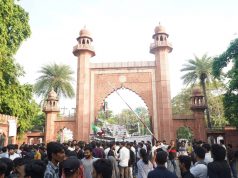

‘Discrimination, imposition of heavy fines, unnecessary and rampant rustications of students, absence of transparency in appointment and admission processes, increasing suicides, escalating numbers of communal and sexual violence incidents, fee hikes, and authoritarian functioning of management’ are the only characteristics defining Indian campuses today.
A reign of terror seems to have engulfed students across the country; campuses are no longer perceived as sacrosanct; headings such as ‘Students need safety’, ‘Vice Chancellor imposing reign of terror in Jamia Millia Islamia’, ‘Delhi University gets court notice on Dalit admission’ and ‘EFLU student commits suicide’ are almost ubiquitous in every daily newspaper.
Only varying in form, depending upon the part of subcontinent to which a campus belongs, these issues – which are striking our campuses in a stealth mode – demand for an awakening. A literal “awakening”, not “Arab Spring” kind of awakening. Today, there is an increasing need for students to be alert and awake. If the students of National Institute of Fashion Technology (NIFT) are protesting against a hike in fees, then surely they know how the hike will affect them – and more importantly, they know that an institution that is run by the Government should not indulge in such practice [of increasing tuition fees by 10% annually].

The protesting students of NIFT also issued a handout that separately indicated [in different tables] how each batch will be affected by the fee hike. Although there are many such instances, within the last 1 year, which give us the notion that students are becoming more aware and concerned [at least in regards to issues which directly concern them], there is scope for more; in fact there is ‘need’ for more.
Only students belonging to more prominent Universities [which are in a way more active examples of dissenting spaces], are increasingly speaking up and questioning the management over their actions. The Delhi University (DU), Jamia Millia Islamia University (JMI) and English and Foreign Languages University (EFLU) are a few notable ones in this regard.
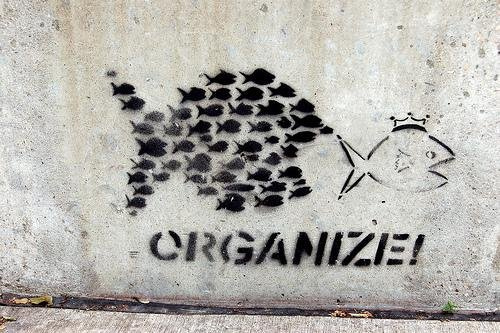
Sporadic pop-ups of public participation, by students of other universities, are also occurring now and then; the Tamil students’ protests against/for US sponsored resolution against Sri Lanka, NIFT students’ protests, protests against corruption and sexual violence etc., are a few examples of this. However, there is an urgent need for students to become active stakeholders in campuses. By this, I mean not only through the language of resistance (protests etc.) but also through the language of participation and dialogue.
Today, students should demand that such platforms be created. Executive councils at the college/university level which will have equal representation from all sections – including students from minorities, girls and other backward classes – may be one of the ways to go about doing this. Students can then be able to discuss their issues – whether it is in regards to facilities or discrimination, like in Mudassir Kamran’s case of EFLU, or a hike in fees or the behaviour of management or career counselling and so on.
Such platforms are a need of the hour; not only to keep a check on the exacerbating state of affairs in campuses across India, but also to send occasional qualms down the spines of perpetrators of such injustices.