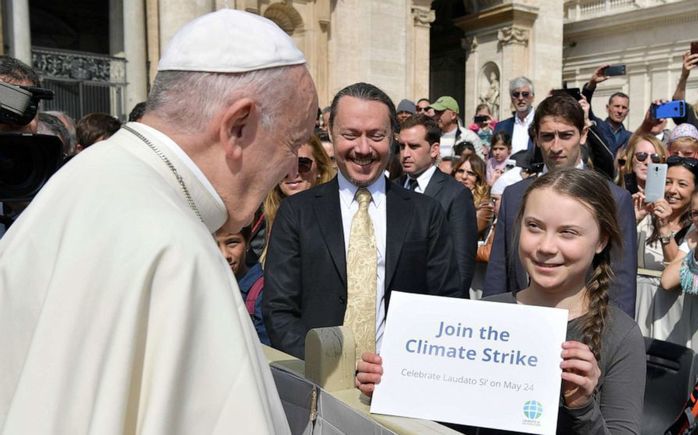
“For the sake of your children, for the sake of your grandchildren. For the sake of life and this beautiful living planet. Will you pledge to do that? Will you pledge to join me, and the people all around the world in doing whatever it takes,” said 15 years old, Greta Thunberg while addressing the United Nations Climate Change Conference (COP24) plenary session in December 2018.
Greta has become the main face in youth led activism demanding immediate global action on climate change. Greta has been known for initiating ‘the school strike for climate change’ also known as Fridays For Future, Youth for Climate and Youth Strike for Climate.
The global movement has gained so much momentum that on 15 March 2019, more than 1.4 million pupils around the world demonstrated calling for action by the adults declaring they have failed in protecting the earth and it is time for them to take matter into their own hands. This protest was the largest demonstration for environment that has ever happened in the history and paved way for groundbreaking wave of the global youth-led activism for climate change. Social media have been flooded with hashtags, stories about the disastrous impact of environmental degradation and now has become an integral part of the discussions in the public sphere. In India, an online petition has been started to declare ‘climate emergency’ in the country. But where are the governments, organisations and leaders? Why aren’t the adults talking about climate change as they always do about politics and sports? Why is it that only youth seems to be more concerned about the horrific consequences of environment degradation?
The governments of the United Kingdom and Ireland have already declared a climate emergency. Although, India has been claiming itself not responsible for the major global greenhouse gas emissions clarifying that “Over 70% of the green house gases emission is due to the developed countries while India’s contribution is just three per cent. There was over consumption by the people in the developed word.” The harmful impacts of toxic air that the major cities of India are breathing are evident.
More than 11 cities of the country are among the top most polluted cities in the world, moreover the capital being on the top. The youth is fed up to see the authorities not taking immediate substantial actions. The consequences of environmental degradation are showing true colours head starting with Chennai –one of the major metropolitan cities almost running out of water. The youth is skeptical of what future beholds for the rest of the country and what actions will be taken to solve the problem. India is looking forward to becoming a superpower but what’s at stake? The youth is concerned about the future generation and thus feels it is necessary to call upon the adults responsible to take action.
According to World Health Organisation’s estimation around 93 percent of the world’s children below the age of 15 are breathing such toxic air that puts them at grave health hazards. In India’s capital which itself breathes the most toxic air in the whole world, the lungs of approximately 2.2 million or 50% of all children are being damaged. In December 2017 during a cricket test match between Sri Lanka and India in New Delhi, Sri Lankan players struggled to breathe to the extent that some even puked in the restrooms and on field as well. However, the Indian side was unsympathetic to the bowlers calling a pre planned excuse but the pollution debate sparked when even an Indian player, Mohammad Shami also puked who was apparently “used to” such conditions. Thus, the statement that Indians are “used to” live in these situations is itself problematic if we dwell deeper, it speaks about the unwillingness and unsympathetic attitude to bring a change and say no one should be “used to” live in such conditions.
While according to the authorities the number of days with ‘good days’ are rising and the situation is not as bad as it seems, the real struggle can only be quoted by the Delhites themselves. A study titled “State of Global Air 2019” the average life of a South Asian child growing up in current levels of toxic air will be shortened by approximately 2 years and 6 months comparing to global average of 20 months. The global numbers of death from breathing harmful air is three million and approximately half of it are contributed by India and China together. While the environment minister has stated that effects of climate change are visible throughout the Indian subcontinent evidently, the ‘monsoon season’ being late and announced various action plans. The need of the hour is to bring change on the grass-root levels and just complaining about the authorities not taking any action is itself an attitude to shrug off the burden from our shoulders.On March 15,Indian youth was the one among others who streamed out from educational institutions trying to save the world .But why aren’t the adults joining hands to bring about the change? As Greta Thunberg is one prodigy who says, “I want you to act as you would in a crisis. I want you to act as if our house is on fire. Because it is,” there are many Greta joining hands to protect the fate of this planet, yet why aren’t the adults coming out for the cause? Climate change and it’s consequences are now becoming a lived reality.What we have seen in numerous movies like 2012 is here, until and unless every being on the earth is not willing to stand up to fight this war, the dream of a healthier and safer environment for all is a dream too good to be true.