India is a diverse country where many linguistic, caste, class, religion and regional identities play a salient role. The study of the Indian subcontinent necessitates a deep engagement with the formation and evolution of identities in it. The nationalisms that emerged within the subcontinent rely on heavily contested notions of being a ‘Hindu’, ‘Muslim’, ‘Bangla’, ‘Indian’, etc. The subcontinent’s political discourses that impact everyday politics invoke more regional and micro identities. Some of these identities trace their origin to policies of the democratic state. For example, the Mandal commission 1979 led to a consolidated Other Backward Community (OBC) identity, which has become a significant player in contemporary Indian politics. Historical claims about these identities are essential to political legitimacy and illegitimacy within this free market of public reason. Therefore, any analysis of contemporary Indian Muslim politics must be situated within this larger historical context.
Defining identity politics
It is essential to define the phrase identity politics for this article. Bernstein noted the widespread disagreements between academics over defining “identity politics”. It has been used to denote a wide variety of phenomena, such as the civil rights movement in the USA to separatist and nationalist movements in post-colonial Africa. In some academic works, the phrase identity politics is used to distinguish class-based politics from all other forms of politics. For this article and the Indian context, a helpful definition of “identity politics” is given by Kauffman as that politics which “the belief that identity itself — its elaboration, expression, or affirmation — should be a fundamental focus of political work”.
There are two critical features of such an identity politics. Firstly, it mobilizes people around shared notions of a given identity. Here also lies one of the significant criticisms of identity politics. Its critics accuse identity politics of the failure to recognize some of the socially constructed nature of the identities, which can lead to their reductionist and essentialist articulations. This phenomenon also explains the disintegration of many identity politics movements, such as the feminist movement, into innumerable groups and subgroups. Secondly, identity politics are generally centred around shared experiences of oppression, at times at the helm of certain privileged groups. Its critics point out that such an essential feature can alienate and isolate those engaging in identity politics from those groups and individuals from within the alleged ‘oppressing’ groups that may have a sympathetic outlook towards them.
Furthermore, sometimes this alleged oppression at the helm of certain privileged groups can be invented or exaggerated for an underlying political motive. A recent example is the controversies surrounding the newly released movie “The Kashmir Files”. Nevertheless, despite its criticisms, the success of many contemporary identity politics-based movements such as the feminist, black lives matter, and the queer movement has encouraged many such identity groups in adopting such politics in their pursuit for justice and empowerment.
Indian Muslim identity politics
The socio-politico-economic context of India contains all the necessary factors required for Indian Muslim identity politics to thrive and flourish. Independent India inherited a battered and broken Indian Muslim community. The overall population of Indian Muslims reduced from 25% in British India to 9% in independent India in 1947. This reduction was coupled with mass migration of educated and wealthy Muslims to Pakistan. The question of minority rights raised by the Muslim league was not resolved adequately in Independent India. The advisory committee to the constituent assembly of India recommended reserving seats in the parliament for minorities based on their share of the population in Jul 1947. However, two years later, in May 1949, the advisory committee sought to abolish any Muslim reservations. The consequence of that perplexing decision is that the 2019 Lok Sabha elections resulted in the lowest ever Muslim members of parliament in the history of independent India (initially 22 but not risen to 27). Furthermore, numerous Government of India (GoI) committees, such as Dr Gopal Singh committee 1983, Misra Committee 2004, and Sachar Committee 2005, have reported that Indian Muslims remain one of the most economically backward sections of the Indian population.
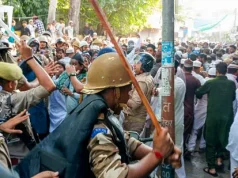
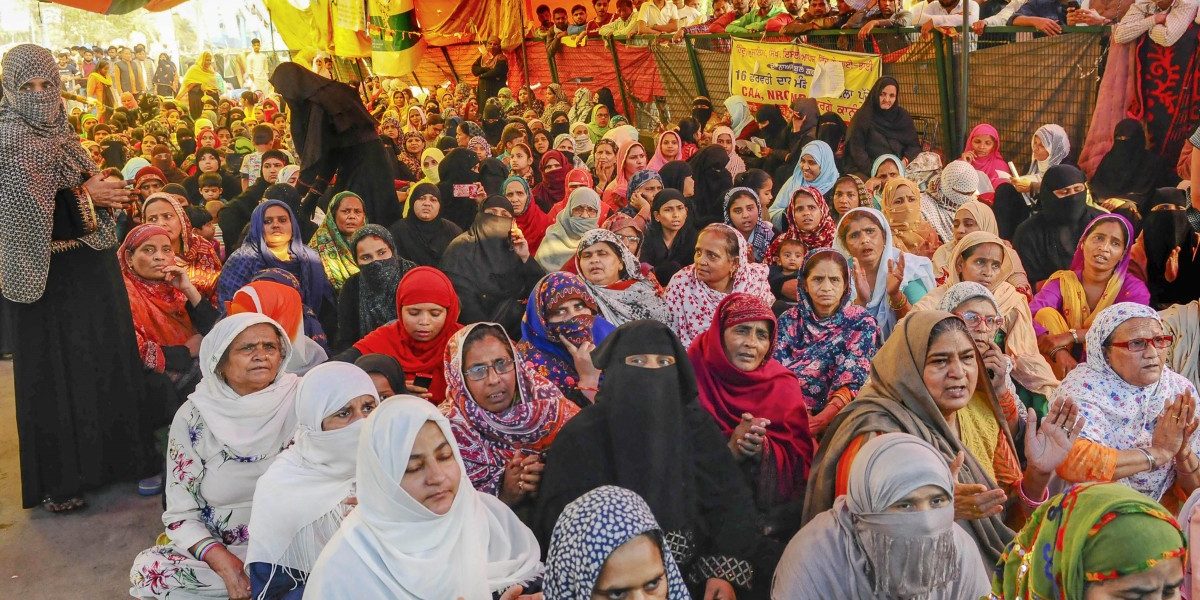
Furthermore, the state’s role in communal riots has been questionable in such violence. The post-2014 rise of fascist forces in India has normalized anti-Muslim hate and violence. Numerous human rights activists and groups have accused the state of actively participating in the demonization of Muslims via Corona-jihad, anti-Muslim violence such as the Delhi riots of 2020, and the online harassment of Indian Muslim rights activists and journalists particularly women. Therefore, the socio-politico-economic backwardness and challenges of Indian Muslims present a great necessity and a very amenable field for Indian Muslim identity politics. It’s hardly a surprise that the rising tide of Islamophobia in India has made many young Indian Muslims consider the idea of identity politics.
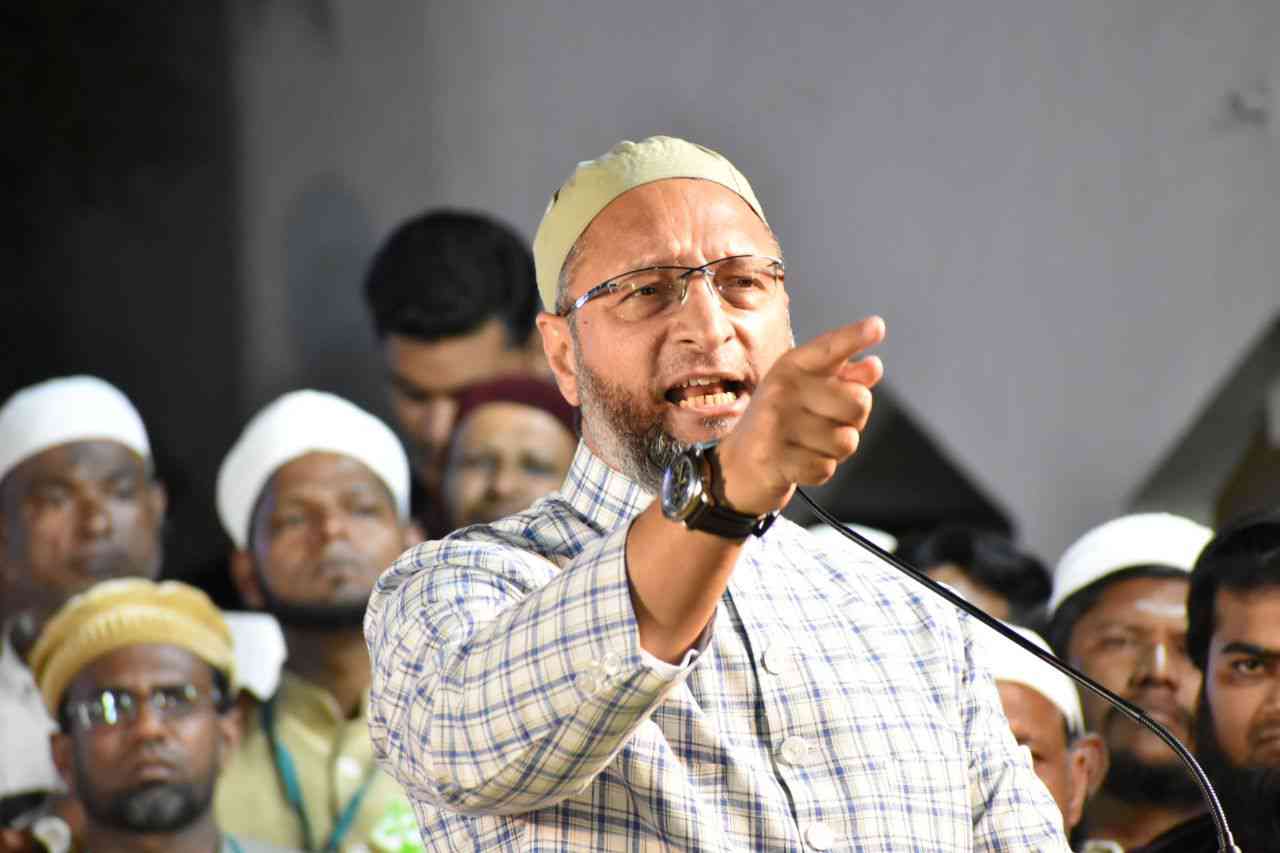
However, the construction of the partition of British India as a quintessentially Muslim demand, rather than its conceptual framing as a question of minority rights, made any political or economic assertion of Indian Muslim rights synonymous with a separatist movement. The memories of the Pakistan movement are frequently invoked in the comparisons of MP Asaduddin Owaisi with the leader of the Muslim league Muhammad Ali Jinnah.
The baggage of partition was so significant that even great stalwarts of the Indian independence movement, such as Maulana Azad, succumbed to the political exigencies of the times. In his speech at the Indian Union Muslim Conference at Lucknow on December 27 1947, he proposed that all Muslim “communal” organizations must be disbanded, even Jamiat Ulama e Hind. His rationale was that the post-partition anti-Muslim sentiment was so strong that any Muslim organization, despite its nationalist outlook, would eventually damage the community’s long-term interests. Some old Muslim leaguers like Maulana Hasrat Mohani vehemently opposed the proposition. Ultimately, the conference passed a resolution asking Muslims to abandon all forms of “communal” politics. Consequently, we find many Muslim leaders and organizations striving for the community’s interests through a neutral vocabulary devoid of any indications of Muslimness. Therefore, Muslim leadership discarded any assertion of Muslim identity at the outset of Independent India.
A small strand of Muslim leaguers from the Madras province dissented with Maulana Azad’s Lucknow formula, eventually obtaining moderate success in the state of Kerala. However, the dominant strand of Indian Muslim politicians continues to seek political advancement with the torch-bearers of Gandhi-Nehruvian Indian nationalism. The proximity of Jamiat Ulama e Hind to the Indian National Congress (INC) is an appropriate example. However, due to the disillusionment of many Muslim leaders with the INC due to its role in various communal violence against Muslims in the early 1960s, some non-INC electoral and non-electoral initiatives were taken up by Muslims to articulate community interests. In 1964, All India Muslim Majlis e Mushawwarat (AIMMM) was formed at Lucknow. It published a People’s Manifesto in 1967 and lobbied for its implementation with political parties and representatives. However, the initiative failed because it did not account for the lack of autonomy of the elected representatives, frequently pressured to toe the party line. The failure of the AIMMM was followed by the formation of All India Muslim Majlis in 1968 in UP and the revival of All India Majlis Ittehad ul Muslimeen (AIMIM) in Andhra Pradesh.
From the 1970s to 2000s, much of the Indian Muslim politics was focused on preserving the distinct religious identity of Indian Muslims against, what was perceived as, an encroaching state. The All India Muslim Personal Law Board (AIMPLB) was formed in 1972 to take “effective steps to protect the Muslim Personal Law in India and for the retention, and implementation of the Shariat Act”. It was spurred into the limelight by the Shah Bano controversy of 1978. AIMPLB was successfully able to pressure the government into bringing the ironically titled Muslim Women Protection Act 1986, which effectively diluted the Supreme Court ruling on the Shah Bano case. However, this success was short-lived due to a later judicial reinterpretation of the Act, which accorded divorced Muslim women the right to maintenance at parity with the other Indian women.
From around the 2000’s, we saw a revival of the political and economic question within Indian Muslim politics. In 1998, two-time Rajya Sabha member Ali Anwar created the Pasmanda Muslim Mahaz with political objectives for another sub-identity within Indian Muslims — the Pasmanda Muslims. Pasmanda Muslims are regarded as non-Ashraf Muslims such as Dalit and OBC Muslims. Furthermore, the electoral success of UPA in 2004 and the subsequent release of Misra and Sachar committee reports brought the economic question of Indian Muslims into the national discourse. Also, the Godhra pogrom of 2002 led to many Muslim and other religious minority groups lobby for a Communal Violence Bill, initially tabled in the Rajya Sabha in December 2005, which was torpedoed by the opposition.
A common theme within most such initiatives of Muslim politics in India is the focus on electoral success to advance Indian Muslim interests. With the notable exception of Kerala, Telangana, and Assam, all experiments with Muslim identity politics have been electoral failures. It is essential to qualify these “failures” with the word “electoral” because any meaningful and impactful identity politics seeks goals beyond electoral politics. However, since the expressions of Muslim identity was never the primary focus of these initiatives, they constitute Muslim politics rather than Muslim identity politics. Therefore, actual Muslim identity politics has started only recently.
Identity politics has conventionally focused on the social and cultural causes and facilitators of oppression rather than the institutional and structural factors. It proposes that political, social, or economic injustices do not perpetuate in a vacuum. Instead, there exists a social outlook that enables this oppression. For example, in India, Ambedkerite groups have effectively argued how the general view towards Dalit groups enables the subjugation of Dalit communities. Therefore, the pursuit of justice for Dalit groups isn’t confined to political remedies alone but also in a deliberate assertion of the Dalit identity. Similarly, such a new vision of Muslim identity politics is emerging in India. Arising from some of India’s top universities, many Indian Muslim youths are filling the major gap in Muslim identity politics discourse by pointing out the hitherto invisible social and cultural pressures and injustices that everyday Muslims are subject to. A common underlying theme beneath such articulations is the concept of Islamophobia, representing anti-Muslim prejudice and hatred.
Identity politics and its Muslim detractors
The contemporary articulations of Muslim identity politics have their notable detractors, especially from within Muslims. These critiques range from those directed towards identity politics to the concept of Islamophobia. Given that the nature of Muslim identity politics in India has added new dimensions post-2014, it is vital to carefully contextualize and locate the critiques against it for a better conceptualization of the problem.
Regarding the critique of identity politics as portraying an essentialist idea of the identity itself, viz Muslim in this case, we should acknowledge that providing a theoretical definition to concepts is always a challenging task that includes and excludes certain things. Usually, such conceptual problems are inconsequential to those engaging in identity politics because words have shared meanings despite not having a clear working definition. As for identity politics being alienating, this issue is possible but not inevitable. It can be addressed with a deliberate cognizance of any such potential mishaps. Furthermore, the post-2014 rise of Islamophobia in India is not because of Muslim Identity politics but despite it. Indeed, the solution to Islamophobia cannot be self-invisibilization from the community. Instead, it lies in a more mature understanding, acknowledgement, and affirmation of the Muslim identity. Only then the criminalization of Muslim-ness would stop reaping such significant electoral dividends.
Regarding the critiques against Islamophobia as a concept, we must acknowledge that Indian Muslims are probably the last major community in India that has failed to theorize its oppressive experiences. Indeed, much scholarship on Islamophobia has been developed in the Western context with a history of racism. However, we must acknowledge the global nature of anti-Muslim prejudice, especially since 9/11, and the remarkable similarities between the experiences of Muslims in India, Sri Lanka, Xinxiang, and Myanmar. Therefore, the solution to the dilemmas of Muslim identity politics in India cannot be throwing out the baby with the bathwater. Instead, Islamophobia as a concept needs to be developed further, particularly within the South Asian context and integrated with the larger historicities of the subcontinent, such as the experiences of the Dalits.
Regarding the critique of Muslim identity politics’ focus on increasing the numerical numbers in the legislature, we should acknowledge that mere numerical strength in the legislature may not be enough in articulating community interests and visions. However, the democratic polity is premised upon the idea of fair representation. Indeed, there is some wisdom behind the constitutional measures to ensure fair representation for SCs and STs in the parliament. Then why exclude Muslims from similar measures? The effectiveness of the so-called “secular” parties in providing Muslim representation in the Lok Sabha is highly disputed. Since Independence, Muslims have been under-represented by at least 50% in the Lok Sabha relative to their percentage share of the population. While such Muslim parties may not be successful in ensuring Lok Sabha seats, they effectively increase Muslim representation in the Vidhan Sabha, making Muslims a much more important factor in state politics than in national politics.
Muslim identity and the national question
We can understand much of the history of the Indian subcontinent in terms of the evolution, development, and dissociation of identities. The Gandhi-Nehruvian Indian Nationalism projected a tolerant and accommodative but distinctively Hindu identity over the past millennia. Hindutva nationalism puts forward a very distinct definition of what it means to be a Hindu. Similarly, much has been written about the Pakistani identity. Much of the scholarship on caste revolves around the operations of and interplays between jatis over time. Even phenomena such as Hindu-Muslim ethnic violence are mainly attributed to the crystallization of Hindu-Muslim identities under British Colonialism via state instruments like the Census. Consequently, unanswered questions surrounding the Indian Muslim identity are bound to remain.
With the rising tide of Islamophobia post-2014, we’ve seen a simultaneous consolidation of Hindu and Muslim identities. Many people consider the solution to such inter-religious polarization as the invisibilization of inter-religious boundaries. Resisting the historical forces leading to the crystalization of our identities may be an exercise in futility considering the sheer strength of these forces. Moreover, historically, projects of national integration via assimilation are usually accompanied by highly oppressive measures towards the communities deemed different. Therefore, a more realistic and prudent solution maybe in a more active and positive acknowledgement of our differences and structure our polity to account for those differences. Unfortunately, the politics of Independent India only abetted the criminalization of Muslim-ness by failing to acknowledge and incorporate its Muslim citizens positively. While there remain genuine apprehensions surrounding identity politics, we’re initiating a de-criminalization of Muslim-ness, brick by brick, by creating a space for Muslim identity politics.
References
Khalidi O. Muslims in Indian Economy. Three Essays Collective; 2006. 260 p.
Anderson P. The Indian Ideology. Verso Books; 2021. 268 p.
Jaffrelot C. Pakistan: Nationalism Without a Nation. Zed Books; 2002. 356 p. 10. Pandey G. Construction of Communalism In Colonial North India. 5th ed. Oxford University Press; 1997.