

College days are always seen as the most exciting and fun filled days in a person’s life. Even after twenty or thirty years of leaving college, people often reminisce and recall college and campus life with nostalgia remembering friends, exams, teachers and roommates. Often the carefree college days are portrayed as the best phase in a person’s life. Is that really the whole story? Is there another side to campus life that we rarely talk about? As campuses are getting more diverse with students and staff from different religions, regions, cultures and economic backgrounds, new tensions and new kinds of conflicts are emerging. Maybe it’s time to recognize that with the transition from school to college, the shift from home to hostel and the experience of sharing classrooms, benches and hostel rooms with people from different and unfamiliar backgrounds, campus life can also be difficult and harsh.
So, what does it actually mean to shift from school to college? Is the college just a bigger school with higher classes without the school uniform and big bags? Or is there a fundamental difference between school compounds and college campuses in terms of the composition of students and the culture that is practiced?
For many young people the shift from school to college involves taking important decisions about which courses to study and which subjects to drop. This is often a confusing process because school students do not get adequate guidance or information to choose a career path based on their dreams, aptitudes and interests. And even if they do get such guidance it is the mark-sheets, parental expectations, family’s financial situation, social status, caste and religion, and where they live that dominates the final choice that is made. It is a process of much turmoil without having the freedom to fully express what one actually wants. So, young people could enter college in a frustrated and confused state about what they are studying and why.
And finally the first day of college arrives. It’s a day of much excitement colored by the fear of entering a new space. The fear of ragging adds up to the tension. While ragging used to be a friendly process of interaction between seniors and juniors and “breaking the ice”, over the years ragging has become a tool for domination, intimidation and harassment. The popular pranks and loud laughter are not always funny they often ridicule a person for belonging to a particular language, religion, caste or gender or just being poor. Cruel and insulting jokes and such harsh treatment in the name of ragging can spoil the whole fun of entering college life and even leave deep emotional scars of humiliation.
 As the phase of ragging ends, going to college also means making new friends and leaving behind childhood friends with whom one has studied from Standard 1 till 10. This is both sad and exciting and if a student is going from a girls’ or boys’ school to a co-educational college it can also be the first time they are getting a chance to make friends with the opposite sex. Therefore, instant crushes and attractions are always coming and going. These can distract a young mind considerably, as getting to talk to the person you like can be the most important agenda for the day. While these are natural and normal processes, it is also a difficult one as no–one is completely sure of what they want, whether the person you like also likes you, who else likes her/him etc. and how to differentiate between friendships and attractions.
While schools always have uniforms, the freedom to choose what you wear to college is something everyone looks forward to. Every campus has the cool cats and the cool dudes who set the fashion standards and everyone else is often trying hard to be like them. But that is not easy- having the cool shoes, clothes, hairstyles, bags, phones, snacks and hanging out together often requires considerable amount of money and parental permissions. With clothes there are also new notions “decency” and aesthetics. For the rural student who is now in an urban setting, everything can be confusing. So, trying to not to be “uncool” can also result in lot of frustrations, fights with parents and feelings of inferiority. If you lose friends or are excluded from certain groups or made fun of in any way, it can be quite a painful experience.
To top it, now college authorities are also imposing dress codes and deciding what is decent /indecent. This is supposedly to prevent girls and boys from dressing in a “provocative” manner. What is needed instead is to help students look at each other as persons with unique minds and souls, and not just a package of clothes. Unfortunately, fashion trends are now confusing stylishness with “sexy” and such sexualisation of beauty can make it hard to distinguish between dressing to reflect your personality and tastes or dressing to be attractive and cool.
While schools always have uniforms, the freedom to choose what you wear to college is something everyone looks forward to. Every campus has the cool cats and the cool dudes who set the fashion standards and everyone else is often trying hard to be like them.
In addition to clothes and accessories, one’s proficiency in English is also becoming a serious issue. Most young people of our country come from villages, small towns or urban disadvantaged backgrounds, and have emerged from families and schools where English is not a medium of communication. Therefore, lack of comprehension and fluency in English is a reality for the majority. At the same time with increasing corporatisation of the economy and global influences, English is now becoming a kind of currency for employability and social mobility. Within the college, text books in English and the premium placed on knowing English, exert tremendous pressure on a large number of students. While they desperately want to learn, their foundations in this language are weak and so they struggle with vocabulary, grammar, accents and syntax. College authorities could do a lot more to empower and help such students and simultaneously need to actively discourage any form of discrimination against those who are not English savvy.
College can also differ from school in terms of academics and ways of learning and teaching. In fact, college should be different and methods of teaching should encourage wide reading, discussion, critical thinking and healthy debate. However, most college teachers continue to treat their students like school children, giving notes and encouraging rote learning for passing exams without facilitating analytical and reflective learning. This is a serious issue as young people need to be encouraged to develop opinions, become creative and to take stands. For a young person who is at the brink of adulthood, such child-like treatment in the classroom can be very stifling and discouraging. With the semester system there is continuous academic pressure, leaving very little time for extra- curricular activities which are a crucial part of the person’s holistic development. On the whole, the learning experience in college leaves students frustrated and pressurized, instead of being stimulated and satisfied.
So what is the solution to all this? Can we have campuses where the diversity of students is seen as a resource? Can we have campuses where campus life itself becomes a significant source of learning? What do we mean by an inclusive campus?
Today college campuses are much more diverse than they were a few decades ago. In the last century when universities and colleges were just being established, most students were upper caste, upper class and urban with very few women. Gradually with the role of missionaries and social reformers, children from scheduled castes and other backward communities were able to complete their schooling and enter colleges and universities. Religion and caste based trusts also founded colleges and universities primarily to encourage youth from their communities to gain access to higher education. Some communities who were primarily engaged in agriculture, business or crafts did not see much value in higher education as their children entered the parents’ professions and learnt knowledge and skills from their elders.
While it is a good thing that college education is no longer restricted to a few, it also means that we need to deal with the diversity of today’s college campuses and create inclusive campuses.
Today even these communities are interested in college education. As a result we have colleges which are run as businesses and private universities as well. Management quotas, reservation quotas and college admission policies have ensured that today most colleges have a wide mix of students- rural and urban, south Indians, north Indians and north-east Indians, male and female, upper castes and scheduled caste, Hindus, Muslims and Christians. They often know nothing of each others’ cultures, they are not aware of each other’s problems and lives and have internalized superiority and inferiority. When thrown together they often end up sticking to their own groups and reproducing the inequalities of society inside the college campus.
While it is a good thing that college education is no longer restricted to a few, it also means that we need to deal with the diversity of today’s college campuses and create inclusive campuses. An inclusive campus is one where students from all backgrounds feel equally respected, treated and nurtured together; where students are taught to learn from each other as equals; where the diversity of cultures and world views is seen as a resource. Is this happening? Unfortunately, old mindsets prevail and staff and managements create campuses conducive to students of their own communities seeing the others as outsiders. Inclusion, however is not merely about accepting quotas and then discriminating against those students in subtle ways or admitting those who pay huge donations and continuously extorting money from them .
Inclusion is about changing the rules of the game so that students from all backgrounds can blossom in an atmosphere where there is no fear of stigma or ridicule. It may even mean re-interpreting curriculum so that all worldviews are recognized, allowing diversity in forms of dressing, providing food for different culinary tastes, ensuring that staff teams are diverse and going beyond “neutrality” to accept that those who has entered the campus from a disadvantaged background could especially be vulnerable. Dalit students’ suicides in premier institutes of engineering, medicine and management have met with a deafening silence. Muslim students and those from the north-east are often called outsiders or anti-nationals and attacked or bullied. Sexual harassment of girl students by teachers and college mates is rampant but it goes on as there is no system in place to deal with their grievances.
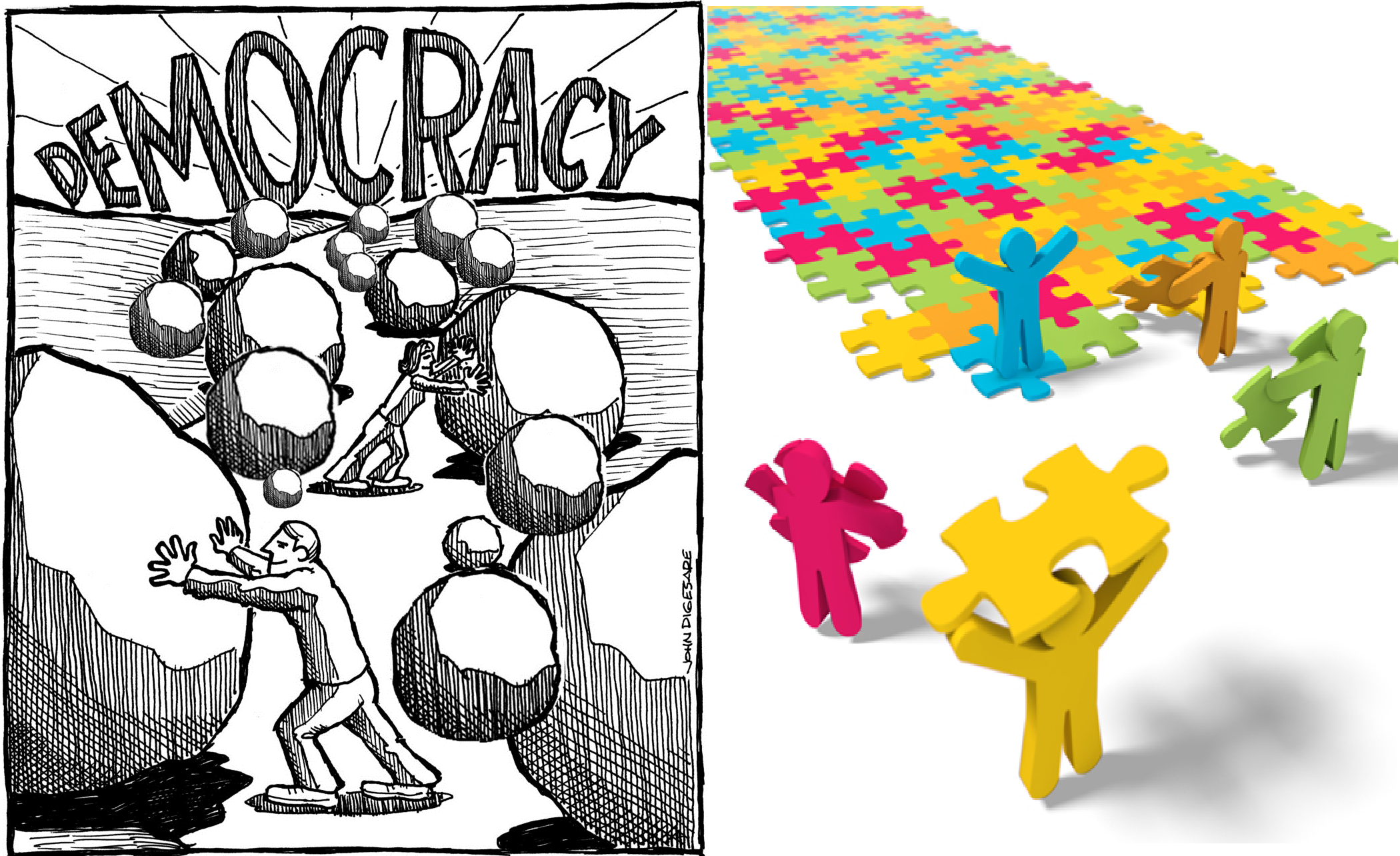
What is needed therefore are, inclusive campuses where democratic values are practised in classrooms, staff rooms, board rooms, hostel rooms and common spaces. The reality however is that in most of these spaces there is domination rather than democracy. In the class room teachers dominate over students. In the staff rooms seniors and those who belong to particular castes or gender dominate. In the board room, trustees of particular communities and those who can bring in resources dominate. In the hostel rooms and common spaces, the cool gangs or those who come from powerful communities dominate. The latter have their own nexus or informal associations which wield power and even use violence to safeguard the status quo. Others are silenced or sidelined in such a tense atmosphere.
Can students do anything to make campuses more inclusive and democratic? Can students play a role in democratising and energizing campuses to make them vibrant and dynamic spaces? Can students have and assert their rights ?
 Students can play a critical and vital role in making campuses democratic, safe, vibrant and inclusive. Firstly, they need spaces to engage with each other across gender, caste, region, religion and class lines. They need spaces to make friends across the board, understand each others’ dilemmas and life stories and to articulate their issues without fear.
Secondly, they need platforms through which they can seek justice. Student organizations, unions, clubs and other student associations for students with special vulnerabilities of gender, caste, religion or disability etc., can also be used as platforms for making requests or demands
And lastly they need mechanisms to deal with genuine grievances. There need to be grievance cells to receive complaints of discrimination, committees for prevention of sexual harassment, spoken English support, counseling cells and career guidance cells etc., so that students’ needs as individuals and as a community are addressed and justice is delivered.

Thought provoking article, Ms. Ratnam has beautifully explained the merits and demerits of the present campus/educational setup. I liked the idea of democratization wherein more emphasis has been given to the ‘individuals & education’ rather than the ‘power & elections’.
https://books.google.co.in/books?id=fEw6n96bjW4C&sitesec=reviews&rf=st:us
It will be great if we get a review of this book to be published on the website