Imarat-e-Shariah, a historic Islamic institution in Bihar, faces a confluence of critical challenges. Internal leadership disputes, allegations of external political influence, and apprehensions surrounding the recent Waqf Amendment Bill (now, Act) have ignited significant concern within the Muslim community. The bill, coupled with the existing state of Bihar’s Waqf properties, raises profound questions about the protection of religious and cultural rights. This article delves into the complexities of this crisis, examining its root causes and potential ramifications for Bihar’s Muslim community and political landscape.
What is Imarat-e-Shariah?
The establishment of Imarat-e-Shariah was a landmark moment for Bihar’s Muslim community, transcending the mere creation of a religious institution. It represented a strategic assertion of self-governance, aimed at securing justice and leadership. As documented by Professor Mohammad Sajjad in ‘Muslim Politics in Bihar: Changing Contours,’ (Routledge, 2014/2018) Maulana Abul Mohasin Muhammad Sajjad conceived it as a vital, Alternative Dispute Resolution mechanism, a function it continues to fulfill. Beyond its role in Sharia-based adjudication, Imarat-e-Shariah symbolizes the political and social mobilization of Bihar’s Muslim populace.
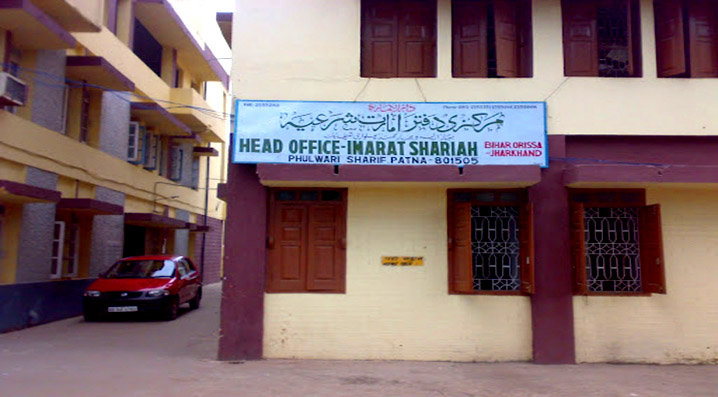
To execute its mandate, Imarat-e-Shariah established key departments like Darul Qaza and Darul Iftah, facilitating Sharia-compliant dispute resolution. Today, its Darul Qaza network spans 102 branches across Bihar, Jharkhand, Odisha, and West Bengal. Complementing this, Darul Iftah issues religious edicts and oversees a substantial educational and social infrastructure: 267 madrasas in Bihar-Jharkhand, 10 CBSE-affiliated schools, 8 technical institutes, a paramedical institute, and a hospital. Notably, the organization also provides critical disaster relief, demonstrating its multifaceted role within the community.
Imarat-e-Shariah: Establishment and Early Structure
Imarat-e-Shariah was established in 1921 under the leadership of Maulana Abul Mohasin Muhammad Sajjad, who tried to realize Maulana Abul Kalam Azad’s vision of an alternative political and religious leadership structure for Muslims. This institution was an attempt to collectively resolve the social matters related to the Shariah of the Muslim society in a multi-religious country like India, in which there is no scope for state interference.
The widespread support of the Khanqahs at the time of its establishment, especially the Khanqah-e-Rahmaniya of Munger and the Khanqah-e-Mujibiya of Patna, gave legitimacy to the initiative. In a meeting held in May 1921, it was decided that the Ulema and Mashaikh would together elect the ‘Ameer-e-Shariat‘. In June 1921, in the presence of Maulana Abul Kalam Azad, Shah Badruddin, who was the Sajjada-Nashin of the Khanqah-e-Mujibiya, was elected the first Ameer-e-Shariat of Bihar and Orissa, while Maulana Sajjad became his Naib (deputy).
The structure of the institution included a nine-member Ulema Council, which acted as an advisory council to the Ameer and Naib. Its financial resources were collected through public contributions—Zakat, Ushar, and other donations—in ‘Baitul-Maal‘, which were collected in an organized manner at the village and district level.
Muslim Politics and Imarat-e-Sharia:
At the beginning of the twentieth century, when the Muslim League was moving in the direction of communal politics, Maulana Abul Mohasin Mohammad Sajjad and his comrades put forward the idea of ‘Muttahida Qaumiyat‘ (Composite Nationalism). This idea was contrary to the two-nation approach of the Muslim League. On the one hand, Sajjad strengthened the Bihar chapter of Jamiat-ul-Ulema-e-Hind, on the other hand, he tried to provide Muslims with an alternative political platform through the establishment of Imarat-e-Shariah and then the Muslim Independent Party (MIP) in 1936.
MIP transcended mere religious identity politics, prioritizing the socio-economic concerns of agrarian and rural Muslim communities. Its victory in the 1937 provincial elections culminated in the formation of Bihar’s inaugural Muslim-led government under Dr. Mohammad Yunus, demonstrating that Muslim political agency extended beyond the Muslim League’s agenda.
Maulana Sajjad, through his 1940 writings in ‘Naqeeb,’ vehemently opposed the Pakistan movement, advocating for complete independence in alliance with the Congress. He posited that in India’s multi-religious framework, religion should be relegated to the private sphere, thereby mitigating the potential for public discord.
Political consciousness and reformist approach
Maulana Sajjad distinguished himself not merely as a religious leader, but as a discerning political strategist and social reformer. He established the Jamiat-ul-Ulama-e-Bihar in 1917, and subsequently founded the MIP in 1936, a platform that concurrently addressed the concerns of both religious and agrarian communities. This party’s participation in the 1937 Bihar government led to Mohammad Yunus becoming the province’s first Muslim Chief Minister.
Maulana Sajjad advocated for circumscribed religious expression within India’s multi-religious framework, aiming to minimize societal conflict. He also vehemently critiqued the Muslim League’s ‘Pakistan Plan,’ deeming it impractical.
Imarat-e-Shariah commenced publication of the Urdu weekly ‘Imarat’ in 1925. However, the British government confiscated the publication in 1933, leading to the prosecution and imprisonment of its associates. Subsequently, the 16-page weekly ‘Naqeeb’ was launched, which remains in circulation today.
The current (eighth) Ameer-e-Shariat is Maulana Ahmed Wali Faisal Rahmani. He succeeded his father, Maulana Mohammad Wali Rahmani, who served as the seventh Ameer-e-Shariat. Their family has a long-standing association with this leadership role—Maulana Minnatullah Rahmani, also from the same family and originally from Munger in Bihar, served as the fourth Ameer-e-Shariat for 35 years.
How did the leadership fight start?
The leadership contest within Imarat-e-Shariah intensified following the 2021 election of Maulana Ahmed Wali Faisal Rahmani as Ameer. This election was contested by Maulana Khalid Saifullah Rahmani, the current Chairman of the Muslim Personal Law Board, and Maulana Anisur Rehman Qasmi, a former Nazim who was subsequently removed from his position and presently serves as the working president of the All India Milli Council. Citing a lack of consensus, Maulana Khalid Saifullah Rahmani abstained from the vote, resulting in Maulana Faisal Wali Rahmani’s electoral victory.
The 2021 election was immediately embroiled in controversy, stemming from concerns that Maulana Ahmed Wali Faisal Rahmani lacked extensive traditional Islamic scholarly credentials. This perceived deficiency ignited internal dissent within the organization.
The internal discord intensified by late 2023, marked by Mufti Nazar Tauheed Mazahiri’s self-declaration as Ameer and the formation of a rival faction. This action was met with widespread condemnation from prominent Muslim scholars and organizations, who cited the heightened risk of communal fragmentation.
In March, Maulana Faisal Rahmani’s appointment of Mohammad Syedur Rahman Qasmi as acting Nazim, replacing Shibli Qasmi, further exacerbated the tensions. This decision is widely considered to be directly linked to the ongoing leadership struggle.
Questions and recent controversies on Ameer-e-Shariat’s citizenship
Ameer-e-Shariat Faisal Rahmani’s citizenship became a subject of intense scrutiny, coinciding with reports of his removal from the All India Muslim Personal Law Board. Subsequently, on March 26th, Imarat-e-Shariah, under the Board’s auspices, orchestrated a significant protest in Patna against the Waqf Amendment Bill. The organization publicly denounced the ruling Nitish Kumar government and issued an open letter urging Muslims to boycott the Chief Minister’s Iftar party. This defiant stance elicited threats of reprisal from Muslim leaders within the ruling coalition.
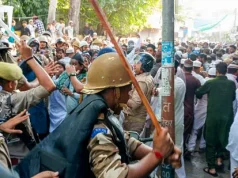
Two days later, on Saturday, March 29th, former Imarat-e-Shariah officials Anisur Rehman and Shibli Qasmi, accompanied by Imarat-e-Shariah Trust trustees and a police contingent, executed a raid on the institution. During a Board of Trustees meeting, Anisur Rahman Qasmi was elected Ameer, purportedly by majority vote, effectively removing Faisal Rahmani. The police presence at this event fueled widespread suspicion of governmental interference.
Waqf Amendment Bill and political interference
Bihar’s political landscape appears to be significantly implicated in the Imarat-e-Shariah controversy. Notably, leading Muslim organizations in Bihar recently boycotted Chief Minister Nitish Kumar’s Iftar party. A press release dated March 22, 2025, articulated their dissent, stating, ‘Prominent Muslim organizations of Bihar boycotted the Iftar party hosted by Chief Minister Nitish Kumar to protest against the Waqf Amendment Bill 2024’. These organizations, including the All India Muslim Personal Law Board, Imarat-e-Shariah, Jamiat Ulema-e-Hind, Jamiat Ahle Hadith, Jamaat-e-Islami Hind, Khanqah Majibiya, and Khanqah Rahmani, conveyed in their letter that “You had promised to protect secular governance and the rights of minorities, but your support of the Waqf Amendment Bill is an open disloyalty to the same promises.”’
Multiple reports suggest that certain leaders within Bihar’s ruling NDA coalition are seeking to exploit the internal discord. It is alleged that individuals previously removed from Imarat-e-Shariah are attempting to align with these political figures to seize control of the institution.
The role of police intervention in this dispute has also raised concerns. Many observers believe the government is attempting to exert undue pressure on the institution, aiming to manipulate its operations.
However, leaving aside the recent controversy, Imarat-e-Shariah‘s closeness to Nitish Kumar is well known. There was even discussion in the political circles that Faisal Rahmani was the first choice of Chief Minister Nitish Kumar compared to other candidates when he became the new Ameer of Imarat-e-Sharia after his father’s death and he had the support of the government.
The Anisur Rahman faction has raised a series of grievances concerning recent developments within the organization. They allege procedural irregularities in the removal of Shibli Qasmi from his position as acting Nazim and claim that the mandatory regular meetings of the Board of Trustees were not held as required. Additionally, the faction has accused Fahad Rahmani, brother of Faisal Wali Rahmani, of undue interference in organizational matters. Fahad is further alleged to have obstructed the functioning of Board members and sealed office premises. Reports of disruptive behavior by Fahad Rahmani, purportedly supported by publicly available video evidence, have also been cited.
Another serious concern voiced by the faction involves doubts over Faisal Wali Rahmani’s Indian citizenship, with fears that this could negatively impact the future of the institution. Former Rajya Sabha MP and JDU leader Ahmed Ashfaq Karim publicly stated, “Maulana Ahmed Wali Faisal Rahmani (Ameer-e-Shariat) is an American citizen. We have proof of this. Such controversial people should not hold such important posts.” On these grounds, the Board of Trustees reportedly passed a resolution to replace Faisal Wali Rahmani with Anisur Rehman Qasmi as the new Ameer-e-Shariat. The faction also insists that the involvement of police forces was purely to maintain order and ensure security.
Contradictions in claims and lack of evidence:
The faction’s claim that the Board of Trustees holds the authority to remove the Ameer-e-Shariat directly contradicts the constitution of the institution. According to the constitution, the Ameer-e-Shariat is to be elected by the Arbab-e-Hal wa Aqd, not by the Board of Trustees. This distinction is critical, especially in light of Anisur Rehman Qasmi’s defeat in the 2021 Ameer-e-Shariat election, which was conducted by the Arbab-e-Hal wa Aqd. His loss significantly weakens the legitimacy of his current claim to the position, as well as the credibility of the process he is now attempting to use to attain it.
Furthermore, the written proceedings of the Board of Trustees meeting—documents that would provide crucial details such as the vote count and the opinions expressed—have yet to be made public. Additionally, no evidence has been disclosed to support the decision to remove Faisal Wali Rahmani, including any documentation concerning the alleged possession of a foreign passport or the findings of any internal investigations.
Questions on All India Muslim Personal Law Board
The faction asserts that since Maulana Khalid Saifullah Rahmani assumed the chairmanship, the influence of Maulana Faisal Wali Rahmani’s adversaries within the Board has grown significantly. They highlight the Board’s decision to appoint individuals openly opposed to Faisal Rahmani to prominent positions immediately after his election as Ameer of Imarat-e-Shariah, viewing it as a deliberate move to undermine his leadership.
Further allegations suggest that a faction within the Board actively campaigned against Faisal Wali Rahmani’s membership, ultimately leading to his exit from the organization. Suspicion has also arisen over Anisur Rehman Qasmi’s elevation to a senior role in the Milli Council following his expulsion from Imarat-e-Shariah—especially given that the Board Chairman himself holds a prominent position within the same Council. Supporters of Faisal Rahmani interpret the Chairman’s continued silence on the unfolding conflict as a sign of possible complicity in the matter.
Imarat-e-Shariah’s Response
Imarat-e-Shariah issued a strong condemnation of the incursion, attributing it to JDU leaders and the police force, and characterizing it as a calculated attempt to undermine Muslim leadership. The organization asserted that the operation was retaliatory, stemming from their successful protest against the Waqf Amendment Bill, and represented an effort to forcibly install JDU loyalists within Imarat-e-Shariah’s administrative structure. Key figures implicated in the alleged conspiracy include JDU leader Ahmed Ashfaq Karim (Trustee, Imarat-e-Shariah), Maulana Anisur Rahman Qasmi, Maulana Abu Talib Rahmani (Trustee, Imarat-e-Shariah), Maulana Muhammad Shibli Qasmi, Maulana Zafar Abdurrauf, Mufti Nazar Tauheed Mazahiri, Advocate Raghib. Ahsan, Manzoor Alam, Dr. Majeed Alam, Mahmood Alam, and Riaz Sharif. Imarat-e-Shariah further accused the Bihar Police and JDU operatives of acting under governmental auspices, and vowed to resist all forms of coercion, pledging to continue its advocacy for the rights of the Muslim community.
Acting Nazim Mohd. Sayedur Rahmani Qasmi dismissed the citizenship allegations, stating, ‘All his allegations regarding American citizenship are false. Had he possessed such knowledge, he should have raised this issue in 2021, upon Faisal Rahmani’s election as Ameer-e-Shariat.‘
Faisal Rahmani’s supporters refuted the Anisur Rahman faction’s claims, questioning the presence of non-trustees at the meeting. They asserted, ‘If a trustees’ meeting was convened, only trustees should have been present. By what authority did others attend, and for what purpose?’ They further alleged that the meeting was a pre-orchestrated maneuver, with Anisur Rehman Qasmi and Shibli Qasmi summoned to seize control of the building with governmental assistance.
Following these events, Ameer-e-Shariat Ahmed Wali Faisal Rahmani convened a meeting and subsequently dismissed four trustees: Abu Talib Rahmani, Nazar Tauheed Mazahiri, Ahmed Ashfaq Karim, and Ragib Ahsan.
Maulana Faisal Wali Rahmani’s supporters are now demanding accountability from the Muslim Personal Law Board. They contend, ‘With the allegiances and motivations of all parties now exposed, individuals like Maulana Abu Talib Rahmani and Anisur Rehman Qasmi should be immediately expelled from the board. Furthermore, the board must publicly address this entire matter.
Opponents Become Allies
The sudden alliance between former adversaries raises significant questions. It is a stark reality that Maulana Anisur Rehman Qasmi and Maulana Shibli Qasmi, both central figures in the current controversy, were previously entrenched rivals. Their longstanding animosity was widely known.
Prior conflicts between these individuals include:
- The removal of Maulana Anisur Rehman Qasmi from his position, with Shibli Qasmi subsequently appointed as acting Nazim.
- Maulana Anisur Rehman Qasmi’s subsequent public accusations against Shibli Qasmi, Imarat-e-Shariah, and the then Ameer-e-Shariat, Maulana Wali Rahmani.
- During the COVID-19 pandemic, Shibli Qasmi faced allegations of sexual assault, leading to the registration of a First Information Report (FIR) at the Phulwari Sharif police station.
- The FIR triggered a division, with Imarat-e-Shariah supporters and Shibli Qasmi alleging the case was fabricated as a politically motivated conspiracy, implicating Anisur Rehman Qasmi and his associates.
The current situation reveals a dramatic shift:
The public has witnessed the unification of individuals who, until recently, were engaged in bitter recriminations, now aligned in an apparent bid for control of Imarat-e-Shariah.
The current alignment within the leadership of Imarat-e-Shariah raises several critical questions about integrity, consistency, and intent.
First, does this emerging alliance represent a principled commitment to shared values, or is it merely a calculated power grab? Is it an expedient arrangement, forged not from ideological alignment but from mutual interests, despite past animosities? If the original allegations and conflicts held merit, what has since changed to render them invalid or irrelevant?
Maulana Abu Talib Rahmani has, in multiple media appearances, openly expressed his discipleship to Maulana Wali Rahmani—Faisal Rahmani’s father—and spoken with pride about this association, frequently praising Wali Rahmani’s stature and legacy.
Yet, this gives rise to a pointed question: given that Maulana Wali Rahmani himself expelled Anisur Rehman Qasmi from Imarat-e-Shariah, how does Maulana Abu Talib Rahmani now justify supporting Qasmi’s bid for the position of Ameer?
This apparent contradiction reveals a troubling inconsistency. On one hand, Abu Talib Rahmani publicly venerates his mentor, and on the other, he actively endorses an individual whom his mentor decisively rejected.
Ultimately, this incongruity invites broader concerns about the motivations at play—suggesting that personal ambition and the pursuit of influence may be driving forces behind recent decisions. In light of these developments, the credibility of Imarat-e-Shariah and the impartiality of its leadership face serious and growing scrutiny.
Public Reaction and Expert Analysis
In response to the escalating controversy, prominent Muslim organizations across Bihar convened at the Imarat-e-Shariah‘s Phulwari office, engaging with Ameer Faisal Rahmani and other officials. They articulated their deep concern regarding the ongoing crisis, conveyed their solidarity with the current Ameer, and issued a fervent appeal for peace. Emphasis was placed on the necessity of resolving disputes through constructive dialogue and preserving communal unity.
Muslim and Milli political experts, analyzing the Imarat-e-Shariah controversy, highlight several critical concerns:
● They express deep apprehension regarding the damage inflicted upon Imarat-e-Shariah’s credibility and authority, emphasizing the institution’s vital role as a community representative.
● Experts underscore the significant role of political forces in exacerbating the crisis, citing alleged governmental manipulation and the divisive impact of the Waqf Amendment Bill.
● They stress the imperative of preserving communal unity, advocating for dialogue and reconciliation to avert further societal rifts.
● The experts emphasize the importance of the Waqf property disputes, and how that affects the greater Muslim community.
● Experts assess the controversy’s potential to reshape Bihar’s political landscape, particularly regarding upcoming elections and voter sentiment.
Analysts contend that a purely political interpretation of the Imarat-e-Shariah dispute is insufficient, citing the following complexities:
● Anisur Rahman and Shibli Qasmi’s participation in the Waqf Amendment Bill protests and Muslim Personal Law Board meetings demonstrates their engagement beyond solely political motivations.
● Ashfaq Karim, despite accusations of political agency, maintained close ties with the former Ameer and holds a pre-existing position within the Imarat Trust.
● Shibli Qasmi’s request for police security on March 29th, citing potential disturbances, was a personal initiative, not an official Imarat-e-Shariah directive.
● The Imarat Trust, an independent NGO with 31 members, must be differentiated from Imarat-e-Shariah, which is led by an Ameer elected by 851 members.
● The Nazim, currently Mufti Saidur Rahman, oversees financial transactions, a role previously held by Shibli Qasmi and Anisur Rahman. Therefore, the allegations against Faisal Rahmani, regarding this matter, are being questioned.
● Faisal Rahmani’s supporters are accused of strategically framing the dispute as political to garner public sympathy.
● The government is perceived as treating the controversy as a matter of prestige, while JDU-affiliated Muslim leaders see it as an opportunity for community-based political advancement.
Imarat-e-Shairah and The Current Political Scenario
The Precarious State of Waqf Properties:
According to the caste survey conducted in Bihar, the Muslim population in the state is 2 crore 31 lakh 49 thousand, predominantly Sunni. According to the Bihar Sunni Waqf Board, there are 2,900 Sunni Waqf estates in the state, with 5,000 acres of land registered. The board estimates that there are 25,000 cemeteries in the state, of which only 1,200 are registered. Similarly, out
of 10,000 mosques, 900 are registered. The Sunni Waqf Board has 3,000 disputed cases pending in tribunals and the High Court. The Shia Waqf Board reports 327 estates and 174 disputed cases pending in the Tribunal and High Court. The low registration rates of cemeteries and mosques raise concerns about the protection and proper management of these community assets.
Political Ramifications of the Imarat-e-Shariah Controversy:
The Imarat-e-Shariah controversy has brought into sharp focus the political agency of the Muslim community, with significant implications for the forthcoming assembly elections. The Rashtriya Janata Dal (RJD) is actively seeking to consolidate its political base by forging closer ties with Imarat-e-Shariah and other prominent Muslim organizations.
JDU Muslim leaders, including Maulana Ghulam Rasool Baliyavi, Ghulam Ghaus, Khalid Anwar, Afaq Khan, Afzal Abbas, and others, are facing a profound dilemma. Their discomfort with the party’s support of the Waqf Amendment Bill has triggered fears of internal division. They
have struggled to provide satisfactory answers to Muslim voters’ concerns, a fact evidenced by their evasive behavior during a recent Patna press conference. These leaders are apprehensive that any deviation from the party line will result in repercussions from the JDU high command.
Governmental Indifference and Perceived Betrayal:
JDU’s support of the Waqf Amendment Bill, viewed by the Muslim community as a direct assault on their rights, has reinforced perceptions of governmental indifference and betrayal. This has solidified the community’s belief that the government seeks to expropriate their properties.
This situation transcends mere political betrayal, raising fundamental questions about the future security of the Muslim community in Bihar. The community grapples with the uncertainty of whether their religious and cultural identity will be safeguarded, or if they will remain vulnerable to political opportunism and governmental neglect. The thousands of acres of Waqf land entangled in legal disputes further exacerbate this pervasive sense of insecurity.
Future of Imarat-e-Shariah:
The internal strife and alleged external political encroachment plaguing Imarat-e-Shariah pose a significant threat to the institution’s credibility and long-term viability. The perpetuation of this controversy risks establishing a precedent for unethical power struggles and political meddling within Bihar’s religious institutions, thereby eroding the trust and faith of the wider Muslim community. To mitigate the damage, Imarat-e-Shariah needs to resolve its internal disputes through transparent and inclusive dialogue.