Jahan Baani se hai dushwar tar kar-e-jahan beeni Jigar khoon ho to chasm-e-dil mein hoti hai nazar paida
More difficult than the conquest of the world is the task of seeing the world
When the heart is reduced to blood, only then does the eye of the heart receive its insight
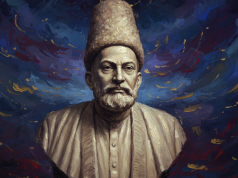
Sir Mohammed Iqbal, lovingly adored as Allama Iqbal, poet of the East, is an intellectual beacon of the ummah. A visionary thinker, astute writer, literary genius, and a maverick who, through his power of imagination, was even able to reply to his Shikwa in the form of Jawab-e-Shikwa. He swam against the tsunami of modern discourses, had the courage to dive deep into its epicenter, Europe, and respond to the hegemonic onslaught, providing clarity and meaning in the turbulent, fragmented world. His work, Reconstruction of religious thought in Islam, provides an intellectual framework to present Islam as Epistemic truth in the liquid (post)modern world. His wizardry and magic of words, conveyed through poetics, breathed the spirit of the Renaissance when the Colonial forces had enslaved the Muslim mind. Marshall McLuhan, a pioneering media theorist, propounded that Artists are the true prophets of their time, in their ability to see clearly the reality of the times they live in and to see the future unfold. By this definition, Iqbal qualifies as the true prophet of our times. This brief write-up is essential because it is as important to consider who is saying it as it is to consider the message itself.
Apni Millat Par Qiyas Aqwam-e-Maghrib Se Na Kar Khas Hai Tarkeeb Mein Qoum-e-Rusool-e-Hashmi
Judge not your nation by the criteria of Western nations
Special in composition is the Hashimi Prophet’s nation
Naquib Al-Attas, one of the prominent thinkers of our time, says that the loss of Adab and hierarchy is one of the most fundamental problems facing the ummah. He notes that the loss of Adab has resulted in following mediocre leadership and merely aping the success formulas of other communities. The above line, khaas hai Tarkeeb mein qoum-e-Hashmi, is the baseerat (Insight) of the Oracle of our time. The Muslim ummah has been bestowed with Divine guidance and a way of life. Prophets and inspired men have walked the face of the earth to be the torchbearers of the divine message, to teach humanity “Noor” (light) and save them from “Zulumat” (darkness). This divinely ordained task of guiding humanity towards light is upon the Muslim ummah, and the success of the Muslim ummah also lies in fulfilling this responsibility to its fullest capacity. As the Qur’anic ayah conveys, success is indeed for believers. This is the mandate of this ummah. The crux of this task, therefore, is being able to see the world with baseerah and clarity.
To elaborate, Modernity has displaced things from their original or right position, resulting in a distorted viewpoint and a crooked worldview. For example, nature has been disenchanted, politics has been desacralized, and values have been deconsecrated. Nietzsche claimed God is dead. Material is the only existence, claiming there is no extra-mental reality. These are the core ingredients of the modern world. As al-Attas says, the criterion of society has been inverted. Economics has overtaken politics and spirituality. All this has resulted in looking at the world and its teleology in a very linear dimension and has relegated Divine revelation and Metaphysical reality to the dustbin of history. The modern man has replaced the need for God and His presence with gadgets and man-made rituals. To say this is the age of crisis of meaning is an understatement.
In this milieu, as the ummah seeks to unchain itself from colonial shackles and contend with the loss of the Caliphate as a unifying and guiding force, its roadmap from the abyss to the pinnacle must be shaped with Islamic epistemic grounding. The project will need an outlook that can soar high, providing the Aab-e-Hayat (water of life) of Noor to refresh and reenergize the Muslim ummah and spread light to humanity entrapped in modernity’s black hole. This is the crux and insight of Allama Iqbal that Jahan beeni is the silver bullet—the prerequisite and quintessential quest to raise ourselves from slumber. Thus, Ibrahimi nazar—the Divinely inspired insight to look at the world—is the ultimate fruition of man’s existence on earth.
Walayat, Padshahi, Ilm-E-Ashiya Ki JahangeeriYe Sub Kya Hain, Faqat Ek Nukta-E-Aeeman Ki Tafseerain
Empire, sainthood, the knowledge of things that hold the world in its sway,
What are they all? Only commentaries on one small point of faith.
To develop insight and foresight is the true wisdom and a treasure. Thus this is the most fundamental task at hand for revival and renaissance. If we blindly follow the materialistic dictates of accumulating wealth, resources, arms, and technology without true foresight, then that path offers no lasting roadmap. Rashid al-Ghannouchi rightly says that Islamic thought is the USP or Uniqueness of Islam, and if we are on this pursuit, we are destined to provide leadership to the world.
Another aspect of this couplet is the idea that true opening only occurs when the heart is reduced to blood. It is said that a crisis reveals the existential plight of the infrastructure. When Allama wrote this couplet, the Ottoman Caliphate had been dismantled, World War II was looming, colonial presence dominated the Muslim world, and there was a crisis of Islamic traditional education, among many other factors. This was also the age of the formation of the Nation-state, with modern polity ingrained in state formation. Thus, this was the period of tectonic shift and also lays bare the existential plight of the ummah. Therein lies the clarity and priority for the ummah: to embark on the path of renaissance by shunning blind taqleed (imitation) and following the Ijtihadi way out (independent reasoning). This means trying to revive the spirit of Khilafa, reverting to the primordial and original roadmap of operating the ummah under Quranic wisdom, and diligently working to conceptualize and present Islam in the liquid modern world as the upholder of truth, beneficence, and jamal (beauty). The task Allama proposes is similar to the responses of figures like Imam Ghazali when he encountered the onslaught of Greek philosophy, Imam Ibn Taymiyyah, and Shah Waliullah with his Hujjatullahil Baligah.
Allama Iqbal’s diagnosis sees the modern condition as a glittery distraction that has bamboozled the world, but he suggests it will ultimately commit suicide on its own dagger, much as Maulana Maududi had prophesied about communism being wiped out of Moscow. But the real insight Allama has bestowed upon the ummah is that its original and incumbent duty is to develop an epistemically rooted Islamic worldview in the age of the modern nation-state armed with its institutions, to guide Muslims with the noor of divine guidance, and, in turn, to illuminate the entire world. This is their duty, their key to survival, their roadmap for the rulers of the world, and the mandate of being the successors of Prophet Mohammed (PBUH) and members of the Khair-e-Ummah (The Best Community)