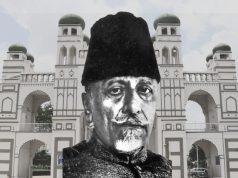

I don’t know how many of you heard the name of this great activist and I don’t know whether I will be able to do the justice with his life by my pen or not but I know he was far bigger than my knowledge and understanding. I am talking about Ahmed Mohamed Kathrada. Yes it is him.
Ahmed Mohamed Kathrada was a South African politician, former political prisoner and anti-apartheid activist.
He was born in the small country town of Schweizer-Reneke in the Western Transvaal, the fourth of six children in a Gujarati Bohra family of South African Indian immigrant parents from Surat, Gujarat.
Because of being an Indian he didn’t get admission in any of the ”European” or “African” schools. So at the very early age he was bound to move to Johannesburg 200 miles away from his home for studies. In Johannesburg he was influenced by leaders of the Transvaal Indian Congress such as Dr. Yusuf Dadoo, IC Meer, Moulvi and Yusuf Cachalia, and JN Singh. Consequently, he became a political activist at the early age of 12 when he joined the Young Communist League of South Africa.. He took part in various activities such as handing out leaflet and performing volunteer work in the individual passive resistance against the Pegging Act in 1941. During World War II, he was involved in the anti-war campaign of the Non-European United Front.
At the very early age of 17 he left the schooling and joined as full time worker for the Transvaal Passive Resistance Council in order to work against the Asiatic Land Tenure and Indian Representation Act, commonly referred to as the “Ghetto Act”, which sought to give Indians limited political representation and restricted where Indians could live, trade and own land.
Kathrada was one of the two thousand volunteers imprisoned as a result of the campaign; he spent a month in a Durban jail. This was his first jail sentence for civil disobedience. Reportedly, he gave an incorrect age to the police so that he would not be treated as a juvenile, but sent to an adult prison instead. Later, he was elected as the chair of the Transvaal Indian Youth Congress.
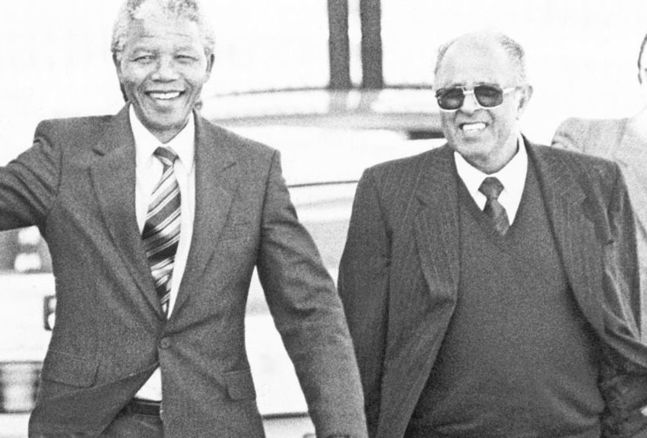
In 1950s Kathrada came into close contact with African National Congress leaders such as Nelson Mandela and Walter Sisulu. He was one of 156 accused in the four-year Treason Trial which lasted from 1956 to 1960. Eventually, all of the accused were found not guilty.
During 1960 so many anti-apartheid organizations were banned but Kathrada continued his political activities despite repeated detentions and increasingly severe house arrest measures against him. In order to be free to continue his activities, Kathrada went underground early in 1962.
So what does anti-apartheid mean?? The Anti-Apartheid Movement (AAM), originally known as the Boycott Movement, was a British organisation that was at the centre of the international movement opposing South Africa’s system of apartheid and supporting South Africa’s non-whites.
Apartheid was a system of institutionalized racial segregation and discrimination in South Africa between 1948 and 1991, when it was abolished.
On 11 July 1963, Kathrada was arrested at the South African internal headquarters of Umkhonto we Sizwe (“The Spear of the Nation” – the military wing of the ANC) in Rivonia, near Johannesburg. Although Kathrada was not a member of Umkhonto we Sizwe, he became one of the accused in the famous Rivonia Trial, which started in October 1963. He was charged with sabotage and attempting to overthrow the government and to start a guerilla war. This trail end in june 1964 and Kathrada along with Nelson Mandela, Walter Sisulu, Govan Mbeki, Andrew Mlangeni, Billy Nair, Elias Motsoaledi, Raymond Mhlaba and Denis Goldberg was sentences for life time prison .
For next 18 years Kathrada was confined to the Robben Island Maximum Security Prison along with most of his Rivonia Trial “colleagues”. In October 1982, he was moved to Pollsmoor Maximum Prison near Cape Town to join others such as Mandela, Sisulu, Mhlaba and Mlangeni who had been moved there a few months before. during his period in jail he completed his degree in History/Criminology and Bibliography as well as Honours degrees in History and African Politics through the University of South Africa.
On On 15 October 1989 Kathrada, along with other prisoners released from the Johannesburg prison .
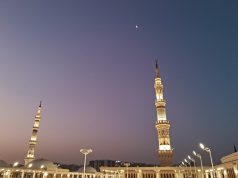
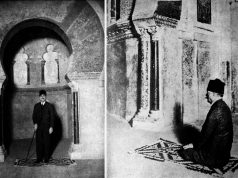
After releasing he served on the interim leadership committees of both the ANC and the South African Communist Party. Kathrada went on the Hajj pilgrimage to Mecca in 1992.
He was awarded four Honorary Doctorates, including the University of Missouri, Michigan State University, and the University of Kentucky. He was awarded the Pravasi Bharatiya Samman by the Ministry of Overseas Indian Affairs in 2005.
He died at a medical center in Johannesburg from complications of a cerebral embolism on 28 March 2017, aged 87.
His job for the people of African even being an immigrant is unparalleled and he will always be remembered as great leader.