

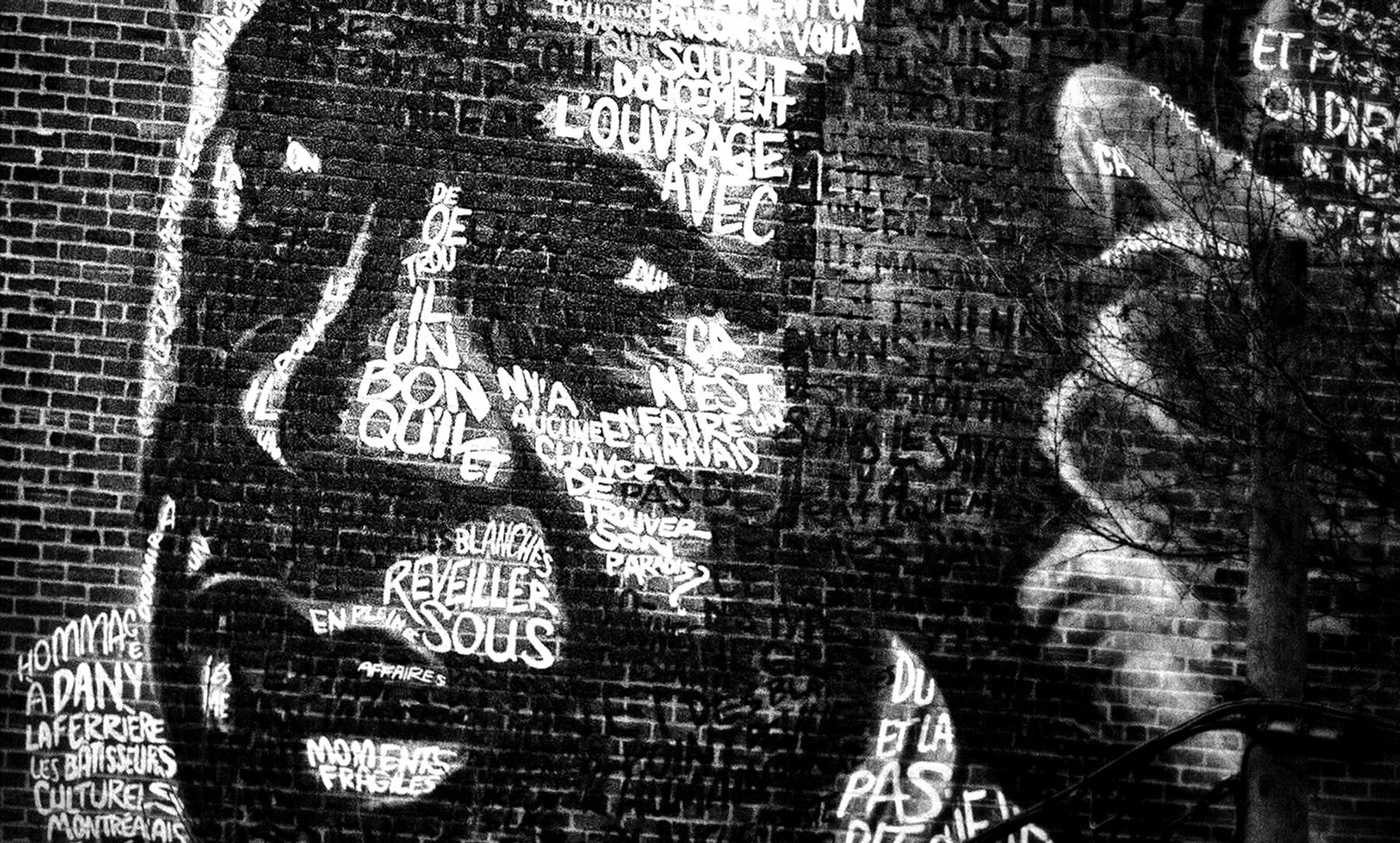
In November 1953, a psychiatrist from Martinique took charge of a ward at the Blida-Joinville hospital in French Algeria and began, almost immediately, to fail.
He had arrived with a method he believed in. At Saint-Alban in occupied France, under the Catalan refugee psychiatrist François Tosquelles, Frantz Fanon had learned that madness was not only a matter of the individual skull, that the ward itself was a social organism, and that a hospital could be reorganised into a place where patients participated in their own lives rather than being stored in them. Socialthérapie, they called it, and the English “social therapy” does not carry what the French does: an entire institutional psychiatry born in the Resistance, built on the conviction that you cannot cure a person inside a sick institution. Fanon brought all of it to Blida. Group meetings. Collective work. Film screenings, festivals, a hospital newspaper written by patients and staff together.
In the ward of Europeans, it worked. The meetings filled, the newspaper found writers, the films drew audiences.
In the wards of Algerian Muslims, it collapsed entirely.
Nobody came. Nobody wrote. The screenings played to empty rooms and the meetings dissolved into silence, and the whole apparatus that had proved itself a few corridors away simply refused to take. A layman would have known exactly what to conclude, because colonial psychiatry had an explanation ready. The Algiers School had built a literature on the premise that the North African was impulsive, credulous, incapable of the interior life that European therapy assumed. The failure would have confirmed the science, and been written up as a finding about Muslims.
Fanon drew the opposite conclusion. Writing with his intern Jacques Azoulay in L’Information psychiatrique the following year, he asked the question that ought to be read aloud on his birthday: “Could our judgement have been more impaired than when we proposed to implement a Western-based social therapy programme in a ward of mentally ill Muslim men? How is a structural analysis possible if we bracket out the geographical, historical, cultural and social frameworks?” Azoulay, remembering it later, was blunter. We had gotten it totally wrong.
What Fanon did next is the reason we are still reading him.
He built a café maure, a Moorish café, inside the psychiatric ward, a real one, with real customers, as a startled visitor recorded. He brought in the meddahs, the storytellers, whose form of narration had actual purchase on the men in his care. He instituted the traditional festivals. He had Ramadan observed inside the hospital and wrote about it in Notre Journal, the weekly he edited. He sent his interns to study the exorcisms performed by marabouts not as folklore to be catalogued, but as clinical material to be understood. He had the patients build a football pitch, of which he was inordinately proud, and which is still in use.
The other doctors found the café ridiculous and said so.
A café in a mental hospital was absurd to them precisely because they could not imagine Muslim sociability as a form of health. They could imagine it as culture, as custom, as the picturesque residue of a backward people — but not as the thing that makes a man well. To take the storyteller seriously as a therapeutic instrument required believing that Algerian life contained its own resources for repair, and that belief was simply not available inside colonial medicine. Fanon put it to his colleague Charles Geronimi directly: the point was to show that Algerian culture carried other values than colonial culture, and that those structuring values should be taken up confidently by the people who bore them.
And then the sentence that everything else in his life turns on. La psychiatrie doit être politique. Psychiatry must be political.
—
The man who built that café was twenty-eight years old, born on the twentieth of July, 1925, in Fort-de-France. He had volunteered for the Free French at seventeen, studied medicine and psychiatry at Lyon, and written Peau noire, masques blancs (Black Skin, White Masks) at twenty-seven.
Three years after arriving at Blida, he resigned, in a letter to the Resident Minister of Algeria that belongs beside anything he published. “If psychiatry is the medical technique that sets out to enable individuals no longer to be foreign to their environment,” he wrote, “I owe it to myself to state that the Arab, permanently alienated in his own country, lives in a state of absolute depersonalization.” And then the question, and its answer: “What is the status of Algeria? A systematic dehumanization.”
He joined the Front de Libération Nationale (the National Liberation Front), wrote for El Moudjahid, and served as ambassador for a government whose country did not yet formally exist. He died of leukaemia at thirty-six, in a hospital in Bethesda, Maryland, in December 1961, weeks after finishing Les Damnés de la terre (The Wretched of the Earth). He was buried in Algerian soil, at his own request, under the name he had taken: Ibrahim Fanon.
A Martinican psychiatrist, not a Muslim, asked to be buried under a Muslim name in a country he had chosen — a man who spent his life earning a belonging no birth had given him.
—
What the ward at Blida established is a general proposition, and it travels: a framework that cannot see a people will mistake its own blindness for their pathology. India offers a case, and the temptation in making it is to reach for the wrong Fanon.
The tempting move is to take the schéma épidermique racial, the racial epidermal schema, his account, in the chapter usually rendered as “The Fact of Blackness,” of how the colonised body is overdetermined from without, how the skin becomes a surface on which the coloniser’s meanings are already written, and simply rename it. An Islamic epidermal schema. The beard, the cap, the hijab, the name standing in for the epidermis.
It is a tidy transposition, and it destroys the thing it borrows.
Fanon’s insight depends entirely on irreversibility. The schema is épidermique. It is written on skin. The child on the train cries Tiens, un nègre! (“Look, a Negro!”) and there is nothing Fanon can do, no correction, no explanation, no performance, no achievement, no proof. He is a physician, a veteran, a man of letters, and none of it reaches the child. The despair of those pages is the particular despair of a man who has run out of moves.
Indian Muslims do not have this. There is no epidermis to read. A Muslim in Lucknow or Bhopal or Malegaon carries no bodily mark that distinguishes him from a Hindu, and the apparatus of suspicion knows it. The schema must therefore be assembled from signals: a name on a form, a beard and its particular length, a hijab, a greeting, a dietary practice, an address, a manner of speech, the way a sentence about Pakistan is finished.
This is not a milder condition. It is different, and in one specific respect, it is worse.
Because the markers can be removed, removal can be demanded; because the accusation concerns affiliation rather than biology, it can in principle be answered, and therefore it must be answered, continuously, for life. Fanon’s Black man is condemned without appeal. The Indian Muslim is granted a permanent right of appeal that never reaches a verdict. He is invited, endlessly, to prove something, and the invitation is the punishment.
Consider the cost, hour by hour. The calculation before saying your name aloud to a stranger. The decision about the beard — kept, trimmed, shaved — made and remade as a security assessment. The condemnation of some distant atrocity offered before anyone has asked, because you have learned that not offering it is itself read. The unending editorial labour, performed by people who have committed no offence, proving a negative that cannot be proved.
This is what Fanon meant by being permanently alienated in one’s own country. Not exiled. Not expelled. Permanently alienated at home, which is harder to name and harder to survive, because there is no border you crossed and none you could cross back.
He has a text for precisely this. It is “L’Algérie se dévoile” (“Algeria Unveiled”), the opening chapter of L’An V de la révolution algérienne (“Year Five of the Algerian Revolution”). The book that reaches English, through a translator’s invention, as A Dying Colonialism. It is his study of a marker that could be put on and taken off, that the French stripped away and called it liberation, and that Algerian women removed and resumed tactically, moving through checkpoints with their faces bare, until the meaning of both wearing and not wearing had been rewritten by the very people the garment was said to imprison.
—
An objection has been waiting since the first paragraph, and deserves stating at full strength.
Indian Muslims, it goes, are not the colonised. They are the descendants of colonisers. A thousand years of foreign rule, temples destroyed, a civilisation subjugated and only now recovering itself. Hindutva does not present Muslims as inferior. It presents them as the former masters, and presents itself as the anti-colonial movement that 1947 left unfinished. It speaks, fluently and constantly, the language of decolonisation. This is the load-bearing wall of the entire structure, and a Fanonian reading that cannot address it is decoration.
The answer is not to deny the medieval record but to ask where its present grammar came from, and that grammar is arithmetic before it is history. From 1871, the decennial census recorded the religion of every household in India. As Bernard Cohn argued, this did not describe Indian society so much as remake it, converting identities that had been local, overlapping and often indifferent into fixed categories with totals attached, and teaching communities to think of themselves as blocs with a stake in their own headcount.
The consequences arrived quickly. In 1891, the Census Commissioner calculated that Hindus would die out in six hundred and twenty years. In 1909, writing in the shadow of the 1901 returns, U. N. Mukherji published Hindus: A Dying Race, correcting the official figure to four hundred and twenty. It ran through many reprints and fed directly into the tracts of the Hindu Mahasabha. The demographic panic that now animates Indian politics, the vanishing majority, the encroaching minority, was not a folk memory of Muslim rule. It was authored by the colonial state’s own statistical office, and Hindu revivalism inherited it as a finding.
So the fear is not indigenous memory; it is an administrative product, retained long after the administration departed. This is what Ashis Nandy meant, in the work that remains the closest Indian companion to Black Skin, White Masks, when he called Hindu nationalism “not an ‘extreme’ form of Hinduism but a modernist creed that seeks to retool Hinduism… into a national ideology and the Hindus into a ‘proper’ nationality.” A proper nationality is a countable one. The movement that calls Indian Muslims foreign is the most thoroughly colonised formation in Indian public life: it wants a nationhood modelled on nineteenth-century Europe, and reads its own people through an instrument the Empire built to govern them.
The harder move is to decline an argument you could win. The temptation is to litigate the record: that the Mughals were Indian, that the destruction of places of worship was a political practice performed by rulers of every faith, that most Indian Muslims descend from converts rather than conquerors. Each is true. And each of them concedes the premise — that present belonging must be established by historical audit, that a citizen’s right to be unafraid turns on the findings of a research programme about the eleventh century.
Fanon saw the trap. He refused Negritude’s recovery of a glorious African past, not because it was not glorious but because answering contempt with grandeur accepts the coloniser’s terms: that worth is proved by ancestry, that the burden of demonstration sits with the accused. Two pages before the end of Black Skin, White Masks, he wrote:
I am not a prisoner of history. I should not seek there for the meaning of my destiny… I am my own foundation. And it is by going beyond the historical, instrumental hypothesis that I will initiate the cycle of my freedom.
That passage and the prayer that closes the book are on the same page. They are one gesture.
And this is where the two halves of the argument meet. The invader charge is why the marker economy exists. Because the accusation is historical rather than epidermal, it generates a permanent demand for proof of detachment, from a history you did not make, a state you have never seen, a loyalty nobody has thought to ask your neighbour to demonstrate. That is why the marker must be removable, and why removing it never finishes the job. They are one machine, seen from two sides.
—
Fanon’s failure at Blida was the failure of a discipline, and India’s disciplines have a founder worth naming.
The first department of sociology in India was established at Bombay in 1919. The man the Empire hired to found it was Patrick Geddes, a Scottish town planner who had been a partisan of Zionism since 1910. He had proposed a plan for Jerusalem in 1918, and Chaim Weizmann, head of the Zionist Commission to Palestine, recruited him to plan the Hebrew University and new colonies. His correspondence with the Zionists was conducted from India; his working time was divided between Bombay and Palestine. In the same years, with the same hands, he was building the institutional study of Indian society and drawing the settlement of another people’s land.
I take this from Irfan Ahmad, whose genealogy of Indian sociology appeared this year in the Sociological Bulletin, and whose point is not that Geddes is a scandalous anecdote. It is that the standard Indian accounts of Geddes do not mention Palestine at all. The discipline’s memory of itself performed the erasure. And that erasure, Ahmad argues, is continuous with the way Indian sociology has handled Islam ever since, through what he calls the catalogues of silence, erasure and assimilation, a pattern that cuts clean across the supposed divide between the Hindu revivalist and the Nehruvian secularist, because both inherited the same instrument.
This is harder than resemblance. The apparatus for knowing Indian society and the apparatus for settling Palestine were not distant cousins who met later over a defence contract. They shared a founder and the same imperial confidence: rational planning applied to populations never consulted. When India and Israel discover their affinity today, the shared vocabulary of counter-terror, the shared demographic anxiety, the shared conviction that a nation is a religious majority holding ground against an internal enemy, they are not converging. They are returning.
It is that no honest person can write about Muslim belonging in July 2026 and write only about India. To partition the subject, Gaza over there, New Delhi over here, each in its proper file, is to practise exactly the compartmentalisation these disciplines invented. The young Muslim in Delhi watching Gaza and feeling something more particular than horror is not indulging in a loose comparison. He is perceiving the outline of a single genealogy, and he is right.
Fanon would have insisted on the differences, and they are enormous. Gaza is a besieged territory under bombardment and starvation. India is a constitutional republic where Muslims vote, sue, publish and organise, although each of these, sooner or later, is criminalised. To collapse them insults both. Indian Muslims are not a colonised people in Fanon’s sense; there is no settler population, no code de l’indigénat, no war of national liberation, and his pages on revolutionary violence, the most quoted and least read in his work, do not transfer. Whoever invokes them here is not reading Fanon but using him, against the very people he wrote for.
What transfers is not the diagnosis but the discipline: the insistence that psychic distress be read as the signature of a social arrangement rather than the defect of a person; that a framework which pathologises a people instead of examining itself is doing the arrangement’s work; and, this is the one that costs something, that the answer to being told you are not fully human is not to assemble the evidence that you are.
—
Which returns us to the café in the ward.
What Fanon built at Blida was not sensitivity training, nor what would later be called cultural competence. It was the recognition that a people’s own forms, their sociability, their storytelling, their festivals, their fasting, are not obstacles to be worked around on the way to health but the material from which health is made. The café was an argument. It said: these men do not have to become Europeans in order to become well.
A community told daily to prove itself has two available responses. It can accept the terms and spend itself on the proof, the pre-emptive condemnations, the patriotism performed at a higher volume than anyone else’s, the endless self-editing that never earns the acquittal it seeks. Or it can build the café: its own institutions, its own scholarship, its own account of its own distress, its own storytellers, its own reading of its own history in its own idiom, and let those be sufficient. Fanon’s word for the first was alienation. He had no single word for the second. He simply did it, in a hospital ward, in 1954.
Irfan Ahmad ends his paper by invoking Ghalib, and the framing is his, so let the last movement here be borrowed with acknowledgement. His argument is that sociologists (or any discipline, in general) should become human first and study nationalism (the matter) second, rather than making the former hostage to the latter, because a discipline that studies nationalism before it has decided to be human will end up, as Indian sociology largely has, enacting dehumanisation and calling it method.
The line he invokes is:
ādmī ko bhī mayassar nahīñ insāñ honā
Even a man is not fated to become human.
In 2015, the Delhi police described Ghalib’s poetry as promoting terrorism. Anti-national. A hundred and forty-six years after his death, the poet who doubted whether man could become human was found, on review, to have been a threat to the nation all along.
And a hundred and one years after his birth, the psychiatrist who built a café in a ward for men the science had written off left us his final prayer, on the same page where he had refused to be a prisoner of history:
O my body, make of me always a man who questions!
Two men, a century and a subcontinent apart, asking the same thing in different grammars: whether one is permitted to become insān. Both were answered by a state that heard the question as a threat. The question is the offence, and to ask it anyway is the work.
References
Ahmad, I. (2026). Toward a genealogy of Indian sociology: Knowledge as nationalism, nationalism as knowledge. Sociological Bulletin, 75(2), 233–251.
Cohn, B. S. (1987). An anthropologist among the historians and other essays. Oxford University Press.
Fanon, F. (2008). Black skin, white masks (C. L. Markmann, Trans.). Pluto Press. (Original work published 1952)
Fanon, F. (1965). A dying colonialism (H. Chevalier, Trans.). Grove Press. (Original work published 1959)
Fanon, F. (1963). The wretched of the earth (C. Farrington, Trans.). Grove Press. (Original work published 1961)
Fanon, F. (2018). Letter to the Resident Minister (December 1956). In J. Khalfa & R. J. C. Young (Eds.), Alienation and freedom (pp. 433–435). Bloomsbury. (Original work published 1956)
Fanon, F., & Azoulay, J. (1954). La socialthérapie dans un service d’hommes musulmans: Difficultés méthodologiques. L’Information psychiatrique, 30(9), 349–361. (Reprinted in F. Fanon, J. Khalfa, & R. J. C. Young (Eds.), Alienation and freedom (pp. 353–372), 2018)
Geronimi, C. (n.d.). Fanon à Blida. Cited in J. Khalfa & R. J. C. Young (Eds.), Alienation and freedom (p. 190). Bloomsbury.
Mukherji, U. N. (1909). Hindus: A dying race. Calcutta.
Nandy, A. (1983). The intimate enemy: Loss and recovery of self under colonialism. Oxford University Press.
Nandy, A. (1997). The twilight of certitudes: Secularism, Hindu nationalism, and other masks of deculturation. Alternatives: Global, Local, Political, 22(2), 157–176.
Notre Journal. (1954, July 15). From the Moorish café to social life (No. 30). Blida-Joinville Psychiatric Hospital.