


As human beings we are consumers and creators of stories.
The plain dictum of speech itself, has the power to transmute a soul into ecstasy after prolonged periods of senseless silence. Even though it is silence that is more commonly associated with the mystical, we must not sell speech so short either. The delirious delight of speech lies not merely in articulation, but in being heard and understood. This joy of communion with another self, is something entirely unlike the solitary elations of a monk on a mountain. Or perhaps it is precisely the lone sanyasi who is better able to appreciate the wonder of speech, because of her prolonged deprivation of it.
Speech, as communication, is a communion with our fellow humans. And it is in stories that we find this communion most pronounced. Stories, more than any theoretical discourse, offer an enactment of our inner drives and desires. They offer screens for projection, but they are also mirrors for reflection – in which to see ourselves and each other. In the stories of individual men lies the story of the universal man – which, as it stands, is also the story of each one of us.
It’s remarkable that quite a few memoirs and biographies read as well written fiction. And there is certainly something unique to their appeal that fiction falls short of. For while fiction is well known for its ability to ‘transmute’ us. It may be said that it is rather stories based on truth, that render our ‘transmutation’ effective. True stories and examples, have that advantage over the purely imaginative, of showing us ‘real’ possibilities and offering greater grounds for hope and courage.
From the most ancient of mythologies to religious traditions and spiritual communities, stories have proven to be the most instructive of educational tools. The metaphor of myth is not merely entertainment, but is rather a potent pedagogical device and an enduring psychological therapy. It is precisely this therapeutic power of stories, that propels Dr. Irvin D. Yalom to impart his psychotherapy through the various novels that he has come to write.
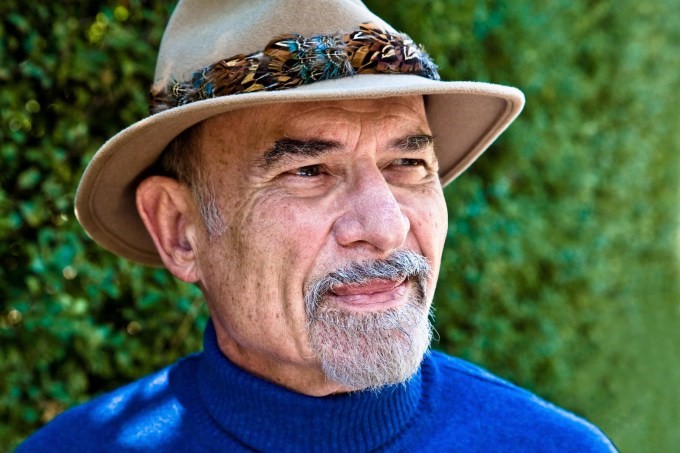
Dr. Yalom is a Jewish born, American psychiatrist who is well-known for his works of fiction which are imbued with the insights of an existential psychotherapist. He uses them as learning tools with his students and patients – though his work has benefited a wider readership. However, during his psychiatry training, Dr. Yalom had a hard time finding a fellow clinician interested in the psychological insights to be gleaned from literature. So he was particularly delighted to encounter the book ‘Existence’ by the psychologist Rollo May which laid out the basic tenets of existential thought and introduced him to relevant insights of Søren Kierkegaard, Friedrich Nietzsche, and other existential thinkers. The book offered a ‘third way’, an alternative to the speculations of psychoanalytic thought and the behaviorism of the biological model—a way that drew from the wisdom of philosophers and writers from the past 2,500 years.
He was to find equal delight in the works of existentialist fiction as well: “such authors as Dostoevsky, Tolstoy, Beckett, Kundera, Hesse, Mutis, and Hamsun were not dealing primarily with matters of social class, courtship, sexual pursuit, mystery, or revenge: their subjects were far deeper, touching on the parameters of existence. They struggled to find meaning in a meaningless world, openly confronting inevitable death and unbridgeable isolation. I related to these mortal quandaries. I felt they were telling my story: and not only my story, but also the story of every patient who had ever consulted me.”
“I gradually drifted away from my original affiliation with medical science and began grounding myself in the humanities. 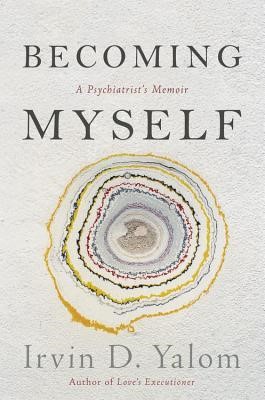 This was an exciting time, but also a time of self-doubt: I often felt like an outsider, losing touch with new developments in psychiatry and, at the same time, becoming just a dabbler in philosophy and literature. Gradually I would pick and choose among thinkers who seemed most relevant to my field. I embraced Nietzsche, Sartre, Camus, Schopenhauer, and Epicurus/Lucretius, and bypassed Kant, Leibniz, Husserl, and Kierkegaard because the clinical application of their ideas was less apparent to me.”
Soon Dr. Yalom’s writing too underwent a transition: from writing research-oriented articles and books for other academics to writing about therapy for a more general public. Moving away from quantitative research language and seeking to emulate the storytellers he had been reading all his life.
Combining his passion for philosophy, literature and psychotherapy, he wrote books such as ‘When Nietzsche Wept’ –where we experience what might have happened if Friedrich Nietzsche had been placed in a moment of history when he could have invented a psychotherapy, derived from his own published writings, that could have been used to cure himself.
Furthermore, as a demonstration of effective group therapy, he offered ‘The Schopenhauer Cure’: If group therapy could help Arthur Schopenhauer, the arch pessimist and most dedicated misanthropist of the ages, then group therapy could help anyone!
When Dr. Yalom first entered residency in 1957, psychotherapy was the very core of psychiatry, and he found his passion for exploring it shared by most of his colleagues. Psychoanalysis was still a standard school in most departments. However, Dr. Yalom found himself growing increasingly disenchanted by orthodox schools of psychoanalysis. He had read the literature and had great respect for Sigmund Freud (whom Dr. Yalom regards as not just the founder of psychoanalysis, but the entire field of psychotherapy itself). Of his own personal analysis with a Freudian analyst, he recounts that the ‘analyst’s comments seemed irrelevant and off the mark, and I grew to feel that, though she wanted to be helpful, she was too constrained by the edict of neutrality to reveal to me any of her real self. Moreover, I was coming to believe that the emphasis on early life, and primal sexual and aggressive drives, was severely limiting.’
By contrast, through his own psychotherapy practice, Dr. Yalom came to believe that that personal honesty and transparency mattered very much in therapy. He chose not to enroll in any postgraduate training such as Freudian or Jungian or Lacanian analytic institutes. Thus Dr. Yalom found freedom from governing rules and chose to be guided instead by his carefully monitored results.
Dr. Irvin Yalom also takes on other adversaries in his book ‘The Gift of Therapy’ which is a frank counsel to patients and upcoming therapists. “I wrote the book in opposition to the brief, manualized, problem-solving, cognitive behavioral approach to psychotherapy spawned by economic pressures. I was fighting, too, against psychiatry’s overreliance on medications. “
He finds working with patients extremely meaningful and fulfilling. “Rarely do I hear therapists complain of a lack of meaning. We live lives of service in which we fix our gaze on the needs of others. We take pleasure not only in helping our patients change, but also in hoping their changes will ripple beyond them toward others.”
He calls upon therapists to appreciate their privileged role as cradlers of secrets, having access to ‘a backstage view of the human condition without social frills, role-playing, bravado, or stage posturing’. It is a work that provides the opportunity ‘to transcend ourselves and to envision the true and tragic knowledge of the human condition.’
Dr. Irvin Yalom attempts to confront this tragic knowledge of the human condition, head-on in his book ‘Staring at the Sun’, titled on La Rochefoucauld’s famous statement: “One cannot stare straight into the face of the sun or death.”
Earlier, researching for the book ‘Existential Psychotherapy’, the author had also read all he could find about death. He found the scholarly literature on death vast, sprawling, often esoteric and quite removed from psychiatry, and realized that his unique contribution could come from his work with patients. So for the next ten years of his clinical practice he was to focus on patients diagnosed with untreatable terminal illness. However, since death anxiety is contained within all of us – even those presently healthy, and because many of our unconscious fears are rooted in our terror of death, confronting it must remain an indispensable part of psychotherapy in general.
“On many occasions I have employed an explicit exercise: I ask the patient to draw a line on a sheet of paper, and then I say, “Let one end represent your birth and the other end your death. Now please place a mark on the line to denote where you are now and meditate on that diagram.” This exercise rarely fails to incite deeper awareness of life’s precious transiency.”
This is no faint exercise. The doctor himself describes being severely anxious after such sessions, brooding about his own death, having difficulty sleeping, and often being hounded by nightmares.
The Czech existential novelist Milan Kundera, wrote that the act of forgetting offers us a foretaste of death. In other words, what terrifies us about death is not only loss of the future but also loss of the past.
Reminiscing about a past incident witnessed apart from himself, by only two other friends who had by now passed away, he recalls: “I experienced a staggering loneliness as I realized I no longer had a witness to that scene of so long ago. It now existed only in my mind, somewhere in the mysteries of my crackling neural circuits, and when I died it would vanish entirely.”
The author finds some solace in a thought-experiment suggested by Richard Dawkins:
“Imagine a laser-thin spotlight moving inexorably along the immense ruler of time. Everything that the beam has passed is lost in the darkness of the past; everything ahead of the spotlight is hidden in the darkness of that yet to be. Only that which is illuminated by the laser-thin spot of light is alive and aware.”
That thought, says Dr. Yalom, ‘always brings me solace: it makes me feel lucky to be alive at this moment.’
The author is grateful for his marriage and family. However, he regrets not having spent more individual time with each child – absorbed as he had become in teaching and writing and financially supporting the family.
And though having travelled the world over, and having always had the desire to see places, Dr. Yalom confesses: ‘As I age, I grow more and more reluctant to leave home.’
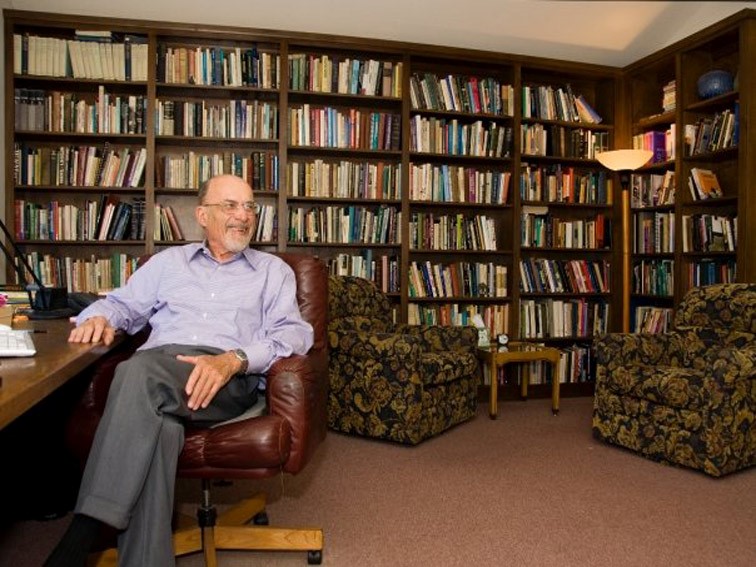
Yet the doctor continues to write in the mornings regularly and see patients in the afternoon on most days. He is often asked why he still choose to work into his Eighties, despite any lack of a financial need. Dr. Yalom muses:
‘Sometimes I accept the idea that retirement should be a time of rest and peace, a time of contented reflection. Yet I also know there are unruly feelings from my very early life that continue to create turbulence and threaten to surface if I slow down.’
And as one reaches the end of the book, one is saddened, and perhaps relieved for the author, to see him announce that he may not write another major work hereafter:
‘Yes, I confess: I have terrible qualms about arriving at this last paragraph. I’ve always had a stack of books waiting in the back of my mind to be written, but no longer. Once I finish this work, I feel certain there are no more books waiting for me. My friends and colleagues groan when they hear me say this. They’ve heard it many times before. But I fear this time is different.’
The fear of disability, dementia and death hangs just around the corner for the doctor in his extreme age. He copes with the aid of writing: ‘I sometimes think the very act of writing is my effort to dispel the passage of time and inevitable death.’
The doctor also finds consolation in the idea of what is called ‘rippling’. Rippling refers to passing parts of our self on to others. Like the ripples a pebble creates on water, spreading out and effecting areas long out of reach of the pebble itself. The legacy that one leaves, the ripples that one creates, in one’s profession, in one’s progeny and in one’s society may offer one the feeling of a life lived well enough. That there are no deep regrets, and that death may now be faced when it comes, with serenity. That one may be able to say at the end, as does Nietzsche’s Zarathustra: “Was that life? Well then once again!”