

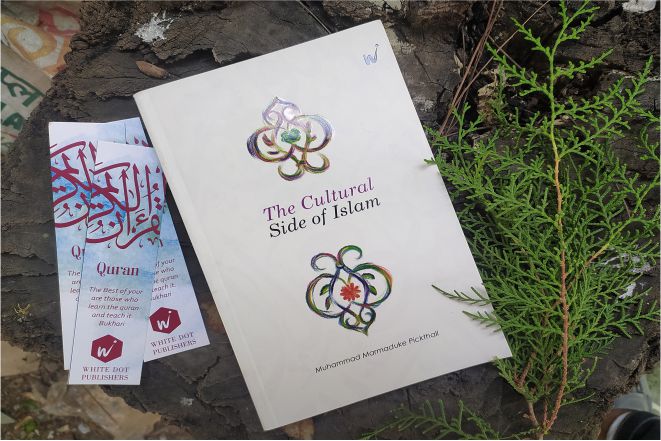
Madras (now Chennai) is a unique city in South India. It has significantly enriched the Muslim intellectual legacy in the recent past. We must especially respect and thank the Committee of “Madras Lectures on Islam,” which played an important role in promoting modern Islamic thought. Thanks to this committee, there were significant contributions to Islamic literature in the form of its famous lecture series on Islam. These were delivered at different times by three, among many, very distinguished figures of high learning and men of letters, namely:
1- Allama Sir Mohammad Iqbal, who delivered six philosophical lectures, published in book form as: Reconstruction of Religious Thought in Islam, later translated into Urdu.
2- Maulana Syed Sulaiman Nadwi delivered his six lectures on Seerat-e-Rasool (PBUH) (life account of the prophet) in Urdu and published as “Khutbate Madras,” a top-rated book on Seerah.
3- Muhammad Marmaduke Pickthall delivered his eight lectures on different aspects of Islamic culture, titled The Cultural Side of Islam, in January 1927.
Muhammad Marmaduke Pickthall is a learned author and a well-known English translator of the holy Quran. He is well versed in Islamic sciences and has a good amount of reason and common sense. That is why he very aptly combined tradition with contemporariness. The book is very insightful and illuminating in various ways. It has a deep sense of lifting contemporary Muslims worldwide from the abysmal conditions they have been finding themselves in for centuries. Pickthall tries his best to draw Muslims out of the crises they are facing; crises in the Muslim mind and crises in thought and action. So, we can safely say that the book is a must-read for every Muslim and those who dream of reviving Islam once again in the world.
“The Cultural Side of Islam” is a small book and a collection of eight lectures on different ideological as well as socio-political aspects of Islam, namely:
Islamic Culture:
The learned speaker, to begin with, very aptly defines the culture in a general sense and elaborates on the main features of Islamic culture.
Causes of the Rise and Decline:
Here the esteemed lecturer opines that the principal cause of Muslim decline is that Muslims have forsaken half of Sharia, in particular its rational quest for knowledge with no discrimination between secular and religious and its free-thinking process. He observed that the West had adopted the same in spirit, not in name, and had risen to civilizational development. In one place, he points out:
“In the early, the successful centuries of Islam, an intense faith in God was combined with free thought upon every earthly subject; for Islam held nothing upon earth so sacred as to be immune from criticism.” P:23)
Brotherhood:
Here it has been described how Islam brought the Arab tribes who were constantly at war with each other to a unified platform and converted different nations and races into a leaden wall based on belief. To fortify his arguments, he produced here the translation of the full text of the Khutbah delivered by the prophet of Islam (PBUH) in his last Hajj, along with other relevant sayings of the holy prophet and evidence from history.
Science, Arts, and Letters:
Pickthall provided a historical context for the rich Islamic contributions to science, the arts, and literature in this chapter. Starting with the caliphate of Banu Umayyah, reaching its zenith in the Abbasid era and partly during the bright period of the Muslim sultanate in Andalusia and Sicily.
Tolerance:
In this chapter, the author rightly observed that the outstanding Muslim character and just behavior with non-Muslims throughout history has been based on tolerance, humanity, and acceptance. Contrasting it with the Christian Inquisition in Spain, a lethal tool in the hands of Christian ecclesiastical authorities by which they wiped out Muslims from Andalusia and Sicily, etc.
The Charge of Fatalism:
Some Western writers allege that the biggest reason for the downfall of Muslims is their belief in destiny and fatalism. The author says that if this is the case, then for a long time, Muslims were the world leaders in everything, and they were the ruling power for centuries; then their fatalism should be the reason for their rise too. Then he briefly shed some light on the subject from a historical perspective.
The Relation of the Sexes:
This chapter laments the plight of Muslim women, particularly those in the subcontinent. I fully agree with him when he says that: “The veiling of the face by women was not, originally, as Islamic custom. It was prevalent in many cities of the East before the coming of Islam… The purdah system is neither of Islamic nor of Arabian origin. It is of Zoroastrian Persian and Christian Byzantine origin.” (P: 120–121) He somewhat compared the living conditions of women in Egypt, Syria, Turkey, etc., with the conditions of Muslim women in India.
The City of Islam:
In this last chapter, the learned speaker briefly mentioned the political history of Islam through the ages, urging that Muslims should develop their own political institutions and instruments and not wholly rely on Western institutions. Because Islamic culture can only be fully reflected in purely Islamic institutions.
At the end of his lectures, he rightly criticised the modern Muslim mindset of monopoly on God’s grace and that only they would go to paradise, so he said: “Many professed Muslims speak today exactly as the Jews and Christians spoke in our Holy Prophet’s time, as if none but members of their community could enter paradise.” P: 158)
It is to be noted here that there is a lack of references in the book, and the editor has not paid due attention to it; for example, brief introductions should be given to some personalities, for instance, the female philosopher Hypatia (p. 69). Similarly, there are some references to weak hadiths in the book, for example, اطلبواالعلم ولوبالصين (Seek knowledge though it be in China P:67), and some minor proof errors. If due attention had been paid to these things, the book’s value would have been increased.
The book is published with minimal points, maybe to reduce the pages, but a little bigger font should have been used so that more people will read it. The book is prefaced by Professor Yousuf Ameen, a learned scholar at AMU Aligarh, while Usama Hameed, a research scholar at the department of Chemistry, AMU Aligarh, has ably edited it and published it by White Dot Publishers, New Delhi.