

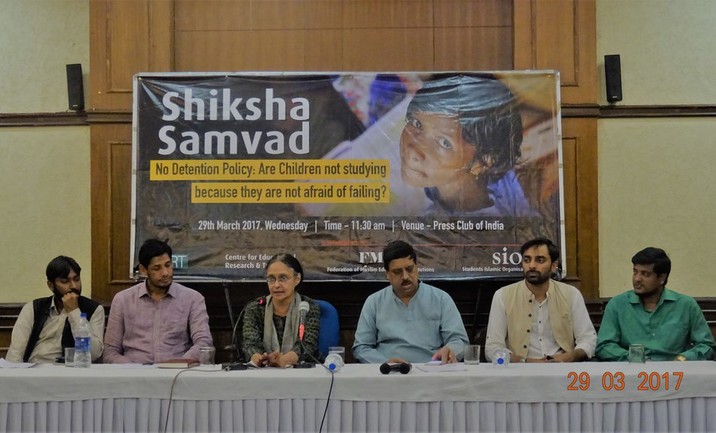
SIO of India organised a discussion on ‘No detention policy’ and its related implications for the future of education in India. Eminent speakers like Prof. Janiki Rajan JMI and Mr. Ambarish Rai National Convenor, RTE Forum participated in the discussion.
In 2016, the Central Advisory Board of Education (CABE) decided to withdraw no detention policy. Many State governments also proposed the same. The reason behind the inclusion of No detention Policy in RTE – 2009 was to reduce the number of dropout students. CABE claimed that students from the marginalized community never came back to school when they were detained in the same class, to overcome the situation they brought in No Detention Policy, especially targeting the backward communities.
RTE – 2009 introduced ‘No Detention Policy’, which states no detaining of students from class 1st to 8th. Accordingly, policy also accustomed certain essential regulations such as one teacher for every 30 students, extra remedial classes for slow learners, Continuous and Comprehensive Evaluation (CCE). The main aim of CCE is to evaluate all aspects of the child growth during their presence in school and Identify and nurture talent of each child. The outcome of this act showed a merely negligible response only. No detention policy was effectively introduced, and rest of binding clauses remained unimplemented.
No detention policy to ensure universal education was introduced through Right To Education Act 2009 with an aim to bring down the drop out rate among school children specially those belonging to disadvantaged groups of Dalits and Muslims, said Prof Janki Rajan.
Now the Government says that due to no detention, students lacked interest in studies, since they were promised of being passed at the end of the year, level of education came down, most of the students even didn’t know how/what to read, write or count. Witnessing degrading quality of education and slack growth in children, government expressed to re-introduce detention policy for grade 5th and 8th in forthcoming years.
Analyzing the last couple of years of RTE act shows that more importance was given only in extending and providing 25% free seats to economically backward students in private schools. Least focus was given to any sort of infrastructural development in government schools, pointing to primary needs or teachers training or any other relevant necessities. As a result, nationwide lakhs of schools got shut down. Private schools which offer 25% free seats to the poor collect money from government, it is government sponsored privatization. Now the number of government schools has reduced to 75% primary schools, 47% High Schools & 43% higher secondary schools. If the government schools get closed in the same manner undoubtedly these economically backward children will be soon isolated and deprived from studies. It seriously affects the marginalized community as most of the students pursuing education in government schools belong to these communities. Now privatization has reached its height, and it is clearly paving way for commercialization of education.
Thouseef Madikeri, who heads the Centre for Educational Research and Training, SIO, said that CABE claimed that students from the marginalised community never came back to school when they were detained in the same class. Now that it is being abolished, the future of a large number of poor school children hangs in balance.
It’s almost seven years since RTE came into effect. Survey reports of pre – RTE years clearly indicate that state of education was same, as of now. However there is no amenity in quality of education. Consequently, only RTE cannot be blamed on this matter. Major cause of hindrance in education is non-availability of teachers or teachers being absent in schools or under – qualified teachers in schools.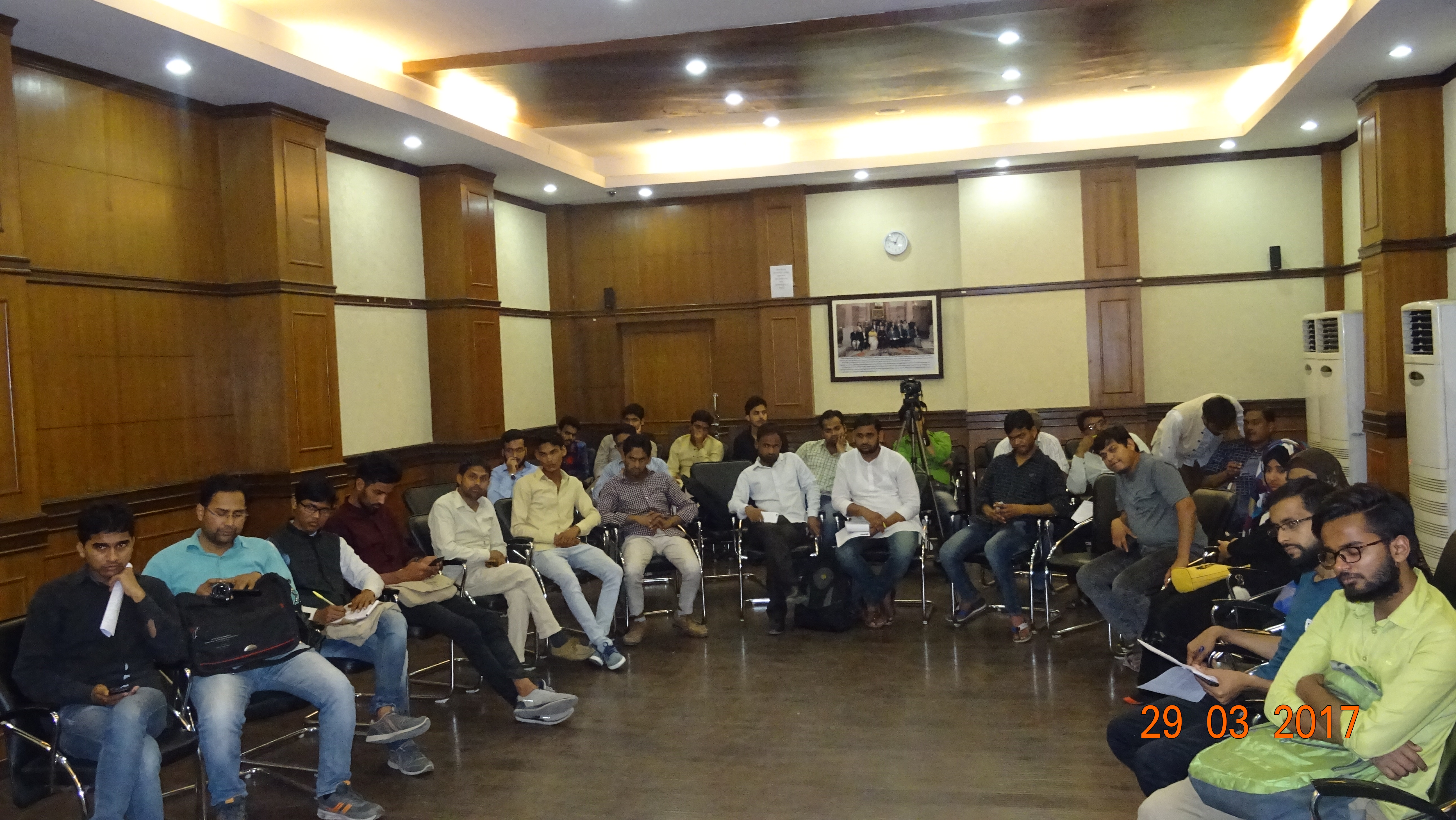
Addressing Lok Sabha session last year HRD Minister said, there are nearly 4, 97,000 vacancies for the post of teachers and about 400000 teachers serve as para teachers or guest teachers. Our Teachers training pedagogy is outdated and there is a need of new training centers. Most of the teachers pursue B.Ed via distance education. In B.Ed, it is necessary to understand the psychology of children; through distance education it is not being effectively done. In South India there are about 12, 17784 teachers training institutes run by private sectors, where as there are just 78017 Government teachers training Institutes. Comparing the numbers it emphasizes that even teacher training centers are being privatized, it’s like only for the sake of degree, and students pay money and get their degree. It is wrong to blame ‘No Detention Policy’ for poor quality of education. Government, concerned departments and organizations should come under one roof and find possible solutions to overcome the situations.
Mr. Inaamur Rahman who is the coordinator of Federation of Muslim Educational Institution, was also present at the event. Mr. Abdul Wodud National Secretary, SIO of India too spoke during the discussion and raised serious concerns.