

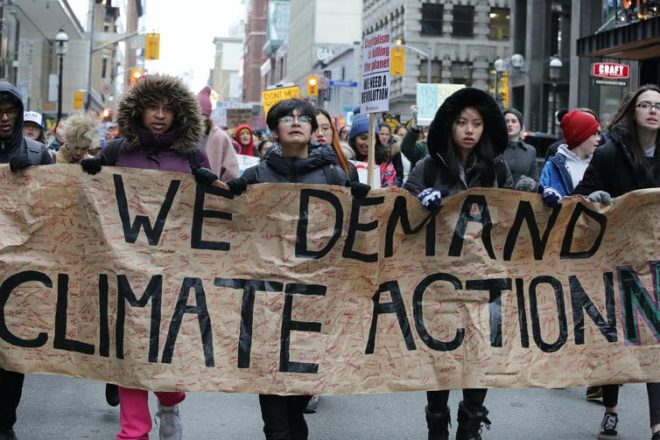
World Environment Day is celebrated on 5th June every year; common masses, students, academicians and activists hold conferences, group discussions, placards reading “save Environment, save Earth”. The scenario would have been same this year but due to covid-19, there are fewer chances that people will come out and propose for the protection of environment. Environment however is a vast term; it includes water, air, land and the inter-relationship which exists among and between water, air and land, and human beings, other living creatures, plants, micro-organism and property. However, there has to be balance in the relationship between these natural components and living creatures.
Human activity has been affecting the relation between these components and therefore demean these slogans and campaigns. World has seen large pollution levels in all components that have affected the eco-system very seriously.
The damage to environment can’t be undone easily for it is to disrupt and change the course of any natural process but it takes a lot to undo the damage to the natural processes. The water pollution, air pollution, noise pollution, climate change, global warming, soil degradation, deforestation, soil erosion, and o-zone depletion are results of irresponsible behavior of human beings towards the environment.
There have always been debates and discussions about responsibilities and liabilities of Global North and Global South for environmental degradation particularly for the most serious problem of Climate Change; however there are arguments that Developed Countries (Global North) are responsible for 79 percent of Carbon Emissions. While as Center for Global Development provides that Global South is responsible for 63 percent of carbon emissions.
The disagreements however aren’t a solution of the problem, and there are requirements for practical and workable effects. Since, there is a race of Southern countries for development and prosperity, the developed countries around the world must understand that poverty in developing countries would not let them take measure for the protection of environment, or to reduce emission of harmful gases by putting a halt or reducing the pace of development. There has to be coordination and mutual understanding amongst the countries in reducing the levels of pollution and ensuring protection of Environment. The world Leaders recently in UN general assembly session held in September 2019 started their speech by focusing on environmental protection particularly on climate change, also, they make strong points for environment protection during election campaigning but have more failed in keeping their promises.
The Prime Minister of Canada Justin Trudeau and of France Emaneaul Macron along with Indian Prime Minister Narendra Modi also made promises for protection of Environment at UN General Assembly, but have failed in past records for ensuring protection of environment in real sense. With an ever-growing population; India is responsible for more than 7% of the world’s fossil fuel CO₂ emissions. Air pollution, heat waves, and flooding plague communities across India as climate change further exacerbates challenges across the country.
Among other things, PM Modi promised his voters environmental reform to help fight the immediate challenges, as well as the long-term ones such as climate change. Alarmingly and ironically, the World Health Organization stated that 11 out of the 12 most polluted cities in the world are in India , with air pollution being the fifth largest killer and the current regime has done little to combat this. PM Modi’s National Clean Air Program does not specify any actual targets for reducing air pollution, even when the government had earlier stated that it was planning to set a goal to reduce 50% of air pollution in 5 years. However, while on one hand the role of the current regime is to be appreciated for planting trees but it has equally allowed cutting of one crore trees for development projects, undermining the principle of Sustainable development.
The state has vital role to play to protect Environment, with Right to Environment recognized as a fundamental Right under Article 21 by Supreme Court in the case of MC Mehta v Union of India (1991) 2 SCC 353, it thereby casts an important duty upon the state to come forward and ensure protection of environment. The state therefore has absolute responsibility for ensuring protection of environment and natural resources as is recognized under the principle of Public Trust Doctrine, which means that the state is trustee of all natural resources which are by nature meant for public use and enjoyment and must take care of these natural resources.
The development of the world can’t be sidelined but there has to be a balance between the two processes, the preservation of the environment and the race towards economic and infrastructural prosperity. In the case of Maneka Gandhi V. Union of India1978 AIR 597, the Supreme Court has widened the amplitude of the right to life and personal liberty and included the environment related rights in it. It’s quite evident that this judgment has played an imperative role in construing Right to clean Air, Right to Clean Water, Right to freedom from Noise Pollution, Right to Clean Environment etc., as a part of Right to Life & Personal liberty mentioned under article 21 of constitution. This right is said to have much enforcement and importance and the right to life and liberty with dignity can be best exercised when environment related rights are protected.
In order to balance the system, the state has been imposed with certain duties for the development and progress of the environment under Article 48A (Directive Principles of State Policy): “protection and improvement of environment and safeguarding of forests and wildlife”. The State shall Endeavour to protect and improve the environment and to safeguard the forests and wildlife of the country. The constitution also imposes duties upon individuals under Article 51A (g), that it shall be duty of every citizen of India to protect and improve the natural environment including forests, lakes and rivers. Therefore, the understanding between individual and the state is very important for the protection of Environment.
Covid-19 has reduced pollution levels due to a pause to industrial and other human activities, it is clearly visible from the effects in our surroundings, as is also reported by the media throughout the world. But, once human activity resumes pollution levels will not be far off.
However, the different constitutional provisions be it Indian constitution or international conventions which talk about the safeguarding of the world environment have always been overlooked and overridden when it comes to the interests of the governments and people at small levels. We should focus to carry on and take the current position of the world environment with us and should make it a better world to live not only a dignified life but to live with the basic principle of sustainable development also.