

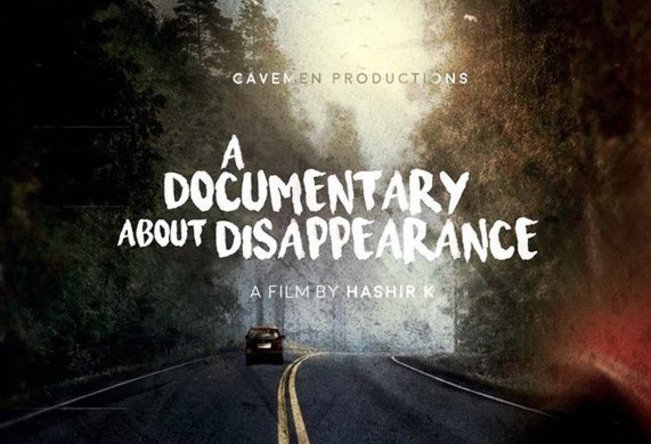
Zakariyya, a native of Parappanangadi in Malappuram, Kerala has been imprisoned under UAPA [Unlawful Activities(Prevention) Act] for a decade since his arrest in 2009. And several years have gone since the witnesses against Zakariyya- in the bomb blast case -said that they were unaware even of their names being included as witnesses. “A Documentary about Disappearance”, directed by Hashir K. Mohammed, narrates how Zakariyya, a Muslim youth, is being haunted by the state. Hashir has also previously directed films on Beemappalli firing, the remarks of Mattanchery of Cochin in films, etc.
Given below is a conversation with Hashir K. Mohammed.
Can you please share with us your inspiration in choosing this particular theme to do a documentary on disappearance?
These are the things we see around us, the things we clearly know about that one wishes to create documentaries on. And as we know, UAPA is one of the most talked about topics today. It is the Muslim community which has been targeted the most by the UAPA. It is in this context that this documentary needs to be read. It was on May 17 that, the Beemappalli firing took place. My first work was on this incident. In a sense, it was a collective effort-the result of numerous discussions and criticisms which ensued in Vidhyarthi Bhavan, Calicut. The next one was “Filmic Ghetto of Mattancherry” as part of the vibrancy of the new-gen youth. It speaks of the basics of “representations” in the films. This documentary can be seen as a direct engagement with the discourse of film. It shows the treatment of Dalits in films, and how Muslims in a given region are oppressed by others. Film works as a dominant media serving the interests of Savarna. Even though various critiques have been raised on the representation of Dalit, Muslim, OBC, and Adivasis in the films, what are most often produced by them are extremely casteist, racist, and prejudiced dialogues and the like. We are well aware of many such examples, and they have been discussed in Facebook many a time. What actually lie behind such topics need to be questioned and the discussion should extend beyond the questions asked so innocently if “they aren’t just films?”.
We went silent in 2009 when 19 year old Zakariyyah was locked up in jails. It was 4 years later that Muslim organizations began speaking about it, and that too with a lot of remorse. It is in this positive atmosphere-where they have begun confessing that it was wrong to have remained mum on the whole-that this work and films need to be given thought. Here, the most basic question is of “disappearance.” We know, geographically, Palestine is vanishing, so is Kashmir. But in a sense, they do resist even as they are being vanished. There are certain elements functioning here which do not see such acts of resistance, and which deliberately do not allow them from being visible. These are the aspects which came to my mind when I thought of “disappearance.” I mean a situation where we could so easily and lightly say a young man has gone missing. We would also have seen posters of Zakariyya missing. However, Zakariyyah is not a young man who went ‘missing’. A team from Karnataka police had, in fact, deliberately and forcefully taken him away. We need to remember that all this was during the Left regime in Kerala. It was during the same age that the Beemappalli firing took place-during the Left rule. Why we emphasize that all these took place during the Left rule is because they hold the belief that they are the revolutionaries, and they inject into young minds which earnestly hope for a social change a false assurance that social change/revolution is possible through them (the Left). But what social change have they actually brought about? No one tries to bring these issues-be it of the disappearance of a young man like Zakariyya or Beemappalli firing-to the forefront, or to take them further. Hence, we purposefully choose the genre of film; and also to include these topics into the film, an (influential) art form.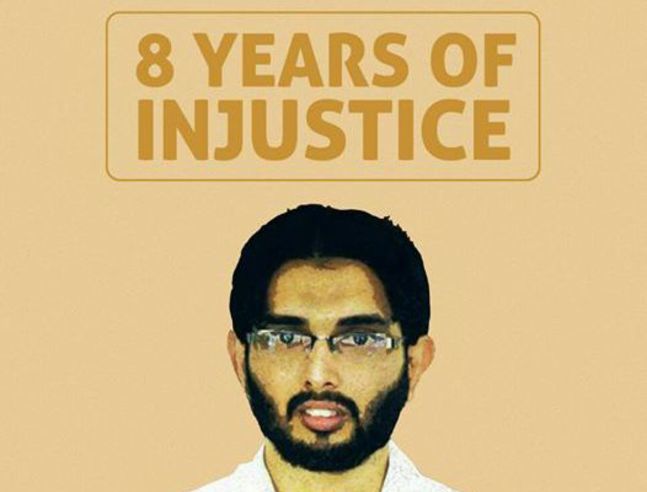
Who are the characters in the film? Who is the hero/heroine?
It is this answer that I would like to highlight. Shuhaib Koniyath is the central character of this film. In that whole year, 2009, when all of us remained silent, Shuhaib made huge sacrifices, and spoke to several police officers, lawyers, and minsters, and endured a lot of stress in the firm belief that Zakariyyah would not have committed the crime. Who else are the real heroes if not people like Shuhaib? Did we not believe that Zakariyyah was innocent only when the witnesses changed their witness statements and confessed that they knew nothing, were forced by the police, and that the statements were written down in Kannada? It is here that Shuhaib becomes a hero. He believed without a dint of doubt that Zakariyyah has not committed any wrong and suspects some foul play. This takes exceptional courage for we know how not many have been able to take over such cases from within the society or Muslim community. Thus, Shuhaib is an exemplary model for all of us.
In the course of his struggle for the past eight years to ensure justice for Zakariyyah, he has met with several organizations to form “Justice for Zakariyyah Forum”, and constantly reminded others to not fall in the cock-and-bull stories of Zakariyyah, and also on how to handle issues as these. All these have influenced me a lot in our personal talks. It is indeed an inspiration. Let’s understand it holds an example and a life-lesson. When one among us is taken away by the police, we should learn to not just doubt their tales but also to (sometimes) deny the cases charged against him and to sharpen our senses such that we can quickly read from it the history of the state prejudices. This is also a reason why Shuhaib was made the protagonist. Analyzing our popular heroes, it can be observed that they are anti-women, anti-Dalit, and anti-Muslim. In an age when characters who share absolutely no commonality with our lives become our heroes and we attempt to blindly imitate them, what this film does is attempting to form the answer, Shuhaib, to the question of who the real hero is.
Looking at the representation in films, one can easily find out that ‘comic’ characters have always come from Muslim community and ‘goons’ from the Dalit community. We have been celebrated, as in the small roles of goons(gundas) in the recent Malayalam film, Pulimurugan. We need to go beyond and challenge the (existing stereotypical roles) and be depicted as heroes and as have played crucial roles in having brought about a real change in the society. Why do we have to say this? Take note of the age. Even while we are pictured as terrorists, and are told to exist as a patient community, are marginalized, and attempts are made to oppress us putting us in prisons, a young man rises amongst us who reacts against it. He is indeed a model in every way. And this is exactly what I wish to say-that we need to live here and impart such models to our future generations.
Shuhaib does not confine his struggle for social justice to a person within his family. He deals with several such issues as that of Abdul Nasar Ma’dani. We know of his talks on YouTube, which discuss each topic with clear facts and figures. As this is essentially a film, it has been treated in a filmic way. The character of Shuhaib has been formed well, and others fictionalized. This is a story of heroes. Shuhaib is our hero. It is a wonderful of a responding youth of our age. And hence, I wish we all took up this film and also took it further.
It can be seen that a group of young men centered in Calicut are actively involved with film asking powerful questions. You are also a part of many such works. Has such a collective helped this docu-fiction?
Certainly. This is indeed a collective. There are a lot of people who help us like Nizam Qadri, Shahid Shameem, and Fayaz Murthath. These are all people who have proven themselves either in technical or creative field. People who offer their cooperation in different ways. A general tendency can be seen in all film directors to withdraw from films dealing with these issues. But I had an opposite reaction. Almost everyone I had approached cooperated quite well and positively. There is definitely a fear in people to take up a whole film on a young man who is being haunted (by the state). This fear which prevails in the society can be sensed both from within and outside the society. Hence, we are striving to bring about a positive engagement by including these issues in films so that people would dare to speak.
There are several kinds of communities which have cooperated for the formation of the collective. And there are many people who enquire about this, knowingly or unknowingly. There are also many people from the mainstream film industry who extend their support to us. This comes forth as a realistic movie. And thanks to the criticisms received, it has been possible to completely change the script to the form of a fiction. Here is an attempt to counter the realism existing in the mainstream and say that this is different kind of reality. Many questions are being raised by this film on social justice, and a number of questions to the prejudices of the state. There is an uncertainty prevailing legally.
We have received help from different corners of our collective. There are lawyers who permitted us their rooms for shooting. We have given the title “cave man production”. We know the story of the cavemen in Surah al Kahf in The Holy Qur’an which narrates the tale of a few young men who were steadfast on adhering to their faith and their sense of social justice, and later sought refuge in a cave for a long time. Our name is derived from this instance. The story speaks of the collective of a few youngsters. Here too, we have such a group of young people with this film. They are interacting in the film industry in several ways… in unfathomable ways, in the form of documentary, short films, film, and scripts. And this vibrant group does not interact for the sake of fame or the like, but because they are committed to the society and make productive engagements. The injustice meted out to Zakariyya, a young man my age, who lives just twenty kilometers away from my home, exerts loads of stress on us. It’s like we ourselves are imprisoned, because we get a lot of questions(answered) on justice from within the Constitution which when on steps into the society don’t seem to exist. It’s a horrible state here. And we are passing through several such injustices.
Entering into liberal spaces ensure a fake feeling that some justice will soon dawn. It’s this kind of a deceiving politics that goes on here. We believe that such films help us in realizing such political discourses and in bringing to the forefront issues affecting Muslim youth. There are many youngsters who are willing to do so. Many of them have shared their fears with me. And then, we can thus use the medium of film in the most effective and proper way. There is a good group of people amongst who can do their job well, be it in the appreciation of entertainment, camera, or editing. It is with an apt filmic manner itself that we attempt to communicate because appreciation/enjoyment is a key factor in any art form. It needs to be seen how this is perceived in the future. It is equally important to see how the viewers accept attempts as these, what the future holds; as well as to form collectives, ensure justice, make sure it reaches the next generation, and consistently hand it down as poems, stories, etc. I believe this collective as a form of art will succeed in doing so.
It does not end with Zakariyya. Instances of Muslim youth being troubled with charges of UAPA continue in Kerala. UAPA has been under wide discussion for the last couple of months in Kerala. What could be the future of this terror hunt? And of those who survive it?
We, the public have little idea of the case of Zakariyya, probably because we have been observing it in silence. It was different when it came to Nadhi’s (Nadheer) case. Everybody knew about him. So we took up the human rights as a campaign. But this change (in reaction) poses a question. Nadhi was campaigned with the label of a ‘human rights activist’, but what about those who don’t own such a label, like Zakariyyah? So are most Muslims here: they do not own such a label. They migrate to Gulf countries and live helping their family, spending on the needy in the society and /or being a part of community services. Thus, Muslims may not necessarily comply with all subjugation and mingle in the society. Hence, they live through different migrations to overcome their difficulties and poverty.
Here, the time that those who possess the human right labels receive would not been granted to these youngsters. They are just taken away from Gulf or their workplaces. And thus we often don’t know much about them. And we have already built up prejudices about people we know little of. They might have been created by the state or by the Sangh Parivar forces. And I am quite doubtful how far the answer of human rights would satisfy such consciences. But there indeed is a probability(of acceptance). The Kerala society and all human rights activists should build up a mindset to accept Muslims too, rather than merely trying out some gimmicks, to counter this politics, for, we must understand that there is a lot of violence involved in saying that Muslims-a community which has undergone several tribulations from being pierced with trishul in the womb, to the demolition of Babri Masjid, to genocide-should forgive and forget such awful wrongs committed.
We can clearly understand a few things when we go through the words of those who are now imprisoned. They are given huge offers provided they admit that they have committed the crime, or if they mortgage their community. We should realize that our responsibility lies in and that the need of the hour is to salute those who spent eight or ten years in jail proclaiming their innocence and not giving into the pressure to admit to false charge which would have dramatically reduced their term to four or five years. This is part of their faith. They are thus moving to the actual spiritual label of a ‘Muslim’. We should try to see this change in those who are in the jails. They are keenly observing how we say lies for materialistic gains.
We need to be inspired by the words of Zakariyya’s mother on the next world: It is not this court, there is yet another court.” This is indeed a critique on our courts. We should understand that this is philosophy and the politics of today. It is her words which should be cited as great words and quotes. Those in jail teach us that holding onto truth is no trivial matter, because the very course of our life in this world can undergo a tremendous change in this world. Our life in this world may be brought to an end. We may be distanced from our families. We may be troubled with loads of trials and tribulations including both physical and mental agony. It being so, we should not pay a blind eye to the struggles they involve in. I am trying to express my solidarity to their attempts, though I don’t know to what extent they can be successful. The failure of our society lies in the fact that such people who partake in what we call real social change or revolutions often go unknown. This film aims at bringing about awareness in at least the young artists, who derive their inspiration from “original” people who have actually lived and died. Those in jail are the “original” people. We should be able to read about them, think about them, and to listen to their words. We should never forget the fact that those who are in the state prisons are either poor people, or are Muslims, Dalits or Adivasis.
Our country has in fact become a physical/materialistic jail. We live here with all sorts of prejudices like caste and others. The struggle towards a new age, towards progress is the struggle against these biases. I took up the medium of film because it is a space where we can communicate, and because we have the backup of youth to support several others. let’s also understand that this film attempts to present the trials these youngsters face.
(This was originally published in Malyalam in Maktoob Media. This has been translated from Malyam into English by Ayisha Humayun Kabeer)