

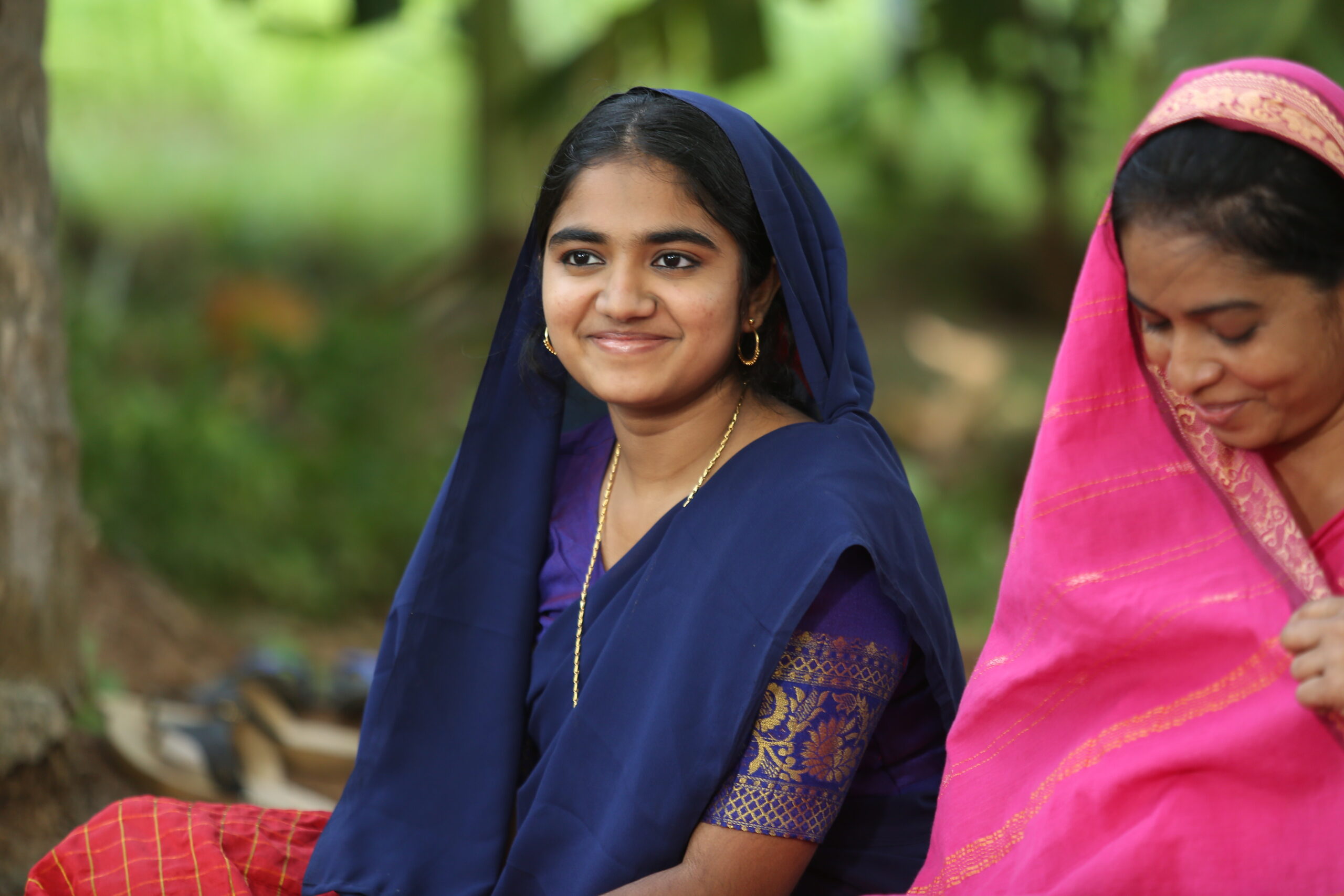
Interview with Director Meera Kathiravan
Habeebi is an upcoming Tamil film directed by Meera Kathiravan, known for films like Aval Peyar Tamilarasi and Vizhithiru. The film is produced by Nesam Entertainment and GKS Bros Production, with music composed by Sam C.S. Romeo Pictures will release the film worldwide. The film is currently in its final stages and is awaiting release.
In this interview, director Meera Kathiravan talks about the story behind Habeebi, its social context, and the vision behind bringing this story to the screen.
Tamil cinema has more than a hundred years of history. Yet it has rarely focused on the realities of Muslim life. What gave you the courage to take up this subject?
I have always felt drawn to the lives of ordinary people, especially those whose stories have never been written down. I have always wanted to stand beside them and tell what has gone unheard.
To me, the artists of Tholpavai Koothu (leather shadow puppetry) are the true pioneers of cinema. They are among our earliest storytellers, the roots from which modern visual storytelling grew. Yet we do not even have proper records of their lives. That absence has always stayed with me.
In many other languages, you will find films rooted in folk traditions. But in Tamil cinema, that is rare. I had a deep longing to make a film centred on folk culture. That desire led to my first film, Aval Peyar Tamilarasi, which documented the lives of Tholpavai Koothu artists.
My second film, Vizhithiru, unfolds over the course of a single night. If you remove ordinary people from a city like Chennai, the city becomes nothing. They are its pulse and spirit. Cities hold countless unheard stories, and since cinema had never truly captured those lives, I wanted to attempt it. That is how Vizhithiru came to be.
In the same way, I had long carried the desire to make a film about Muslims. For a hundred years, Tamil cinema has not authentically portrayed Muslim life. In today’s political climate, we see deliberate attempts to create hatred and misunderstanding. Muslims are increasingly isolated. Watching the injustices they face troubled me deeply.
At a time when false narratives are being built and repeated, I felt an urgent need to show the truth, the simple, everyday reality of Muslim life. That is how Habeebi was born.
Tamil cinema has made films about oppressed communities, tribal people, women, transgender individuals, marginalised groups, and children. But the natural, lived-in, everyday world of Muslims has remained largely absent. This is despite the fact that Muslims have been part of Tamil cinema from the very beginning — as investors, actors, producers, directors, and technicians. Yet their real stories and lives have rarely been recorded. That silence, that erasure, pained me. Habeebi grew from that pain.
How did the story and setting of the film take shape?
For nearly twenty years, as I tried to understand Muslim life more closely, I kept notes, small incidents, conversations, stories I read, and people I met.
My close friend, writer V. S. Muhammad Ameen, who is the editor of the magazine Samarasam, and I often discuss cinema and society. One day, we had a long conversation about the need for an Islamic-themed film in Tamil cinema. During that discussion, he mentioned the short story “Neithal” from his book Padhivu Seyyapadaadha Manidhargal. I was deeply moved by the story.
Muslims who follow Islam as a way of life are spread across India and across many regions. Though their faith is the same, their daily lives are shaped by the land they inhabit. What many people do not know is that Tamil-speaking Muslims in southern Tamil Nadu were traditionally handloom weavers.
Like many other communities, mechanisation pushed them out of their ancestral professions. In the 1970s and 80s, many Muslims migrated abroad simply to survive. But migration is never just the story of the person who leaves. It is equally the story of those who remain behind — the families who wait.
When our films show foreign lands, we usually see deserts, camels, and airports. But we wanted to show something different, how migration reshapes families and communities, even without leaving this soil.

When Ameen spoke about this perspective, I was deeply moved.
I had witnessed this life up close. I knew its textures and its silences. I felt confident I could bring it truthfully to the screen. Both Ameen and I come from the very region where the story is set, and his family also has a weaving background. It felt personal. It felt right. We knew this was the story we had to tell.
We wanted viewers to feel as if they were walking through Muslim streets, sitting inside Muslim homes. The audience should not feel like observers; they should feel part of those lives. That is how we chose the story of Habeebi. It reveals how deeply Muslim life is rooted in this land.
Why did you choose the Arabic title “Habeebi” for this film?
There are more than two billion Muslims in the world. Their lifestyles may differ, and their languages may change, but emotionally, they are connected through faith. A film about Muslim life, therefore, has the potential to speak across borders.
A Tamil film might travel into other Indian languages. But a story about Muslim life can travel much further, across continents. That is why we chose the title Habeebi. We want the film to move beyond India and be seen by Muslims and non-Muslims alike, across the world.

Can a film succeed without big stars? How was your experience working with newcomers?
When we approached certain well-known actors, there was hesitation. The story spans three different time periods and demanded a long-term commitment. Some did not respond at all — perhaps because it was an Islamic-themed film.
For me, authenticity was crucial. If we cast big stars, the audience would see the celebrity first, not the character. With new faces, there is no barrier. Viewers feel they are watching real people. To preserve that authenticity, we cast many local individuals who had never stood before a camera. Training them in acting and dubbing was demanding and expensive. But our producers understood our vision and supported us throughout.
Interestingly, many of the actors are not Muslims. Yet they inhabited their roles with complete conviction. I consider that one of the film’s greatest achievements and, in a way, a sign of hope.
Can art films survive in today’s commercial cinema environment?
Tamil audiences have a deep love for cinema. Yes, releasing a film without stars is challenging. But once people sit in a theatre, they respond to the story and its emotions, not merely to who is acting. Today, even star-driven films fail if they lack substance.
Audiences watch several films every week. They crave new experiences. Films that offer fresh emotional landscapes have never truly been rejected. We believe Tamil audiences will connect with Habeebi, and that the film can achieve commercial success as well.
Will the film reach the masses?
Among audiences, there are those who seek meaningful cinema and those who do not. Ordinary people hear the call to prayer every day. They have Muslim friends, neighbours, and colleagues. Yet they have rarely seen these lives portrayed honestly on screen.
In today’s political atmosphere, many people actually want a film like this to exist. It is a feel-good, mainstream film crafted within a commercial framework. But without relying on formulaic “masala” elements. It carries the elements needed to succeed both artistically and commercially.
What was your experience working with the Muslim community while shooting in Muslim localities?
For many years, Tamil cinema has produced films that portray Muslims from a position of misunderstanding, often placing them on the “other” side. Such portrayals give the impression that Muslims live in a separate world, disconnected from the society around them. Because of this history, people may have wondered: Why should we help create a film that might misrepresent us again?
That concern is understandable, especially since such experiences have happened before. When a community has repeatedly been targeted and misunderstood, it is natural for them to be cautious.

But when we explained our intentions for the film, they extended tremendous support. The people of Kadayanallur contributed to this film with genuine warmth and sincerity. Without them, this film simply would not exist. Their trust has also opened the possibility of something larger, the chance to travel to different regions and document the diverse lives of Muslims who live in different landscapes and cultural settings.
Two people played a crucial role in overcoming the initial hesitation and making the shoot in Kadayanallur possible: the film’s screenwriter, Ameen, and his uncle, ViswaShafi. They helped build a bridge of trust between the community and us.
In neighbouring Kerala, many films portray Muslim life. Yet in Tamil cinema, it seems to have taken nearly a century for something like this to happen. Why?
There are several reasons why Muslim life has found space in Malayalam cinema. One important factor is the way people there unite through language, even when they belong to different religions or communities. Muslims also form a significant part of Kerala’s population, which naturally creates a market for such stories.
Muslims have also made substantial contributions to Kerala’s political, cultural, and artistic life. Writers like Vaikom Muhammad Basheer and Shihabudheen have left powerful legacies. There is therefore a commercial and cultural space for Islamic-themed cinema. Kerala also has a strong culture of education and reading, which often results in broader perspectives among audiences.
In Tamil Nadu, however, there exists a perception that films about Muslims might be seen as alien or might not be accepted by wider audiences. That perception does not exist in Kerala. Actors like Mammootty, Fahadh Faasil, and Dulquer Salmaan, along with many technicians, directors, and investors, come from the Muslim community. In Kerala, Muslim identity is not treated as something separate.
In Tamil cinema, however, there is often hesitation. Many fear that openly expressing Muslim identity might lead to isolation within the film industry.
Do you think this film will lead to a bigger change or trend?
Yes, there is definitely a need for Habeebi to initiate such a trend.
If you look at Tamil cinema fifteen years ago, the way Dalits were portrayed was very different from how they are portrayed today. Directors like Pa. Ranjith and Mari Selvaraj have transformed that perspective. Their films have shifted not only cinema but also public consciousness.
Today, Muslims are being targeted by hate politics even more intensely than many other marginalised communities. Films like The Kashmir Files and The Kerala Story have been produced with the clear intention of spreading anti-Muslim narratives.
Certain political forces believe that religious harmony threatens their agenda. As a result, visual media is sometimes used as a tool to cultivate prejudice and hostility toward Muslims. The Sachar Committee Report has already shown that Muslims face deep economic disadvantages and lack representation in many areas. For many years, the cinema has repeatedly portrayed Muslims as terrorists. These portrayals have now evolved into an organised form of hate politics.
Simply protesting these portrayals will not be enough. If cinema is used as a medium to distort and erase your identity, then responding through the same medium becomes a powerful act.
In Tamil cinema, Habeebi has attempted to carve out a new path. Most films have reference points that came before them. But in this case, Habeebi itself may become a reference point for the films that follow.
We have placed the first marker on this path, overcoming many obstacles. Of course, I am aware that one film alone cannot create such a transformation. It requires collective effort.
Even films that spread Islamophobia often receive organised support that helps them reach the public. In the same way, democratic forces and progressive cultural movements must come together to support films like Habeebi.
Just as Dalit cinema created meaningful change, there is a need for a new wave of Muslim cinema. If we fail to wake up now, the next generation may grow up internalising the same prejudices that have been planted over many years, where Muslims are casually portrayed as terrorists in the public imagination.
That is why Habeebi must become an ongoing movement. And I believe Habeebi can help make that possible.