

In the second year of discussing The Hungry Tide with post graduate students at the institute I work in, we encountered a student from Bangladesh. The Hungry Tide, from the first page itself, queers the question of who belongs where, and who doesn’t. Piya (Piyali Roy, a marine biologist who comes to the Sundarbans in West Bengal in search of the Gangetic Dolphin, and through whose actions and reactions, much of the central narrative moves forward) is recognized as a foreigner at first glance, by the savvy translator/ interpreter, Kanai. It was this term. ‘foreigner’, upon which we hit our first stumbling block.
Why is she called a foreigner, the class wanted to discuss. Is it because she looks ‘foreign’? What does looking foreign mean, and what is the geographic boundary across which being and looking foreign start? Couple of sentences earlier, the narrator had glimpsed into Kanai’s thought that Piya (or the foreign looking woman) would not have looked out of place in a posh area of Kolkata, such as Park Street, but is decidedly alien/ foreign in this South Calcutta railway station. We decided, then, foreign is someone who doesn’t look the way the others, in specific surroundings do.
But then, what do we call the Bangladeshi student sitting in our midst? As far as appearances go, she looks exactly the same as the rest of the Bengali Hindu women students, the definition of foreign that we arrived at a moment earlier, stops to work. The students then seized upon the notion of geographical space, and the fact that she is ‘from’ somewhere else, somewhere, definable as distinct by virtue of national identities. While foreign, national (and in the current political clime, anti-national), belonging, displacement and refugee, continue to be extremely contested and heated ideas and political tools for our times, Hungry Tide is significant for the ways in which it problematises our common sense regarding these while bringing to the fore what a critic has called ‘histories from below’.
Young marine biologist of Indian origin, yet brought up in America, Piya, and Delhi based translator/ interpreter Kanai, form two complementary, at times contradictory, focalisers in the novel, while much of its information becomes available to the readers through Kanai’s acts of translation. Both are headed to the Sundarbans. Piyali hopes to wrangle a permit to visit the waterbodies and track the movements of the Gangetic dolphin, while Kanai has been summoned by his aunt, to be bequeathed the journal of his deceased uncle (Nirmal), which might also throw some light on the final days of his life. Their journeys, albeit apparently dissimilar, intersect repeatedly, as do the things that matter to them. After a fall, Piya is rescued by the fisherman Fokir, who happens to be the son of Kanai’s childhood playmate, Kusum, a potential victim of trafficking and one through whom Nirmal gets an entry into the world of Marichjhnapi.
The massacre at Marichjhapi, by the then Left Front government of the state is scantily documented, although several Bengali language accounts abound, as does Anu Jalais’s brilliant “Dwelling on Marichjhapi”. This 2004 novel by Amitav Ghosh fuses the past and the present, different kinds of displacements and migrations to bring out an emotionally charged history of the massacre, but also the lives centred in and around the island, the promised revolution and collective action, memories and tidal waves creating and recreating the contours of the ever shifting human geography that populates the Sundarbans.
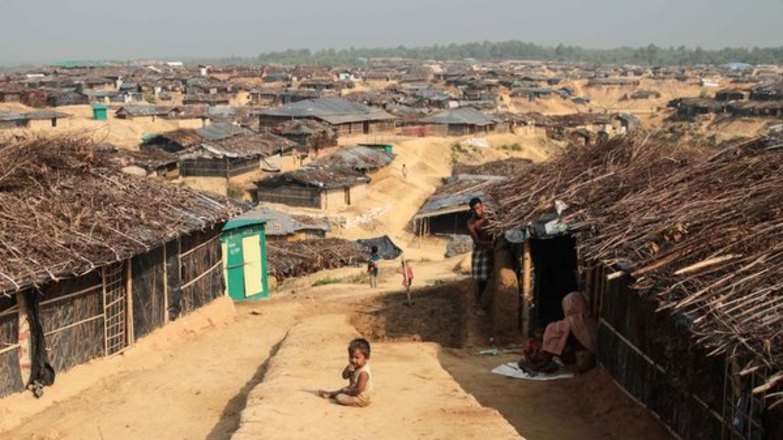
In 1978, a large group of former refugees from Bangladesh, who had been ‘rehabilitated’ in places outside of West Bengal, such as Dandakaranya, trickled down to Marichjhapi, one of the northern-most forested islands in the Sundarbans. Backing their decision was the left Front government’s earlier promise to rehabilitate all Bengalis in Bengal. Around 30,000 Bengali dalits managed to reach Marichjhapi, clear land and establish a settlement. Many islanders also joined these ‘outsiders’, landless couples were encouraged to settle there—actions that were met by governmental repression. Economic blockades were set up, when the settlers tried to go across the river to collect firewood or catch fish, their boats were sunk, and by January 1979, there were starvation deaths on the island (Mallick 110). The government also refused to allow journalists near Marichjhapi, initiating police action, that opened fire on unarmed people. The settlers were eventually ‘brutally evicted for violating the Forest Act’ (Jalais, 1757). In the aftermath of the killings, people were hired to forcefully separate men from women, of the thousands who remained in the island, it is alleged that dead bodies were dumped in the river. More than four thousand families perished in transit in trying to go back to Dandakaranya.
Edited Bengali volumes such as Marichjhapi: Chhinna Desh, Chhinna Itihash (Torn Nation, torn Histories) or Aprokashito Marcihjhapi (Unpublished Marichjhapi), are rich collections of narratives by survivors, transcripts of debates raised at the assembly, newspaper reports from the time of the massacre as well as interviews conducted afterwards. They also contain legal notices, lists of people who contributed to the welfare of the refugees at Marichjhapi, and the amounts that they donated. Both volumes are extremely necessary and seek to address the lacunae in both Bengali and English academic engagement with the Marichjhapu massacre, as well as the populist oblivion to which the event has been relegated. One of the reasons behind this absolute lack of continued media and academic engagement must lie in the identity of the refugees. It is by now well documented that while caste Hindu refugees from the former east Bengal and current Bangladesh were largely accommodated/ rehabilitated in and around Kolkata, in colonies (buttressed by their better-off economic positions and kinship networks), the so-called untouchable castes (in the case of Bengal, largely the namashudras) were carted off to camps like Dandakaranya. One of the foremost Bengali novelists, Manoranjan Byapari recounts his years at the Shiromanipur Camp in Bankura district of West Bengal, where only two tube wells were expected to provide drinking water for more than two thousand residents, and the myriad other hardships that the government saw no need to assuage.
In Hungry Tide, Kusum, the young girl who went away from Lusibari in search of her trafficked mother, and landed in Dhanbad, gives voice to the sense of dislocation, disorientation that those encamped in Dandakaryana suffered from. She runs into many of them, marching to Marichjhapi, and this is what they had to say for themselves:
Once we lived in Bangladesh, in Khulna jila, we are tide country people, from the Sundarban’s edge. When the war broke out, our village was burned to ash; we crossed the border, there was nowhere else to go. We were met by the police and taken away: in buses they drove us to a settlement camp. We’d never seen such a place, such a dry emptiness, the earth was so red it seemed to be stained with blood. For those who lived there, that dust was as good as gold; they loved it just as we love our tide country mud. But no matter how we tried, we couldn’t settle there: rivers ran in our heads, the tides were in our blood. Our fathers had once answered Hamilton’s call: they had wrestled the estate from the sway of the tides. What they’d done for another, couldn’t we do for ourselves? (Italics in original, as the chapters translated from Nirmal’s journal are in italics).
John Hamilton was a rich colonial merchant, who, in the novel, was seized by the desire to settle people in the Sundarbans, to reclaim the vast fertile lands from the tide and the tigers, and to create a society where people would be known for their work, and not be aprioi identities assigned by virtue of birth. Before this, Manik Bandyopadhyay’s 1936 novel Padma Nadir MAjhi talked about Moynadwip, a settlement dreamt of by the moneyed Hosen Mian, where backbreaking work and inclement weather manages to make people go back to where they came from. But in both the instances, Sundarbans was one place. Be it the vision of the colonial exploiter who dreamt of a society freed from bondages of caste, creed and religion, or that of the native money lender who gave loans to poor fishermen and their families to make the move to Moynadwip, the displacement, migration and the movement was never imagined as being across national boundaries.
It is this boundary, the imaginary line that the people Kusum speaks to, cross, which makes them, in the eyes of the nation state, refugees. But imagine Kusum’s surprise to see people designated as refugees to be speaking the same language as her, and in fact to be from the same tide country (bhatir desh) as her, albeit across boundaries that frame and form nations. By introducing the characters of Kanai and Piya, Ghosh complicates the issues of belonging even further. For Kanai, a former resident of West Bengal, travelling to Canning (the rail station nearest to the Sundarbans) and then to Lusibari, and finally to the interiors of the forest, entails leaving behind comforts, certainties and conversing in a language that he has relegated to his past. But for him, this doesn’t entail crossing any unbreachable boundary as both Sundarban and Delhi are part of the same imagined geography given ontological status, in the construction of the nation.
Piya travels far greater distances, although she was born in Kolkata, she neither identifies as an Indian, nor does she remember much apart from stray words like mashima and objects like the gamchha. Yet, her entry into this unfamiliar space is legitimised by government documents, passports, Visas and permits—her presence becomes problematic only when she starts to travel with Fokir, without official sanction.
The people who settled at Marichjhapi found in the tide country everything that was familiar to them. They also sought to build an alternative social structure that would be more inclusive, and give due dignity to labour. However, their labour was shunned aside and their habitation termed encroachments, in the name of environmental protectionism.
Ghosh problematises this token environmentalism in his novel as well. The act of settling in the Sundarbans, something that people and empires have been trying to do, and repeatedly failing, is in itself an act of violence on the fragile and interdependent eco system. The ominous and prophetic utterance by Nirmal, that ‘the tide will turn’, has proven correct throughout history (case in point, the Port of Canning), taking away with its human monuments, constructions and promises of ‘development’. It is a gross injustice to not address the very fact of human existence as fundamentally altering the natural universe, and instead to selectively choose environment over humans, only in instances when human populations are already marginalised, broken. While the refugees were forcibly evicted from Marichjhapi, it did not go back to being the island it was earlier. Many were settled there as part of direct Left Front intervention, bringing to question the whole logic of wildlife conservation in the first place.
In response to increasing international concern and funding over the tigers of the Sundarbans, it has becomes popular practice to think of the poor as the single most imminent threat to ecological balance. However, across the border, the neighbouring Bangladesh government has been in talks to set up the Rampal nuclear plant, guaranteed to destroy the environment as we know it. Many Bangladeshi and international organisations and civil society activists have been vocal against this destructive plan. However, sitting in West Bengal, the silence around it lulls one into believing that the imaginary boundary dividing the rivers and the mangroves and the tigers between Bangladesh and West Bengal must be indeed ‘real’, unbreachable, that tides do not flow across countries, birds do not fly and radiation stops at Radcliffe line. What else can explain the absence of the alacrity with which refugees were evicted citing environmental concerns, but a nuclear power plant can stay?
References:
Bandyopadhyay, Manik. (1936). Padma Nadir Majhi.
Bhattacharya, Tushar ed. (2010) Aprokashito Marichjhapi. Guruchandali.
Byapari, Manoranjan.(2012.) Itibritye Chandal Jiban.
Jalais, Anu. (2005) “Dwelling on Marichjhapi: When Tigers Became ‘Citizens’, Refugees ‘Tiger-Food’.” Economic and Political Weekly.
Ghosh, Amitav. (2004) The Hungry Tide. Penguin.
Malick, Ross. (1999) “Refugee Resettlement in Forest Reserves: West Bengal Policy Reversal and the Marichjhapi Massacre”. The Journal of Asian Studies.
Pal, Madhumoy ed.(2012) MArichjhapi: Chhinna Desh, Chhinna Itihas. Gangchil.
(Note: This article was originally published in The Companion Print, November 2017 edition)