

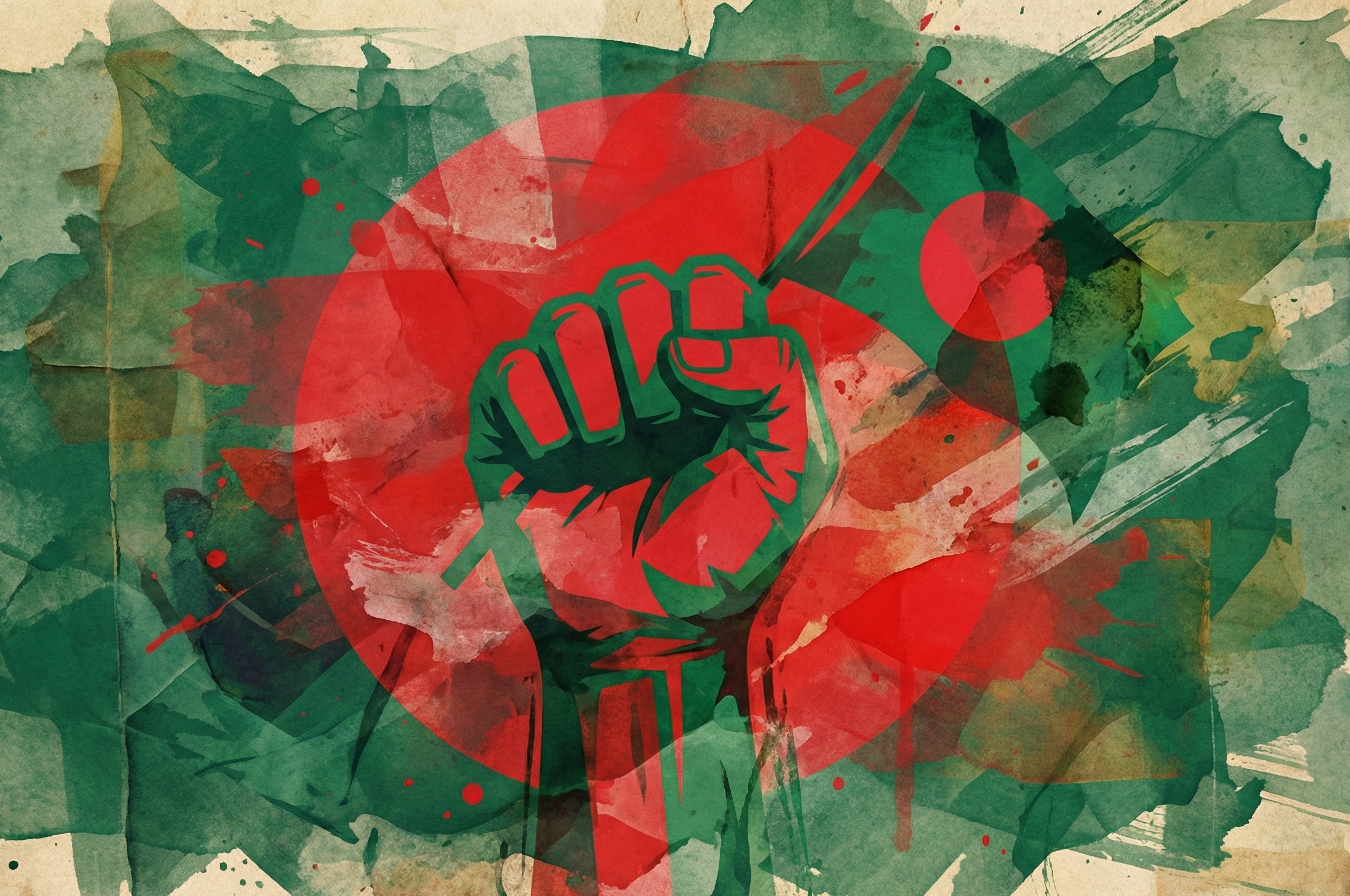
There are moments in a nation’s history when violence against vulnerable groups is not merely an isolated incident, but a symptom of something deeper: a breakdown in rule of law, a loss of moral anchor, and a failure of governing institutions to uphold the dignity of all citizens. Recent unrest in Bangladesh appears to be one such moment.
At its core, what is profoundly troubling is not the fact of conflict itself political turmoil happens but the extent to which lawlessness has created space for acts of mob violence that target individuals based on rumors and fear. When rumors escalate into brutality, and brutality goes unsanctioned, the moral fabric of society begins to unravel. No allegation, no political instability, and no emotional provocation can ever justify the taking of a human life. Such acts are not only criminal; they are corrosive to social trust and democratic legitimacy. For any government that claims commitment to constitutional principles and democratic governance, the protection of minorities is not optional. It is the fundamental test of its moral and legal credibility. Citizens do not owe their allegiance only to majoritarian narratives; they owe it to the universal principles of equal protection, dignity, and justice. When vulnerable communities fear their safety, the social contract is strained, if not broken.
What has been notable in recent responses is a clear affirmation from segments of civil society that ordinary citizens do not accept violence as inevitable. Individuals and community groups stepping forward to protect their neighbors reflect the conscience of society. These acts of public solidarity are not mere gestures they are critical interventions that safeguard pluralism in everyday life. At the same time, there are elements that exploit sensitive religious and social issues to spread fear and hatred. This exploitation is not an abstract risk; it is an active dynamic that requires robust, decisive action from the state and its institutions. Law enforcement, civil administration, and political leadership must act swiftly against those who incite unrest, and they must counter rumors with verified information in a transparent manner. Delay in justice, or ambiguity in response, only emboldens those who would profit from chaos.
The imperative to protect places of worship, secure the safety of minority communities, and communicate a clear message that discrimination, vigilantism, and violence will not be tolerated cannot be overstated. Civil stability is not built on passive aspiration but on active, sustained legal and moral enforcement. This is not a narrative of collective blame. To hold individuals accountable for violence is not to condemn an entire society or its majority community. It is to insist that, wherever and whenever violence occurs, it must be clearly condemned, investigated, and punished under the law. The absence of accountability signals permissiveness; accountability restores public trust.
These dynamics are not unique to Bangladesh. Around the world, minority communities have endured the most of political upheaval and societal strife. From Europe to Africa, South Asia to the Americas, human rights organisations document patterns where minorities become more vulnerable in times of weak governance. International human rights frameworks are explicit: equality before the law must be paired with proactive protection, especially when fear and rumors threaten to undermine peace. The situation in Bangladesh underscores a broader global lesson. Minorities are not a peripheral concern. They are the litmus test for the strength of democratic institutions and the maturity of public morality. When a society upholds the rights and dignity of its most vulnerable, it confirms its commitment to universal justice. When it fails to do so, it invites cycles of fear, retaliation, and fragmentation. Restoring democratic governance and reinforcing the rule of law are not interchangeable slogans. They require clear, principled action from states, genuine engagement from civil society, and unambiguous solidarity from cultural and political leaders. To reject mob violence in all its forms is not a rhetorical stance; it is a declaration that human life and dignity are the ultimate, non-negotiable foundation of any stable society.
In times of crisis, we learn not only who holds power, but who honours principles. Protecting minorities is not a special concession; it is an essential duty of any society that claims to believe in justice, equality, and human rights. Bangladesh’s moment of reckoning is a shared call for all nations: peace rooted in law and moral clarity is the only path toward enduring stability.