

The Greatest Is Gone. We May Never See One Like Him Again.
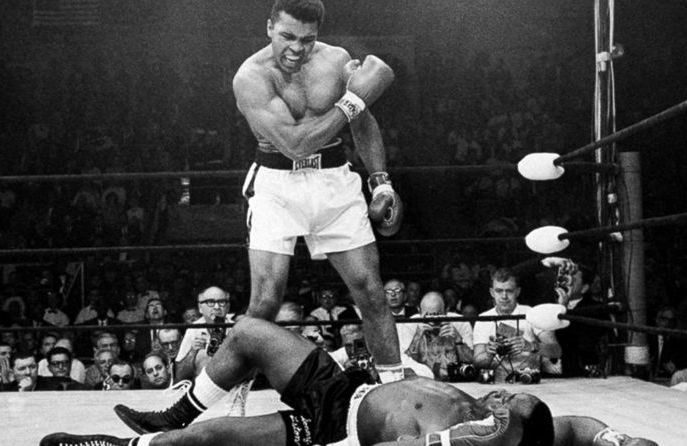
Universally regarded as one of the greatest boxers in history, Muhammad Ali’s stature as a legend continues to grow even after his death. He is celebrated not only for his extraordinary athletic ability, but also for his courage to speak his mind and challenge the status quo, and for his lifelong devotion to humanitarian work.
Muhammad Ali, formerly known as Cassius Clay, transformed himself from a young boy searching desperately for his stolen bicycle into a world heavyweight champion, and later into a global philanthropist who gave new meaning to humanitarianism.
Born on 17 January 1942 in Louisville, America, Ali was not just an athlete who represented his time. He shaped them. Whenever there is a debate about who deserves to be remembered as “the greatest,” Ali’s name inevitably leads the conversation. His professional boxing record of 56 wins out of 61 fights stands as proof of his unmatched calibre.
He won his first Olympic gold medal at the age of 18 in the light heavyweight division at the 1960 Rome Olympics. From there, he continued to dominate both inside and outside the ring.
Ali grew up amid racial segregation. At a time when Black Americans were denied basic civil rights, he emerged as a voice of dignity and resistance. He stood with oppressed communities and actively participated in movements for racial justice. He once said, “Hating people because of their color is wrong. It doesn’t matter which color does the hating. It is just plain wrong.”
In 1967, Ali was called upon by the United States military to serve in the Vietnam War. Staying true to his conscience, he refused to fight, declaring that his beliefs would not allow him to kill innocent civilians. As a result, he was stripped of his heavyweight title, his passport, and his boxing license and was banned from the sport while facing draft evasion charges. He was arrested and silenced at the peak of his career. Ali stood firmly against violence and war. In one of his most powerful reflections, he said, “Wars of nations are fought to change maps, but wars of poverty are fought to change lives.” His stance for justice and peace eventually gained widespread support, and the United States Supreme Court overturned his conviction.
Ali’s words continue to inspire generations. “Don’t count the days, make the days count,” he once said, and he lived by it. After years away from boxing, he made one of the greatest comebacks in sports history by winning the iconic “Fight of the Century.” Years later, in 1996, he lit the Olympic torch at the Atlanta Summer Olympics, standing tall as a symbol of resilience and hope.
Ali’s brilliance was not limited to boxing. He was nominated twice for the Grammy Awards for his spoken-word recordings. He was also a devoted father. His daughter, Laila Ali, followed in his footsteps and became a successful professional boxer in her own right.
After retiring, Ali dedicated much of his life to philanthropy. In 1984, he publicly announced that he had Parkinson’s disease and went on to raise awareness and funds for Parkinson’s research through the Muhammad Ali Parkinson Center. He also supported organizations such as the Make-A-Wish Foundation. Reflecting on service, he said, “Service to others is the rent you pay for your room here on earth. The more we help others, the more we help ourselves.”
In the end, Muhammad Ali became a quiet messenger of peace. He taught us that life becomes meaningful when we build bridges between people instead of walls. Sadly, that message remains just as relevant today.
The revered athlete passed away on 3 June 2016. The man who shook the world in life continues to inspire it in death.
May the Almighty grant him paradise.