

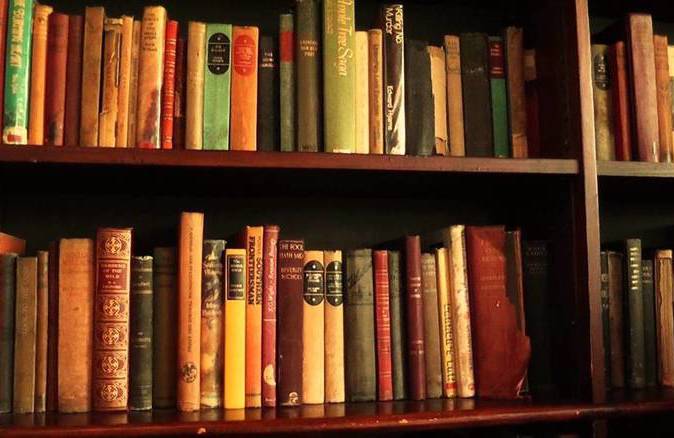
The World Book Day was chosen by the UNESCO General Conference to “pay a world-wide tribute to books and authors, encouraging everyone, and in particular young people, to discover the pleasure of reading and gain a renewed respect for the irreplaceable contributions of those who have furthered the social and cultural progress of humanity.” The first World Book and Copyright Day was observed on 23 April 1995.
Most educated Indians are indeed curious about the things which concern them immensely. But unfortunately, the media or formal education does not offer us insightful explanations. Paradoxically, the present young generation seems less interested in reading and more inclined towards the electronic screens. An important cause is that the most useful books that really educate us and reveal our various aspects, and of our world, are seldom publicized with the vitality which they deserve. So the curious mind gradually resigns itself to whatever is popularised by the powerful elite, without ever questioning it.
A selection of 99 books is hence listed here to educate the curious mind and society – to provoke imagination and to reveal certain realities which journalism is generally too shy or embarrassed to care. That is why, many of these books will probably be unknown to the best book stores in your city or a professional librarian. One of these books has been banned in India since 18 years; it isn’t offensive to any culture, but to power.
So, here diverse books on general knowledge, science, philosophy, personality development, life, education, deception, sexuality, fiction, fantasy, history, religion, society, politics and economics of India and the world, war and terrorism, peace and reform. A list of perhaps the most important books for our times; the oldest one is about a thousand years old (translated, of course) and the latest was published just a few months back. The choice of any title doesn’t necessarily mean our approval of the ideas or information from the book, it is rather meant for us to reflect and learn. Why? Even the books of Hitler or LaVey can reveal interesting things to us, besides pure evil!
- Know It All: Facts, Stats, Lists, Records and More by Francesca Baines & Samone Bos
Nature, science, life, society, culture, history, religion etc for young minds with beautiful photos. - 1001 Ideas that Changed the Way We Think by Robert Arp (ed)
All the conceptions of the human mind since antiquity till recently that influence us today. - World Heritage Sites: A Complete Guide to 1031 UNESCO World Heritage Sites by UNESCO
Excellent description of every officially extraordinary place with beautiful photos across 900 pages. - The Element: How Finding Your Passion Changes Everything by Ken Robinson
Breaking the barriers of age or occupation, we can all discover our natural talents and direct them towards our deep passions. - The 7 Habits of Highly Effective People by Stephen Covey
Perhaps the most inspiring and effective book for personality development. Useful for college students, professionals, parents, executives and policy makers. - Understanding Human Nature by Alfred Adler
Pioneering psychotherapist explains human psychology to improve your personal, social and professional life. - Man’s Search for Ultimate Meaning by Victor Frankle
Psychotherapist, who survived the concentration camps of the Holocaust, answers the ultimate questions to life, purpose, suffering, death and shows how life can offer profound meaning at every turn. - Discourse on the Method by René Descartes; Pamela Kraus (ed), Frank Hunt (ed), Richard Kennington (tr)
Autobiographical account from the father of modern philosophy and mathematics on the method of scientific enquiry and the reality of human existence, life, God etc. - Experience and Education by John Dewey
Greatest educationist of the twentieth century proposes the best philosophy and approach to modern education. - The Theory of Moral Sentiments by Adam Smith
Perhaps the most humane and sophisticated approach to sympathy, moral judgement, conscience, virtue, social and political thought. - Liespotting: Proven Techniques to Detect Deception by Pamela Meyer
Proven techniques of police academies and intelligence community to judge deception in everyday life. - Magic and Mystery of Numbers by Martin Gardner
Fun with Mathematics. Games with numbers can produce art, literature as well as music, besides giving us deep mathematical insight. - How Stuff Works by Marshall Brain
Explanation with over 1000 full colour illustrations to how science, technology, transportation, health and fitness etc. work. - The Grand Design by Stephen Hawking
From the origin of the universe and life to the most sought after questions about causality and existence. - The Sixth Extinction: An Unnatural History by Elizabeth Colbert
From interdisciplinary researches, scientists speculate the most unnatural extinction in Earth’s history that seems imminent from human actions. - The Origin of Species by Charles Darwin
A scientific theory based on ecology, struggle for existence, natural selection and survival of the fittest to explain the origin and evolution of life, simultaneously discrediting any Divine Providence. - Darwin’s Black Box by Michael Behe: The Biochemical Challenge to Evolution
The irreducible complexity in organisms that challenges the microbiological possibility of Evolution; argues Intelligent Design. - 1984 by George Orwell
70 years old novel speculates the nightmare of a totalitarian state that uses high technology, mass media, human surveillance and revision of history. - Gora by Rabindranath Tagore; Sujit Mukherjee (tr)
A soul-searching novel by the great poet-philosopher exploring religion, social values and nationalism; set around 1900. - The Autobiography of an Unknown Indian by Nirad Chaudhuri
Self-discovery of a Bengali youth and his conviction and admiration towards the British Empire; set around Indian independence. - Interpreter of Maladies by Jhumpa Lahiri
An interpreter guides a young Indo-American couple through the confusions of culture and generations to hear an astonishing confession. - The White Tiger by Aravind Adiga
Religion might not bring virtue and money will not solve every problem. But decency can still be found in a corrupt world and you just need to keep attentive. - Asura: Tale of the Vanquished: The Story of Ravana and His People by Anand Neelakanthan
A narrative of the defeated, for legends are often written by victors. The mighty wise king changes the destiny by one action. - Introduction to the Constitution of India by Durga Das Basu
22nd edition of an overview to the most sacred Indian document, the longest and the best constitution in the world. - Indian Nationalism: The Essential Writings by Irfan Habib
Reproducing the writings of India’s most important thinkers and leaders, Irfan Habib shows how the founding fathers of independent India viewed Indian nationalism and reminds us the kind of inclusive and free nation that was envisaged. - The Essential Writings of B R Ambedkar by Valerian Rodrigues
The most relevant extracts from the extensive pronouncements of the chief architect of the Constitution, without whom India would have been the most unequal and unjust state. - Anandamath or The Sacred Brotherhood by Bankim C Chatterjee; Julius Lipner (tr)
Translation, contextualisation and critical analysis of the Bengali novel, which contains India’s National Song, Bande Mataram, against a cultural, political and militant history. - Hindu Nationalism: A Reader by Christophe Jaffrelot
Writings of the founding fathers and key intellectuals of Hindutva, from the British Raj to the present. Indispensable to understand contemporary Indian politics or society. - Education in Emerging Indian Society: Challenges and Issues by Sunanda Ghosh
Evolution of education in India and the ongoing trends in relation with national integration, international understanding, democracy, human rights, value crises and globalisation. - Caste, Discrimination and Exclusion in Modern India by Vani Kant Borooah
A comprehensive assessment of the broad issues that underpin social exclusion and how caste and religion are lived realities of everyday life in modern India. - India’s New Capitalists: Caste, Business and Industry in a Modern Nation by Harish Damodaran
The modern-day evolution of business communities in India and the rise of new entrepreneurial groups with no established pedigree in trading or banking. - The Polyester Prince: The Rise of Dhirubhai Ambani by Hamish McDonald
The rags-to-riches life of Indian tycoon. Examining intricate political and questionably diverse connections, a raft of corruption charges and a rollercoaster journey, this study shows how capitalism emerges by fair and foul means in new industrial economies. - Sue the Messenger by Subir Ghosh and Paranjoy Guha
Rising trend of silencing journalists through measures known as Strategic Lawsuits Against Public Participation (SLAPP), which undermine democracy. - Everybody Loves a Good Drought: Stories from India’s Poorest Districts by P Sainath
The real lives and aspirations of a large section of Indian society and the often ludicrous efforts to do something for them.
- Excreta Matters. State of India’s Environment: A Citizen’s Report, 2 vols by Sunita Narain
In most Indian cities, the mismanagement of water, waste and sewage is polluting water bodies and causing water shortage besides crippling the health of millions. - Framed as a Terrorist: My Fourteen Years Struggle to Prove My Innocence by Aamir Khan and Nandita Haksar
Autobiographical account of an ordinary young man, who was kidnapped, framed and jailed by the state police for almost fourteen years. Written after his acquittal, this book shows the strength of human will and values. - Betrayal of India by Elias Davidson
Critical evaluation of the Mumbai 26/11 attack that questions the official account and the mystery of the death of Hemant Karkare. - Hidden Story of Begging Business in India by Arvind Katoch
Using maimed people in begging is a business venture for gangsters. True stories about begging which most of us don’t know, based on extensive research.
- Myth of the Holy Cow by D N Jha
Scholarly analysis of cow slaughter in ancient India, with references from Hindu scriptures as well as secular works of Kalidasa, Charaka, Sushruta and Vagbhata. - Godse’s Children: Hindutva Terror in India by Subhash Gatade
A comprehensive treatment of the Hindutva terror as not a mere regional or rare phenomenon, besides the common tactics used by these terror modules. - Uniform Civil Code: Fictions and Facts by Tahir Mahmood
Challenge to the widely prevailing myths, resurrection of forgotten facts and underlying realities and invitation to fresh assessments. - Islamism and Democracy in India: Transformation of Jamaat-e-Islami by Irfan Ahmed
An in depth examination of India’s Jamaat-e-Islami and SIMI, exploring political Islam’s complex relationship with democracy and providing a rare window into the Islamist trajectory. - Naxal Challenge: Causes, Linkages and Policy Options by P V Ramana
Examination of the socioeconomic causes of the Naxalite movement, their political bases, external links, and the viability of a political approach to resolve the problem. - Broken Republic by Arundhati Roy
Annihilation of those who have a different imagination and might guide us to the future. Can the uber-elite leave the water in the rivers, trees in the forest, and the bauxite in the mountain? - Understanding Kashmir and Kashmiris by Christopher Snedden
Tracing the roots of Kashmir problem in British era, Snedden explains why it continues, and assesses the political and administrative implications for the divided peoples. - Kashmir: The Case for Freedom by Tariq Ali et al.
Each dimension of life in the India-governed Kashmir is replete with the obsessions and absurdities of militarisation.
- Imagined Communities: Reflections on the Origins and Spread of Nationalism by Benedict Anderson
Careful and insightful analysis of the emergence of nationalist narratives; in Europe in the 19th century and in 20th century in the colonised world. - Victims of Progress by John Bodley
How industrial development affects indigenous peoples throughout the world. Struggle between small-scale indigenous societies, and the colonial and corporate developers who have infringed their basic rights.
- Indian Philosophy (2 Vols) by Sarvepalli Radhakrishnan
An eminent exposition of the ancient traditions of India, showcasing antique texts in relation to contemporary issues of philosophy and religion. - Islam by Fazlur Rahman
An incisive and comprehensive analysis of Islam and its prospects, from Prophet Mohammed to the late twentieth century, as a religious, spiritual and an intellectual tradition. - In the Footsteps of the Prophet: Lessons from the Life of Muhammad by Tariq Ramadan
Significance of the Prophet’s life for some of the most controversial issues of our times. A brief biography of the Prophet combined with the spiritual and ethical riches of Islam. - Misquoting Muhammad by Jonathan Brown
Amid myriad controversies and complexities of the religion of Muhammad, Brown traces their development and how Islamic scholars have sought to balance reason with -revelation, science with religion and culture with scripture. - Mere Christianity by Clive S Lewis
The fundamental truths of the religion. Rejecting the boundaries that divide Christian denominations, Lewis highlights the core of Christianity. - Hindus: Their Religious Beliefs and Practices by Julius Lipner
An essential reader to understand Hindu traditions. Based on a lifetime of research and personal experience, Lipner explores the debate about Hindu origins, their worship, dharma and morality, philosophy and reason, Hindu society and the Caste system. - Bertrand Russell on God and Religion by Al Seckel (ed)
A single volume compilation of Russell’s best essays on free-thought and rationalism with a severe scrutiny on religion. - The Strange World of Human Sacrifice by Jan Bremmer (ed.)
Academic articles on the history and anthrolpology of all the traditions of the world to explore the most intriguing aspect of religion.
- India’s Ancient Past by R S Sharma
General readers, students or tourists, this book is for all those who want a masterly, yet eminently lucid overview of India’s ancient history. - Alberuni’s India by Muhammad Al-Beruni; Edward Sachau (tr)
Classical father of Indology presents a scholarly account with a profound understanding of almost all aspects of Hindu life and the ancient Indian civilisation. - Mind Over Matter: Essays on Mentalities in Medieval India by D N Jha and Eugenia Vanina (eds)
Eminent historians from various schools of historiography present papers to showcase the myriad aspects of medieval Indians and stress on the importance of comparative studies in history. - Indianized States of Southeast Asia by George Coèdes
The expansion of Indian rule in Southeast Asia and the influence of Indian arts, customs, languages and religions upon those kingdoms. - Aurangzeb: The Man and the Myth by Audrey Truschke
Challenging the colonial narrative, historian Audrey Truschke takes a fresh look at the most controversial Indian emperor in a brief and captivating biography. - India’s Struggle for Independence by Bipan Chandra et al.
An examination of the various strands of the greatest struggle in human history under an analytical framework – from the abortive revolt of 1857 to the final victory of 1947. - India After Gandhi by Ramachandra Guha
An epic history of the pains, the struggles, the humiliations, and the glories of the world’s largest and the least likely democracy.
- Muqaddimah: An Introduction to History by Abdul Rahman Ibn Khaldun; Rosenthal and Dawood (tr)
A monumental work of the 14th century that established the foundations of several disciplines including the philosophy of history, sociology, ethnography and economics. - The 100: A Ranking of the Most Influential Persons in History (1st ed.) by Michael Hart
Short biographies of the most influential personalities who swayed the destinies of billions of people, determined the rise and fall of civilizations and changed the course of history. - History of World Religions by David Noss and Grangaard
Perhaps the most thorough history of all the world religions available in a single volume, treating many subjects largely neglected in other texts. - The Preaching of Islam: A History of the Propagation of the Muslim Faith by Thomas W Arnold
An objective reflection on the spread of Islam and its message among the people of the world, offering a fine example of unbiased scholarship. - 1001 Inventions: The Enduring Legacy of Muslim Civilisation by Salim Al-Hassani (ed)
A unique insight into Muslim history that has been ignored by the dominant narrative, although it paved the way to modern scientific age. - The Adventures of Ibn Battuta: A Muslim Traveller of the Fourteenth Century by Ross Dunn
A recounting of the greatest travelling career in history, a thorough exploration of three continents in 27 years. - IBM and the Holocaust by Edwin Black
Collusion of American Capitalism with the Nazi Reich through state-of-the-art technology to identify European Jewry with unnerving speed and accuracy. - Blood and Soil: A World History of Genocide and Extermination by Ben Kiernan
A global history of the greatest crimes against humanity, from prehistory to late twentieth century.
- An Interpretation of Desire: Essays in the Study of Sexuality by John Gagnon
(Foundational work that is widely considered as the most important study of human sexual behaviour, including issues like Freudian theories, homosexuality, hazardous sex, and the social aspects of sexually transmitted diseases. - Women and Islam by Zayn Kassam
The expert essays shows how Muslim women are actively involved in addressing the conditions of their environments and adopting strategies ranging from the political to the legal, from the theatrical to the religious.
- Wealth of Nations by Adam Smith; Tom Butler-Bowdon (intro)
Adam Smith’s masterpiece, first published in 1776, is the foundation of modern economic thought and remains the single most important account of the principles behind modern Capitalism.
- Marx’s Capital: A Student Edition by Chris Arthur A skilful and readable abridgement of Marx’s daunting critique of the capitalist mode of production in England, which was the most advanced industrial society of his day.
- Protestant Ethic and the Spirit of Capitalism by Max Weber; Stephen Kalberg (tr)
This esteemed classic examines the deep cultural “frame of mind” that existed at the birth of modern capitalism and to this day influences the attitudes towards employment in the Occident. - Theory of the Leisure Class by Thorstein Veblen; Alan Wolfe (intro)
A surprisingly reflection of contemporary economics and society, although written 120 years back. Veblen’s most famous work has become an archetype not only of economic theory, but of historical and sociological thought as well. - Society of the Spectacle by Guy Debord
Everything that was directly lived has moved away into a representation. A rare combination of political-cultural theory and analysis of pervasive technologies. - A Brief History of Neoliberalism by David Harvey
A story of the new capitalism of Reagan and Thatcher that is one of the root causes of today’s inequalities and global discontents. The 2011 Occupy Wall Street movement was partly against Neoliberalism.
- Interest by Syed Abul A’la Maududi
Renowned Islamic scholar of the last century presents the scourge of interest on the society – as the primary cause of concentration of wealth and socioeconomic exploitation. - Islamic Finance by Suhail Zubairi
Essays by global experts in Islamic finance product development and advice to financial institutions on contemporary assessment of the key legal and Sharia issues. - Commanding Heights: The Battle for the World Economy by Daniel Yergin and Joseph Stanislaw
An incisive overview of the state of the economies, of the interplay between governments and markets in each region of the world and about the ideas & factors that are shaping the future. - Consuming Religion: Christian Faith and Practice in a Consumer Culture by Vincent Miller
Contemporary religious following is silent on one of the most important cultural issues it faces, namely “consumer culture”. Analysis of Christendom but equally applicable to most major religions.
- Fault Lines: How Hidden Fractures Still Threaten the World Economy by Raghuram Rajan
World leading economist and banker shows the serious flaws in the globalised economy and discusses a system of growing inequality and thin social safety nets. He outlines the hard choices required to ensure a more stable and prosperous world economy.
- The Shock Doctrine: Rise of Disaster Capitalism by Naomi Klein
The disaster capitalism complex now exists as a booming global economy, and is the violent culmination of a radical economic project that has been incubating since fifty years.
- Clash of Civilisations and the Remaking of World Order by Samuel Huntington
A provocative analysis of geopolitics after the fall of Soviet Union. Have “civilizations” replaced nations and ideologies as the driving force in global politics today? - Identity and Violence: The Illusion of Destiny by Amartya Sen
A sweeping philosophical work challenging the reductionist division of people by race, religion or class. An inspiring and firm vision of peace in the world. - Rise and Fall of Civilisations by Nicholas Hagger
An outline of the patterns of civilization, the dynamics of their origin, rise and collapse, and how one civilization leads into the next. Where our civilization is headed today.
- Propaganda by Edward Bernays
Scientific techniques of engineering public opinion. Those who manipulate this unseen mechanism of society form an invisible government which is the true ruling power of any state. - Orientalism by Edward Said
From the beginning of Western speculation about the Orient, the one thing that the Orient could not do was to represent itself. - Media Control: The Spectacular Achievements of Propaganda by Noam Chomsky
“Propaganda is to democracy what the bludgeon is to a totalitarian state”; mass media is but a propaganda vehicle in the United States. The public is a “bewildered herd” that needs to be directed, not empowered. - Covering Islam by Edward Said
Throughout its history, Western media has portrayed Islam as a monolithic entity, a malicious pariah. The hidden agendas and distortions of fact often underlie even the most objective coverage of the Muslim world.
- Requiem for the American Dream: 10 Principles of Concentration of Wealth & Power by Noam Chomsky
On the subject of income inequality, world famous intellectual casts a clear, cold and patient eye on the economic facts of life. He describes the policies that undermine democracy and shape an ideology that maximises profit by marginalizing the population. - Hegemony or Survival: America’s Quest for Global Dominance by Noam Chomsky
The leaders of freedom and democracy have been pursuing a grand imperial strategy through unilateralism, dismantling of international agreements and state terrorism, in a drive for hegemony that ultimately threatens our very existence. - Brokers of Deceit: How the US has Undermined Peace in the Middle East by Rashid Khalidi
The United States has masqueraded as an unbiased mediator working to bring peace to the most contested region of the world, but, in fact, has brokered a continuing injustice and has actively prevented compromises. - Israel Lobby and US Foreign Policy by John Mearsheimer & Stephen Walt
The most taboo political issue in America. The most powerful and detrimental lobby in the US and its contradictions.
- Misunderstanding Terrorism by Marc Sageman
A striking reassessment of the global Jihadist threat to the West. A veteran expert on international terrorism, Sageman shows why people adopt fundamentalist ideologies and how terrorism has evolved. - Cutting The Fuse: Explosion of Global Suicide Terrorism and How to Stop It by Robert Pape and James Feldman
Gathering from a wealth of knowledge, an academic and a military expert explain that the root cause of suicide terrorism is prolonged military occupation, which triggers secular and religious people alike towards suicide attacks. - The New Threat: Past, Present and Future of Islamic Militancy by Jason Burke
Drawing from his long experience of reporting on the terrorism in Kurdistan, Afghanistan and Al-Qaeda, renowned journalist explains the rise of Islamist terrorism and speculates its future.
Happy World Book Day. Enjoy reading