


A country surrounded by landmass on all sides having critical geopolitical as well as strategic significance, known as Afghanistan has been witnessing an array of calamities ever since the overthrowing of American backed Afghan government by the Taliban when they took over Kabul last year. It is an undeniable fact that Afghanistan has a long history of war and conflict but the struggle between the Taliban and the American back Afghan government for ruling the country with their own set of principles has been a source of fascination as well as heated debates for scholars as well as for common folks.
Roots of this conflict however go back to the Soviet Union’s invasion of Afghanistan back in 1979 during the era of cold war. The soviet union and the US have since faced embarrassing defeat leaving behind a mountain of corpses of its 40 year-long history. USSR which came with a sky-high dream to rule Afghanistan carrying its communist ideology was compelled to collect remnants of its soldiers in coffins enshrined with soviet flags and only to head back straight to Moscow after 10 years of adamantine resistance by the Afghan Mujahideen.
At its aftermath structure, the country has spectated a bloody civil war between various Afghan rebel factions who previously united under one single banner to fight against their common enemy. This upheaval broke out to answer the question about who will rule Afghanistan now? This very clash led to the genesis of Taliban and its rise as a voice of the oppressed people which successfully captured the capital Kabul at a rapid pace back in 1996 and they remained in power until the US invasion of Afghanistan in the very beginning of 21st century.
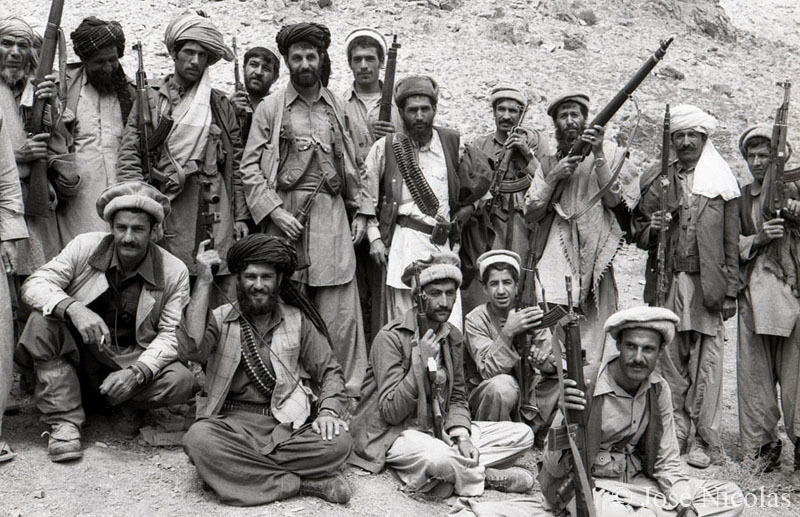
In 2001, the first Taliban government was toppled by the US invasion along with its allies on account of providing safe haven to al-Qaida’s leading face Osama bin Laden who was allegedly portrayed as responsible for the 9/11 attack on world trade center. To their misfortune, US also witnessed the same fate or even worse than that of the Soviet Union in the hand of Taliban.
In accordance with the Doha agreement inked in 2020, US eventually decided to end the longest war of its history and finally, last year when it commenced its absolute withdrawal from Afghanistan turning up in the wake of rise of he Taliban. The visuals which came before the world were really heart throbbing. Civilians left no cope in rushing towards airport, taking shelter on airplane’s wheels, some were even seen falling to death. Hundreds of thousands of people including the ones who have been a firm fist in assisting the NATO forces for years in their anti-Taliban operations also became refugees even after the Taliban declared amnesty for all locals, irrespective of their past deeds. Ever since the conquest of Kabul by the Taliban in 2021, Afghanistan has become a pariah state. Around half a million people have lost their jobs besides which, national assets worth more than $9 billion in Afghan central bank have been seized which worsened the economic crisis and resulted in the crash of economy and led to rapid inflation.
This year on 15th of August, Taliban celebrated its Independence Day and marched riding on US Humvees, flying American black hawks reflecting that after 40 years of war and conflict now the country is in the hands of its rightful owners. On the other hand, the same is not even close to independence for the common Afghanis who are being forced to sell their organs and infant babies for bread. There is a lot to be done in order to make Afghanis feel the essence of true independence. There is a huge debate on human rights, women rights and education brewing under the banner of Afghan politics.
After completing one year of its sustaining rule, Taliban government has been unable to garner international recognition because of political and ethnical disputes where the international community is even today demanding an inclusive government which may assist in commencing a new chapter of bilateral relations of Afghanistan with the global political bodies. Since Taliban has taken power, they have been working for betterment of the country in economic, health, education, and security sectors.
Taliban has launched an anti-narcotics campaign at state level. On one side it made rehabilitation centres to cure drug addicts and set up a medical structure for them who were lying destitute at road side. On the other hand, it has officially banned narcotics, its farming, production, and trade. Taliban regime has also appealed to international community to assist them in this campaign to counter global mafias. This campaign has also created an agricultural crisis as Afghanistan is facing drought which is highly favourable for opium. It is a big challenge for the government amidst all this to provide an alternative for earning as the economy has already been crumbling since the past one year.
Ever since the Taliban were fighting to gain political supremacy, they have been making critical endeavours for international recognition of their government and these efforts came into limelight after they captured Kabul. The biggest concern of the international community behind not recognising Taliban government is that lest Afghanistan would be used for terror activities. The biggest challenge for Taliban is to satisfy and guarantee the global community that they will not allow the internal strife with in the territory of Afghanistan to pose as a threat to global peace.
Afghan Taliban has time and again reflected their passionate desire to establish remarkably good ties with all others countries. In response to which, many countries particularly western countries have urged Taliban to form an inclusive government which must entail varying factions of Afghanistan and respect human rights as pre-requisite condition to officially recognise the Taliban regime. In this regard the Taliban government sent its delegations to different countries such as Norway, Switzerland, Turkey, China, Qatar, Russia, and Pakistan to formally develop diplomatic relations. With all the ups and downs India has also resumed its embassy in Kabul this month.
Though Afghanistan has seen an expedicious decline in violence after regime change but the country has been suffering from severe economic and humanitarian crisis at the same time. However these crisis are in some way or the other driven by external forces only. There are various factors which have adversely afflicted Afghanistan’s economy but the most invincible factor of all turned out to be Afghanistan’s isolation in international political arena. Another factor which arose to worsen the situation associated with the above mentioned international isolation is the Afghanistan Central Bank assets worth more than $9 billion being seized by the US for Taliban not having international recognition.
World Bank and IMF have also cut their ties with the destitute war-torn nation and have categorically denied Taliban’s plea for foreign funds. These moves have plunged the country’s economy into a deeper crisis where the banking system has now been pushed to the verge of collapse. Thousands of businesses were forced to be shut down which further culminated into unemployment, hunger, and poverty rates reaching all time high. According to a report put forward by the United Nations, more than half of the population of Afghanistan is in dire need of receiving humanitarian aid. The aid on which country relies heavily, has been cut off allegedly for not respecting human rights in general and women rights in particular which has been the root cause leading to humanitarian catastrophe.
Migration has emerged as another great challenge for the Taliban government. Since last year the country has witnessed a rapid rise in migration of Afghani civilians particularly to Iran and Turkey, fearing a new conflict which may occur after the Taliban take-over of Kabul as the same events followed after the Soviet Union’s withdrawal in 1989. The migrants included military personnel of former government, journalists, civil society, and human rights activists. Though the pace of migration has slowed down after Taliban announced amnesty for all and promised to protect lives and properties of all people including officials of previous government but still some people’s decision of migration remains unaffected.
A new challenge for Taliban which has now emerged is in the shape of ISIS which considers Taliban as moderates and not different from any of the previous rulers. It has continued attacks on Taliban forces to gain geopolitical hegemony in their hands. In view of ISIS, the Taliban government is not an Islamic government on account of being moderates and that ISIS is only capable of establishing a purely Islamic government. The common Afghanis who have nothing to do with this status quo and are struggling for bread in a war-torn country are forced to pay the price for this war between moderates and extremists. So far Taliban forces are unable to deter these inhumane attacks hosted by ISIS.
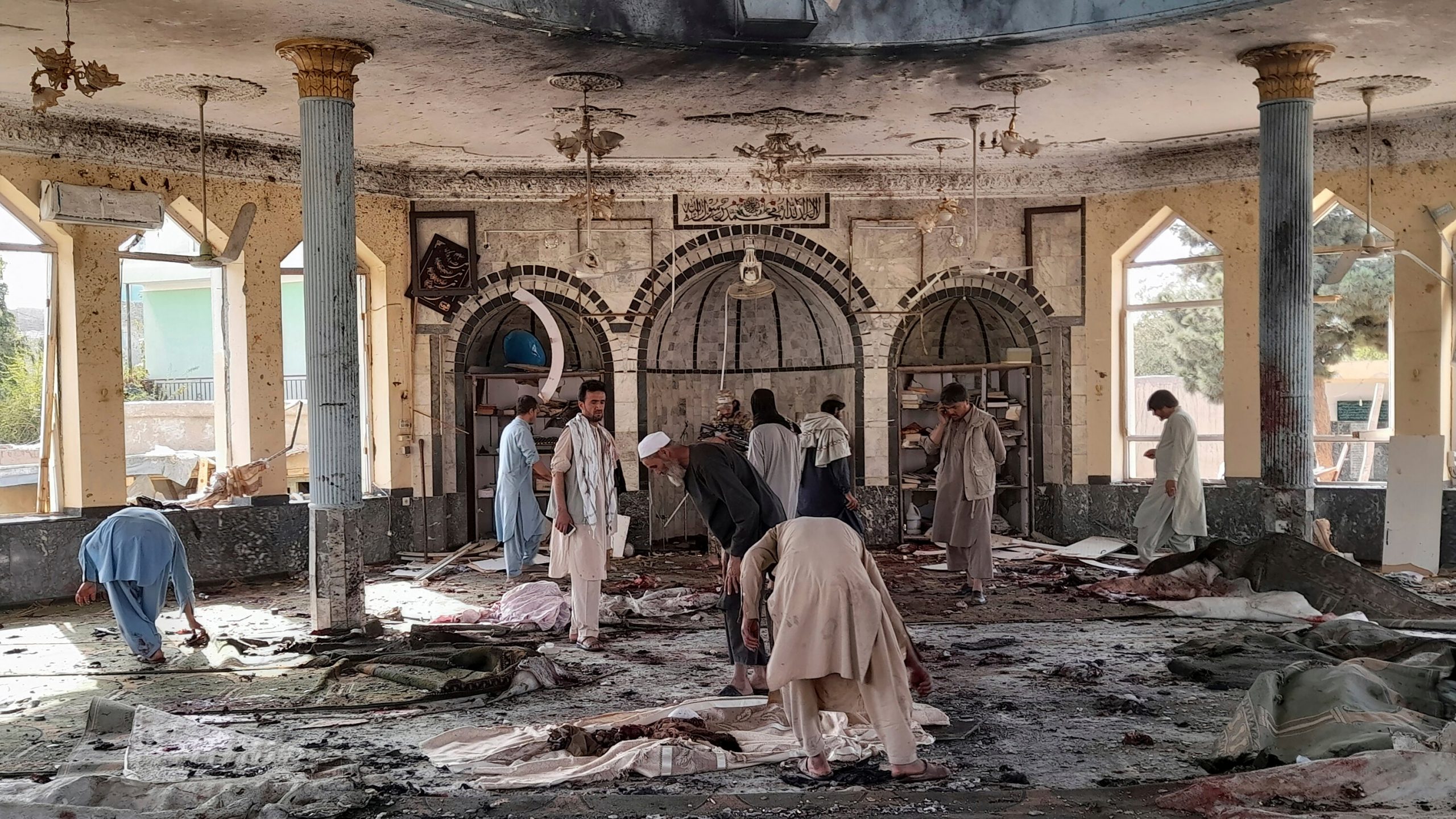
These challenges have created further hindrances in the way of Taliban and have swiftly slowed down Taliban’s momentum of their endurance in monitoring the country to get over these predicaments. Taliban’s call for general amnesty for all officials associated with the previous government and calling them to resume their work depicts that they do not want further escalation in conflict and are willing to maintain a peaceful atmosphere in the country.
Concerns of the West regarding human rights are appreciable but they should understand that European values have a confined fence and cannot be labelled as global values. Western world wants women rights in light of their own framework to be implemented in Afghanistan while the Taliban has promised to respect women rights in light of Shari’ah law for which they have fought American led NATO forces for years and they are not ready to desert it at any cost. On the other hand, this fact must also be taken into consideration that Palestinians under the despotic regime of Israel are also facing similar or even severe basic humanitarian crisis for more than 7 decades but not even a single European nation has dared enough to cut its diplomatic ties with Israel and in turn throw Israel into isolation at international level. This in itself portrays double standards of Western model of politics.
After 20 years of resistance, the Taliban have proved that it is an established reality and no one can stop them from implementing their model of governance. It would be better for the world to focus on basic human needs like food and medicine to minimise the sufferings of Afghani civilians at a time of these fatal crisis as first priority in the issue of Afghanistan and to leave other differences to be debated and resolved later.