

Do not follow prolonged abstinence with extreme indulgence.
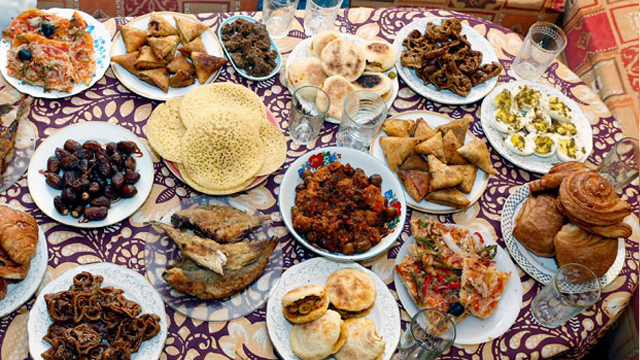
As we sit and eye the sumptuous Iftar meal before us, with just a few minutes to Maghrib, we face an opportunity to define ourselves and our behavioural patterns: When given the chance to eat and drink, will we be excessive? When unleashed, will we be able to restrain ourselves?
This choice that we are faced with at the Iftar table, extends beyond it into each and every aspect of our lives. When the pendulum of our lives swings to one extreme, it acquires the inertia to swing to the other extreme.
We must look into ourselves: how often do we swing from one extreme to its opposite? Are we prone to such patterns of behavior when we enthusiastically embark upon a new religious practice? What are our patterns of piety and sin? Of prayer and pornography consumption? Of fasting and gluttony? Of binge-reading the Quran and binge-watching TV shows?
Often, it becomes a vicious cycle where one extreme fuels the other. The extreme of piety burning itself out and welcoming extreme laxity. Instead of jumping between extremes, we must learn to straddle the middle path of sobriety, and seek to cultivate a composed countenance before both prayer and pornography. Only then, when we are not caught in the tides of extreme guilt and extreme gaiety, can we step back and make a sober assessment of our situation.
To abhor a sin is not enough. To overcome it, one must understand it. One must understand the deep seated feelings of inadequacy, anxiety or uneasiness within oneself, that drive one’s cycle of addiction. What is it in my life that I am seeking an escape from? What is so disturbing that I am unable to squarely face it?
Only by answering these questions for ourselves, and only by adequately understanding and diagnosing our diseases, can we set about properly treating them. We suffer from spiritual illnesses. And we must become our own doctors in treating them – with the doctorly concern for an effective cure, along with the doctorly compassion for existing suffering. From the doctor’s viewpoint then, blaming one’s illness is unhelpful. The priority should be to understand what is causing it so as to administer an appropriate therapy.
Finally, one must never forget that the path to recovery is a gradual one. That an effective therapy is one that does not abruptly discontinue the drug that one had become addicted to, and thereby send one spiraling into all sorts of other reactions of sudden withdrawal. Rather, the safest guarantee of a long lasting treatment lies in gradually weaning off one’s drug, whether it be actual drugs, or pornography, or gluttony, or TV addiction.
With these thoughts in mind, as we sit and eye the sumptuous Iftar meal before us, we can allow a moment of pause before pouncing upon the food, and think about how our extreme fantasies of indulgence often mirror our extreme ideals of abstinence. And to ask ourselves at that holy hour, in the eyes of God: what sort of behavioral cycles do we want defining us?