

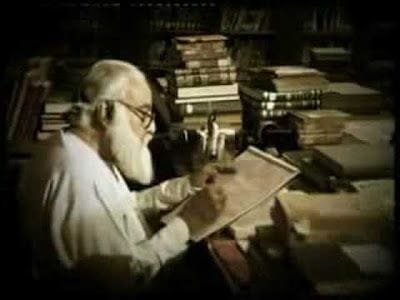
Maulana Syed Abul A’la Maududi is one of the defining scholars of the 20th century—the century which saw major upheavals and tectonic shifts in society. With the colonial footprint scarring the entire globe, fuelled by the white man’s burden to civilize the world in its modern outlook, this caused major ruptures in the very fabric of society. The emergence of the nation-state as a new form of governance, with a liberal way of life, forced a new way of life. Especially, the countries which were colonized were reeling under the colonial grip; their education, identity and civilization were subjected to mental and physical slavery. This new condition confronted the mind with new questions. The idea of religion was chiselled into a secular frame, the emerging sciences replaced divine knowledge, and the western way of life became the new benchmark. In this milieu, Maududi ushered in a new way of looking at things. There emerged two kinds of responses: either a full-scale rejection of every idea, or a blind acceptance of western ideals. Maududi was neither apologetic nor dismissive of the emerging modern ideas. He articulated and crafted a response rooted in tradition with the dynamism of the era, and thus expounded the idea of Islam as a way of life. This was the revolutionary slogan that catapulted the resurgence of Islam in the last century. His entire corpus of work is an effort to articulate and provide a blueprint for the grand thesis of Islam.
Today, the domain of decolonial knowledge and episteme is considered the quintessential paradigm for understanding holistic knowledge and engaging with the truth. Maulana Maududi’s engagement with the modern episteme shows his originality in how he deciphered and problematized the modern paradigm from an Islamically rooted episteme, and presented Islam as a viable alternative, demonstrating to the world that the hegemony of the western episteme, with its racist and material underpinnings, must be challenged, and how. This is the genius of the thinker in Maududi that is not fully appreciated. Let me present how Maududi dissected the foundations of modernity and then presented an alternative discourse rooted in logic, coherence and reasoning, nurtured by Divine revelation.
Engagement with modern ideals
The three pillars of modern discourse are said to be the supremacy of reason, individualization and secularism. These three pillars express themselves in any system they give birth to, be it capitalism, liberalism or socialism. Unless and until the crux is dissected, it is impossible to comprehend these ideas, let alone combat them. Thus Maulana Maududi, throughout his writings, has been a forceful advocate of the primacy of Divine wisdom, conveyed through revelation in the form of the Quran and the Sunnah of the Prophet. In an era when Nietzsche declared, “God is dead,” and Descartes said, “I think, therefore I am,” Maududi forcefully propounded that unless knowledge is nurtured in the light of Divine wisdom, it too will lead to destruction and become obsolete. From his booklet Islam and Jahiliyyat to his magnum opus Tafheem-ul-Quran, this theme is ever present, the primary mover of his ideas, amid the apologist tendencies even within the ummah. The hyper-individualization that leads to the disintegration and dismantling of society, where the individual is robbed of his dignity and reduced to a pawn as John Locke imagines, thus giving rise to a contract of individuals that leads to the idea of the sovereign, is also challenged by Maududi. The idea of community, Shuraiyat and collective life to establish deen is central to Maududi. And finally, the idea of secularism, that religion should be relegated to private affairs, was vehemently opposed by Maududi. This should also be read in the context of the Muslim ummah taking refuge in the madrasa versus the Aligarh model of education. He was unflinching in his articulation that religion must provide guidance in all walks of life, and that there is no compartmentalization between the emperor and the pope, which was a hangover of the Judeo-Christian way of life. That Islam has a political, economic and social way of life was emphatically propounded in the age of the formation of the nation-state, as a viable alternative to the western, liberal, capitalistic way of life. Now let us look at how this critic of modern ideals paves the way for an Islami
Islamic system of life
Now, having looked at the context of his emergence and the key levers of his thought, when we apply his outlook to the various disciplines and systems of life, we clearly see distinct, coherent and logical thought that provides a framework for us to derive a roadmap for a society nurtured by faith, with justice and peace as its resulting fruit. Consider his work Khilafat-o-Mulukiyat, a magnum opus on Islamic political history. In it he offers an objective analysis of the past millennia and synthesizes a recipe for the Islamic political imagination. He pinpoints where the institution of khilafat was hijacked by individual aspirations and turned into mulukiyat (kingship/monarchy), and the idea was pillaged, whereas the khilafat system had been a shining example of Shuraiyat, accountability and transparency, in which sovereignty rested with the Divine and the ruler was His vicegerent. Hakmiyat lay with the Divine and not with the ruler, a principle that was slowly diluted. Thus the law was derived from the divine and not man-made, with the majority dictating morality. He critically analysed and brought home Islamic political principles, and also applied them to modern political discourse in his work Tehreek-e-Azadi-e-Hind aur Musalman, showing how the modern discourses that derived sovereignty and law from the profane were bound to doom. He had predicted the failure of liberal democracy and foretold that the majority would devour the minority in a republic, something that is happening across the world. Elected mavericks such as Trump also show the limitations of such systems, in which democratic systems can be hijacked. The law and order crisis, especially in the face of the Palestinian genocide, reveals the failure of liberal democracies. The idea that politics must encompass morality and accountability is, in a nutshell, what the liberal nation-state, anchored by a capitalistic economy, fails to embody.
Similarly, when we look at economics at the turn of the 20th century, industrialization brought about new forms of economic model. Heavy machinery relegated labour, capitalism took the stage and money became the new god, while communism responded to the crisis of production and labour. Maulana Maududi, in his Sood, showed why a system built on interest is exploitative and bound to wreak havoc, which we are witnessing from Wall Street to Dalal Street in India. Capitalism sought to empower the individual with capital, relying on the invisible hand of the market, while communism sought to regulate with the iron fist of the state; Maududi diagnosed that the inherent contradiction lies in the conception of man as a “selfish” individual at the root of this crisis. He presented an Islamic model built on the idea of man as khalifa and vicegerent of Allah: wealth is his responsibility and he must have freedom, but the overall welfare and Nafiyyat of humanity at large must be served, and the malaise of interest must be eradicated. Thus today, in the age of crony capitalism, Maududi’s ideals on Islamic economics remain a silver lining for humanity to introspect upon. Education, law, art and culture, and many other domains have likewise been discussed thoroughly by Maududi, but the idea here is to offer a peek into his thought process and his application of these ideals.
Finally, from the above discussion, we clearly see a blueprint rooted in the idea of Islam as a way of life. These ideals have moral foundations and principles that can be applied to an evolving human society. The Prophet Mohammed lived in a feudal society in 7th-century Arabia; the crux of Maududi’s vision is that the ideals of Islam are not static in time, but possess the dynamism to enlighten across space and time. This is the achievement of Maududi: to present Islam as a dynamic system of thought and ideals that can be successfully applied to nurture a human society rooted in morals, striving for a holistic existence and a prosperous nation. Thus, from feudal societies to the complex nation-state, from a simple rural economy to a globalised, hyper-connected world, the principles of Islam as a dynamic entity are the way forward. It is not about replicating age-old systems or getting trapped in a narrative of lost golden history but, as Maulana Maududi demonstrated brilliantly in Khilafat-o-Mulukiyat, about synthesizing pearls from history to create a vibrant future. That is the genius of Maulana Maududi.