
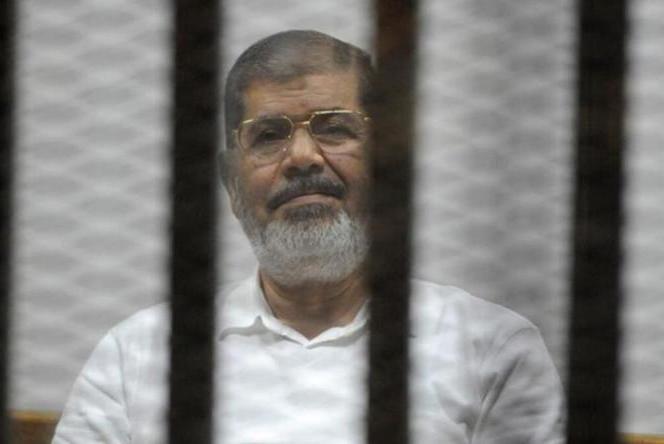
His death hardly received attention in the mainstream media in Egypt. While many refrained to mention his title, none, except for one privately owned tabloid gave the first democratically elected President of the country a front-page cover.
Turkey and Qatar called him a ‘brother’, a ‘martyr’ and strongly criticized Sisi’s regime. While the rest of the world condemned Sisi’s ill-treatment of his prisoner on humanitarian grounds, Morsi was mostly labelled as ‘Islamist’, ‘Terrorist’, ‘incapable’ or ‘good-for-nothing’. Their criticism soared so high that he was dubbed ‘the accidental President’ and ‘the spare tyre’.
But there’s a lot more that one can learn by reading news carefully and critically. News tabloids began poisoning the political discourse in Egypt especially the Brotherhood long before Morsi and his political party won the elections. And the charade continued and exploded during mass protests and his consequent ouster by the military. The standard picture was that when the military suspended the constitution and overtook the government amidst mass protests, virtually causing the worst massacre in Egypt’s modern history, it counted as ‘stabilization’ in the official narratives. When Morsi and his supporters resisted the aggression and defended the legitimacy of his Presidency, it was ‘terrorism’. It is an almost laughable deceit.
While the mainstream media busied itself with manufacturing colossal lies in service of their respective states, only one media outlet dared to document the truth through the words of Morsi’s own Cabinet Minister, who survived the coup. So severe is this departure from the general journalistic trend that if it weren’t for the witnesses and various evidences gathered in the documentary, it would have been hard to believe Al-Jazeera’s narrative.
Khaled Al Qazzaz, the then Presidential secretary for foreign affairs, one among the nine men with Morsi, recounts his last days in office. Sisi’s ‘ambiguous comments’, ‘changed demeanor’, ‘a change in the messages he was providing’ several days preceding the mass protests against Morsi signaled at an impending military coup. His ultimatum to the public without the President’s knowledge and instructing the military to ‘work on gaining people’s trust’ through acts such as ‘painting street pavements’, presenting the military as ‘the sole saviour of the nation’ and demanding absolute loyalty from his comrades gives off a very wary impression of him. Orchestrating ‘frequent power cuts’, ‘long queues at the petrol pumps’ to create resentment among the people and ‘revealing only part of the (military) deployment plan to the President, when it was more extensive than agreed’ and ‘deploying the military to major infrastructure that are necessary to the conduct of the government’ and ‘not just to major likely protest sites’ were all part of his ‘plot of strategic deception.’
But it isn’t just Sisi who helped pave the way to a bloody military coup. Khalid Al Attiyah, Qatari Minister of Defence recounts his meeting with Morsi, who complained of ‘interfering’ neighbouring countries. One particular gulf state went too far as to fund armed groups unheard of before in Sinai with weapon shipments and money to attack security forces. Despite Morsi’s multiple attempts to negotiate with the neighbouring countries, the opposition parties, and the public to find a way out of the crisis, some sell-out politicians like El-Baradei, who ‘previously demanded the military out of politics were now lobbying on its behalf both home and abroad’ and calling on the army to take over, while simultaneously instigating and provoking the public by false claims of a failed regime.
When Sisi’s conspiracy finally dawned upon Morsi, he called for a meeting at the Palace, the last of many, suggesting the replacement of the Prime Minister ‘by someone who all the parties, patriotic groups, and the military could agree on.’ But Sisi had already set his eyes on the Egyptian throne. Later that day he called the deal off proving his treachery. Morsi was ousted by his own Defence Minister despite millions of his supporters who loved and admired him protesting in the Rabaa Square in favor of his presidency for consecutive days while the world media focused on ‘large’ but ‘short’ protests of the opposition in Tahrir Square leading to the President’s house arrest, kidnapping, a sham trial and consequent murder.
Rubbernecking their own Human Rights violations in their own land or foreign territory, the gulf states and the USA stood by an illegitimate military coup and suggested ‘constitutional changes and severe restrictions on Morsi’s power.’
Now compare this first-hand narrative with the world’s view of Morsi. Also, compare the story of Zainabul Gazali, an Egyptian activist imprisoned and tortured along with many of the Brotherhood members by the then Egyptian President Gamal Abdel Nasser, in her book, The Return of the Pharoah to the narrative surrounding Nasser and his governance in the mainstream media. If a commoner’s perception of the shape of the globe were as warped as the world’s narrative, he or she might well be institutionalized. But for those who work for the state and fill their pockets, however, such intellectual emaciation is all in a day’s work.
What makes the world apathetic towards Morsi and the Brotherhood is loud and clear. They find a support, a friend in their agendas against an honest governance freely chosen by its people which if allowed to flourish would have sounded the death knell for all neighbouring despotic regimes. Fixating on the Brotherhood’s religious tendencies is actually just a fig leaf intended to cover up Sisi’s own tyrannical inclination. Though the press ostensibly criticizes Morsi as being unsecular and undemocratic, the press is blatantly propagandist. Too often, liberals while discussing religion decide for themselves what will be discussed, what they will hear and what they will learn. Space for differing opinions doesn’t exist, doesn’t matter.
Morsi’s death is the fruit of six years of institutionalized animus directed towards the Brotherhood’s popularity not just among the Egyptians but the world’s Muslim population. His only crime was that he was a Muslim and a strong supporter of the Syrian and Palestinian cause.
The heinous nature of his death demands a moment of silence for Morsi; for courage and bravery that he epitomised until his last breath; for justice that he fought for in every moment of his short but well-lived Presidency; for humanity that he stood by even in his worst of times; for trust that Sisi so shamelessly betrayed; for democracy that suffers every time it is sold for power and for liberty and freedom that have become game phrases for liberals and anti-Islamists to discredit and slander anybody who endangers their vested interests and selfish ideologies.