

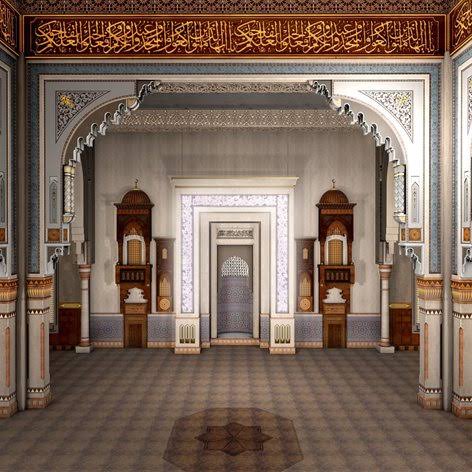
Abu Huraira reported that the Messenger of Allah (ﷺ) said: The parts of land dearest to Allah are its mosques, and the parts most hateful to Allah are markets. (Reference : Sahih Muslim 671)
I’d like to share an interesting development I came across recently. Upon returning late at night from a wedding celebration in the city where I live, our way back home took longer than usual. It was after all a weekend and traffic in the heart of the city should be expected. But this traffic was being held up for no usual reason. The youth of the city were out on the streets to celebrate the weekend by enjoying a hookah or two with their friends.
What struck me most, particularly as a Muslim, was that a massive mosque stood empty right across the road from flooded cafes. This isn’t to say that you should instead, party at the mosque but the silence that engulfed the massive expanse of the mosque was telling of the society we are building for ourselves and our future generations. What is this whole fuss about the mosque anyway? We’re praying anyway regardless of where we are right?
It would be at this point that a reminder about the importance of the mosque as a symbol for the Muslim community might seem useful. The hadith shared at the beginning of this article alludes to why the mosque is so dear to Allah SWT because it is here that Allah SWT is exalted and glorified by the worshippers [1]. It is a sanctified space for Muslims to come together and pray.
Interestingly, the mosque has a history of serving multiple purposes for the community. The mosque of Ibn Talun situated in Cairo- Egypt was built in 879 AD and was known to incorporate one of the world’s first hospitals. The mosque also housed a specialist library containing an impressive collection of 100,000 books on various branches of medical sciences. The Kalyan mosque situated in Bukhara- Uzbekistan is a complex of buildings that included a prayer hall, library and a school.
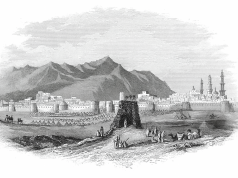
The great mosque of Djenne situated in Djinn- Mali was one of the most important African centers of Islamic learning during the middle ages. It has shaped the identity of the local community. Cut to the present day, the Mosque of the Holy Prophet in Medina serves as an important catalyst for the local community to find learning spaces. In the early hours after Fajr, you will notice small groups of women sitting in the mosque and revisiting the rules of Tajweed. In some larger mosques spread out in the US and UK, you will find halaqas taking place that also happens to serve as a rendezvous for many locals.
At my local mosque, the womenfolk frequent the mosque throughout the year but more so in Ramadan. The Imam’s wife would organize fun activities like Islamic quiz sessions for the children who would come to the mosque with their older family members. She had taken it upon herself to try and teach the other women about the smaller aspects of salah that we needed to be mindful of. People would bring oud(incense) to make the mosque more fragrant and there would always be someone who decides to bring kettles filled with tea for the others.
In a way, the mosque brings together the Muslim community regardless of race, caste, economic or social standing. And quite literally so, salah is most certainly the spiritual connection we have with our Rabb. It is evident that when we stand together in prayer, it signifies that we are equal in the sight of our Rabb. The spirit of Muslim brotherhood/sisterhood is exemplified through this act.
With more people getting involved at the mosque, especially during Ramadan, being a part of the mosque then feels like you are truly part of something bigger than yourself. The etiquette observed in the mosque also motivates the worshippers to do more for each other. Simple acts like passing or distributing water to fellow worshippers, clearing up and putting back chairs/prayer mats once the prayer is over, and accommodating each other in the rows to not leave a gap, add life to the Islamic spirit of bonhomie.
Of course, there are incidences when your slippers go missing once you are ready to leave the mosque or an elder person pokes at you for wearing shorts to the mosque or for wearing nail paint albeit breathable nail paint or a whole bunch of other unique reasons that many of us have the creativity of coming up with. I fondly recall being reprimanded by an older lady, as a child of course, for various reasons and some rightly so, like being too noisy in the mosque or not wearing a fitting attire to the mosque or for not praying in the proper manner. While many of us have been in similar situations, it should not deter one’s spirit from visiting the mosque more often. The onus of accommodating and welcoming one another to the mosque is on all of us.
There are matters pertaining to the local mosque that some of us may agree or disagree with which must inspire us to make suggestions to the people in charge at the mosque. And we must be patient by keeping in mind that the implementation can take time.
Our involvement with the local mosque is key to a spiritual experience. The effort we take to understand the word of Allah SWT that is recited in every salah is crucial to enrich this experience for ourselves. The effort we take to improve the spiritual experience not only for ourselves but also for our fellow brothers/sisters visiting the mosque with us can also make a big difference to the collective quality of our worship.
The architecture of the mosque is built to create a calming and peaceful ambience for the worshippers. Sometimes, the grandeur of the mosque architecture acts as a catalyst to draw worshippers inside. You would notice that many older mosques have similar design patterns. A courtyard with a water fountain/well was always a common feature among many constructions for various reasons. Every detail that goes into planning the architecture of the mosque adds to the spiritual experience of the worshippers. In a way, even though you stand together with everyone during prayer, it is just you and God. Safe from the worries that change every day, five times a day.
Of course, cultural differences dictate how we perceive the experience at the mosque. They influence how the community takes cognizance of an institution like the mosque. We must strive to protect and preserve the sanctified spaces in our mosques. And in these turbulent times, even more so. I implore the young readers to try and make the best of Ramadan to get connected to the mosque and to utilize our time and potential to understand what more needs to be done to improve these spaces and in that process, improve ourselves. Structures give meaning and shape to a society and the mosques, in all their glory, give support and strength to the Muslim society.
References:-
- Prayer according to the Sunnah (P. M. Zulfiqar, Compiler). (2006). Darussalam.
- The Museum of Islamic History at Ithra

Very well written. 🙂
Keep it up muneeba…..