Prophet Ibrahim is one of the most important and central figures not only in Islam but also in Judaism and Christianity. The ritual of sacrifice (Qurbani), which comes directly from him, holds a very important place in the Islamic tradition. The life of Prophet Ibrahim is epitomised by sincere devotion and complete submission to Allah. Throughout his life, he faced numerous tests and trials and emerged successful in each, solely for the sake of Allah. In recognition of his unwavering faith, he was appointed as the Imam (leader) of humanity, as Allah swt says in the Quran: “When Abraham’s Lord tested him with certain commandments, which he fulfilled, He said, ‘I will make you a leader of people.’” (2: 124) Sacrifice, in this context, extends beyond the outward act; it embodies a way of life rooted in divine love and commitment. In an age increasingly dominated by materialism and moral decline, the example of Prophet Ibrahim serves as a guiding light, reconnecting us with the Divine and calling us to a life of moral integrity and noble purpose through the lens of love and sacrifice manifested in unconditional submission to Almighty God.
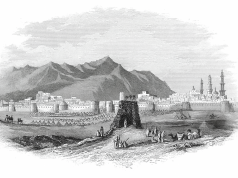
In the blessed month of Dhul-Hijjah, from around the world, Hujjaj gather in the holy city of Makkah to glorify the greatness of God, and they are accompanied by the same echo throughout the world, as if you throw a stone in a pond and its waves spread out on all sides. Hence, do not slow in tuning in with the sound of God’s glorification that fills the universe, reaching Aars-e-Azeem. He hears us and responds to us. Do not stay behind in asking Him all that you think you need. Whether He gives or deprives, both are blessings. Consider that, and be unconditional in your submission unto Him.
Our presence on earth is to proclaim the greatness of His Being. And it is through proclaiming the greatness of God that we attain servitude. And in that servitude lies the peace for heart, soul, and mind. In the first Revelation, Allah commanded us through His beloved Prophet (ﷺ) “to read” (96:1), and then he (ﷺ) experienced a pause—fatarh. What does it teach us? Read and contemplate in solitude. And in the second, He commands us to glorify Him when He says to His beloved (ﷺ), “Proclaim the greatness of your Lord.” (74:3).
There are numerous teachings in the life of our father, Prophet Ibrahim. The life of Prophet Ibrahim is a life full of sacrifice. He left everything for the sake of God’s love. And in the particular event of Qurbani, he showed the utmost level of love when he was about to sacrifice his dear son, Ismail. As a result, God gave him two things in return, as Professor Tariq Ramadan beautifully paints: “Abraham is the story of a sacrifice. Sacrifice the child of love in the name of God’s love. To end up being wrapped and protected by two loves. The teaching is fundamental: what you think you lose through the sacrifice, relying on reason, you win twice, relying on faith and love. Life is not a calculation, neither is love, and there are losses that are victories and falls that are elevations. One must go beyond the logical appearances. Accept the trials, forgive your fellow human beings and smile at life … you will win twice, His peace in your heart, as well as His love in your faith. In sha Allah.”
Love is the essence, and the spirit is profoundly deep, yet simple: love in sacrifice and sacrifice in love. When the world is obsessed with “having”, let us define ourselves with “being” by giving. In a world that does not care about the meaning of existence, redirecting our lives towards the One becomes a necessity and an act that must remain in a constant mode. A life intimately centred around Allah is a life worth living; otherwise, there would be no meaning and peace at the bottom of one’s being. Prophet Ibrahim was a man of faith in one God and challenged the whole world alone. From where do such guts come? It is when one understands his Creator, who is all-powerful and all-encompassing. When you are connected with the One, you stand firm in His path under His supreme protection and love. You would be ready to sacrifice your life in the face of persecution, but you would never compromise His love for you.
For believers in the One True God, tests and trials are meant to elevate them in both ways: physical and metaphysical senses. Thus, the life of Prophet Ibrahim acts as a catalyst to this eternal and universal truth of standing firm in the face of unease and difficulty in life. Nothing befalls a believer except that which brings goodness in it for him. A believer in Allah has been taught this powerful understanding, calling him to put his ultimate hope in Allah: “Say, ‘Only what God has decreed will happen to us. He is our Master: let the believers put their trust in God.’’(9:51)
Every time the month of Dhul-Hijjah comes, the echo of discussions on sacrifice starts to ring. True indeed, but have we ever paused for a moment to uncover the layer and see beyond the ritual of sacrifice? In a world where love is badly monopolised negatively, the life of Prophet Ibrahim calls us to rediscover the essence of love—what is it to sacrifice one’s life for the sake of God’s love? In the whole life of Prophet Ibrahim’s sacrifice, if you fail to see the love at the bottom of it or the love of God as the force behind the whole story, then pause and recentre your life. Love and sacrifice are deeply connected to each other. Without one, the other cannot be imagined. Sacrifice cannot be done from the heart if love is absent, while love cannot be proved without sacrifice. To love is to sacrifice. Love is the force behind life.
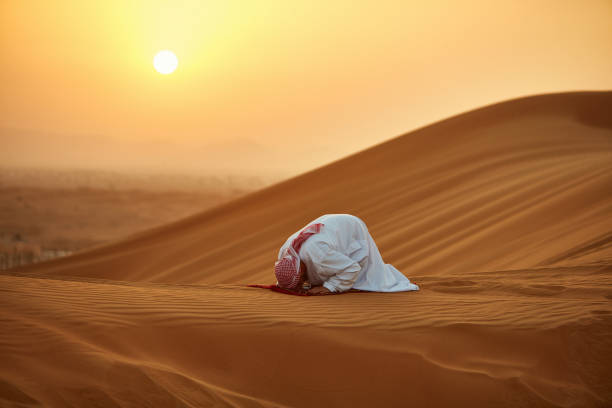
Let us (re)center our lives the way Prophet Ibrahim did through love and sacrifice, which is manifested, out of many, in his words that Allah quotes in the Quran: “I have turned my face as a true believer towards Him who created the heavens and the earth. I am not one of the polytheists.”