This article is an analytical study of people’s union for civil liberties Karnataka (PUCL _ K) interim report on the “Impact Of Hijab Ban On Karnataka’s Educational Institutions”. You can view the report here.
PUCL in their study says, The Karnataka High Court order that upheld the state government’s directive to ban hijab in educational institutions has imperiled not only the right to education but also other associated constitutional rights of Muslim girls, It is a fight for equality and dignity that has been ongoing for nearly nine months.
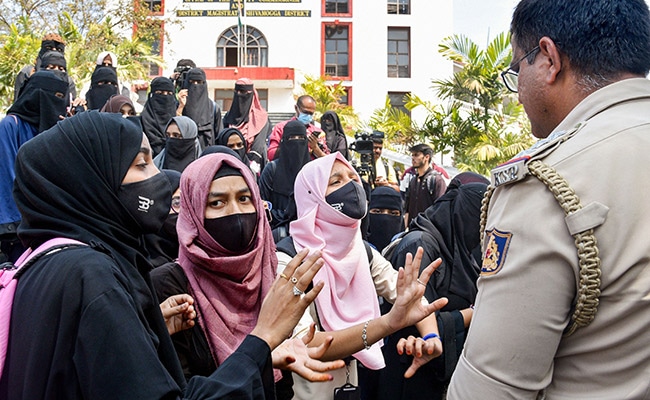
While multiple dimensions of the hijab ban and the state government orders are discussed, it talked about the plight of Muslim girl students in Karnataka. A six-member team of PUCL studied the “hardships endured and the struggles waged by Muslim women across the state and elsewhere to stand up against an environment where hate is the norm; coupled with the abysmal failure of the state to protect the rights of the minority community”.
The illegal critiques of the judgment in Resham v state of Karnataka
The judgment focused on whether the right to wear the hijab was an essential religious practice, instead of concentrating on the key issue thrown up by some of the petitioners, namely the imperilment of their right to education.
The ERP (essential religious practice) test has come under severe criticism by legal thinkers and scholars. This was an incorrect focus on Hijab as an Essential Religious practice. The Judgment fails to focus on the principle of non-discrimination as per Article 15 of the Indian constitution. The High Court stated that the right to freedom of expression, speech, and privacy were only ‘derivative rights’ and could not be claimed in ‘qualified public spaces’. High Court fails to address these rights.
A via media would have been based upon the ‘principle of reasonable accommodation’ and allowed for students in addition to the uniform also wear a hijab off the color of ‘the prescribed dress code’. Muslim students were not against dress code but they were requesting that the uniform should be a little flexible so that it could accommodate hijab,” Sumaiya Roshan, GIO president clarifies . “Hijab is not something that they started wearing a week or a month ago. It is a part of their identity. Suddenly asking them to remove it and asking them to choose between hijab and education is unreasonable,” she said.
However, the Court argues that any such accommodation ‘would establish a sense of ‘social- separateness’ and would offend the feel of uniformity which the dress code is designed to bring about amongst all the students regardless of their religion & faiths.
It is apparent that Muslim women in this instance are gravely disadvantaged by the unreasonable barriers to their education that have been placed by the state. Despite the alarming nature of the violation of Muslim women’s right to education and elaborate contentions on this question of law by the petitioners’ counsels, the court barely engages with this issue while only saying that ‘school dress code to the exclusion of hijab, bhagwa, or any other apparel symbolic of religion does not rob off the autonomy of women or their right to education.
Role of the Media
Media has often been one-sided in their presentations, giving undue coverage to Hindutva hate groups identified with a recorded history of mass violence; even while glossing over the aggressive role of students who wore a saffron shawl in opposition to the hijab. The Kannada TV media has played a major role in weaponizing the interim order of the Karnataka High Court and enforcing an effective ban on the hijab on all college campuses.
In one notorious video, a Dighvijaya TV reporter with the camera is seen chasing a young hijab-wearing child in the school campus. The news anchors have often portrayed the hijab-wearing students as backward and stubborn, and have framed the issue as Muslim women choosing the hijab over education.
The girls talking to PUCL team told that it is for this reason that during the controversy, they didn’t speak to the media since they felt the media might manipulated their statements and made their situation even more precarious.
Interactions with bureaucrats revealed that the concerned departments and administrative structures had not only failed to address the issues and uphold the rights of the Muslim girl students, but also denied them justice.
The impact of the verdict on the affected students – educational, social, and psychological
For most of the hijab-wearing students who missed writing their exams this year, the High Court judgment came as a rude interruption to their studies and further plans. Their immediate concern is about appearing in the exams and resuming their education.
Thereby, they assert their freedom of choice regarding what to wear and who to fraternize with. Having to constantly cope with the conflict and tension generated by the hijab issue has bred in the students a pervasive feeling of isolation and estrangement, wherein they are being targeted for wearing the hijab and are forced to live under a constant state of fear and coercion.
While the immediate concern of the Muslim students PUCL spoke to was to seek a reversal of the court verdict, thereby undoing the damage caused by the verdict and its aftermath. They also asserted that wearing the hijab in the classroom is a fundamental right guaranteed by the Constitution, which implies the right to wear the hijab and attain modern education as well. They want this choice to be recognized and accepted as such.
The testimonies indicate that a range of rights that are guaranteed to all Indian citizens have been comprehensively violated post the judgment of the High Court of Karnataka. These rights which have been violated include the Right to Education without Discrimination, the Right to Equality, the Right to Dignity, Right to Privacy, Right to Expression, Right to Non-Discrimination, and Freedom from Arbitrary State Action. It’s important to note in particular the violation of the right to education without discrimination. It is not just a fundamental right but also an obligation of the state under the Directive Principles of State Policy. Under Article 41, the state shall within the limit of its economic capacity and development, make effective provision for securing the right to education among other rights.
This report depicts the complete failure of the state government to fulfill its obligation to protect constitutional morality, and hence the obligation falls on citizens to then do so. The courage, spirit, and fearlessness of Muslim students who stand for their rights is commendable.