The reconstruction or transformation of society is essential for establishing a fully humane and peaceful society—a society where human dignity is equally protected, regardless of one’s background. A society where justice is fully upheld, and every individual receives it equally. The members of such a society must not surrender themselves to anyone other than their Creator—Allah ﷻ. But when the opposite becomes the norm of a society, the reformation rooted in and guided by divine revelation becomes a necessity.
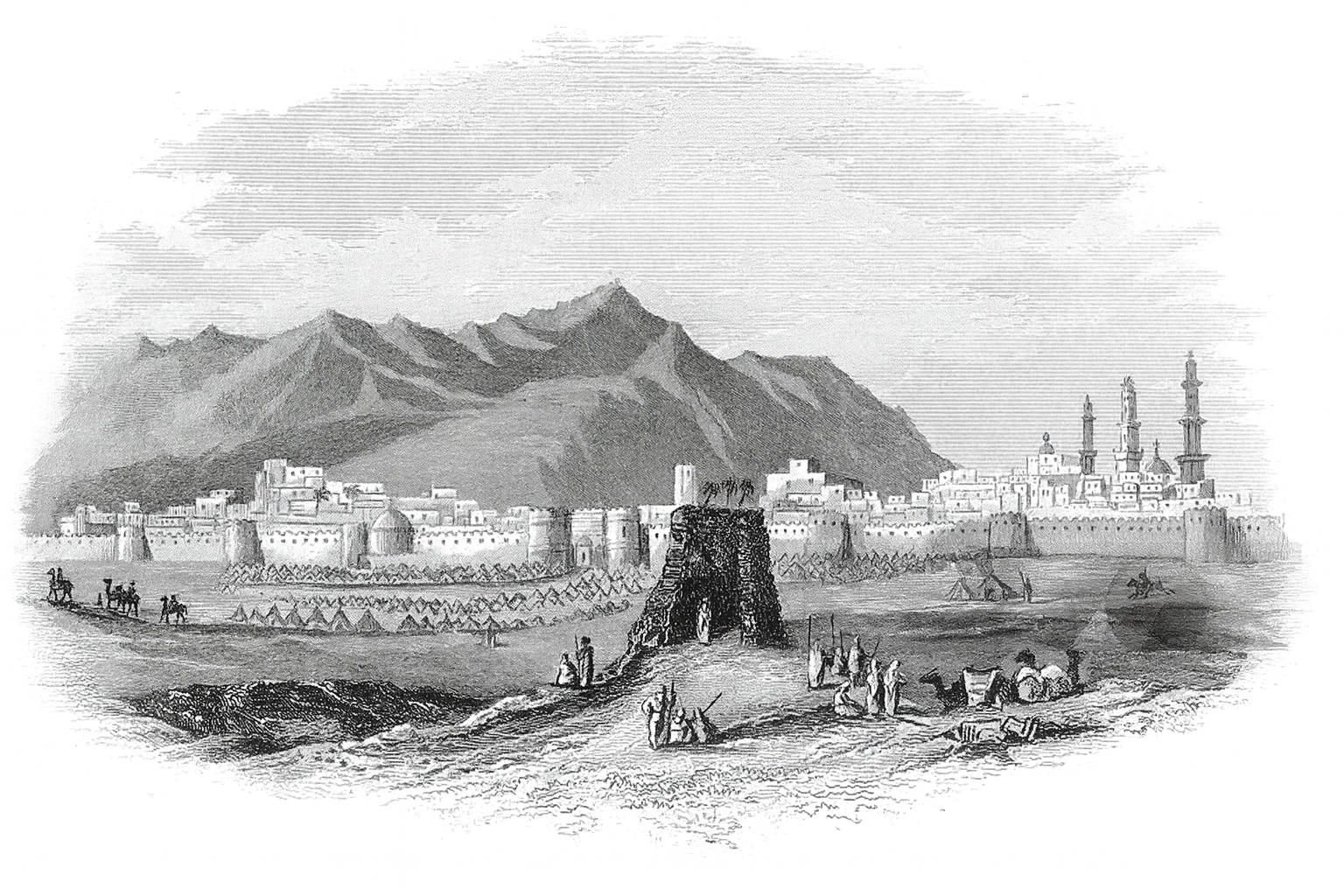
In the history of humanity, a man by the name of Muhammad, whom God has chosen to be the last Messenger to mankind, was born in Mecca, Arabia, in the year 570 (according to some, 571) CE. His father, Abdullah, passed away before his birth. When he was six years old, his mother, Amina, also died. Thus began the upbringing of a child who would become the greatest man in all of human history, who would later bring mercy to the entire world. He was the seal of the divine message that had been sent from time to time for humanity by Allah ﷻ, the Lord of all worlds.
Now, take a quick look at the Arab society before the Prophet Muhammad ﷺ. What inhumane and anti-social act was absent there? There were thousands of partners with the One True God, violations of human dignity, injustice towards women—there was not even the faintest glimmer of love, honor, and compassion in that period of time. At such a disastrous moment in history, the Lord of the Universe sent the most noble gift to this world—the beloved Prophet Muhammad ﷺ.
Even long before receiving prophethood, he was deeply contemplative about how to guide such an unorganized, unethical, and inhumane society toward light. He thought about the welfare of humanity and the world from a very early age. Not only that, but he also played a key role in the formation of a social welfare organization named Hilf-ul-Fudul. He was a founding member of that organization. Thus, from his childhood, we can see his noble and sacred presence in making a society.
The well-organized movement of society building that the Prophet Muhammad ﷺ initiated under the guidance of divine revelation—the Qur’an—was at a time when the prevailing social system of the Arabs was based on a fundamentally flawed and irrational philosophy. The history of the pre-Muhammad era (which historians refer to as Jahiliyyah or the “Age of Ignorance”) was extremely ugly and inhumane. In such a weak societal structure, Allah, the Lord of the Worlds, sent the greatest reformer on earth—Muhammad ﷺ. He established an unparalleled society in human history.
He gifted the people of the world an ideal society—a society that transformed the most uncivilized and barbaric people in history into the best generation on earth. Those who were bloodthirsty became protectors of blood. For them, shedding a drop of blood unjustly became equal to destroying the entire world. Those who used to treat women with savagery refrained from even casting a lustful gaze at them. Those who used to bury their daughters alive under the soil became ecstatic with joy at the arrival of daughters. In short, he transformed a pitch-dark society into one as bright as the midday sun. While pointing out to the Prophet’s gift to humanity, Syed Jalaluddin Umri (d. 2022) writes in his Glimpses from Sirah of Prophet Muhammad ﷺ: “The Prophet’s biggest favor to mankind is that he blessed people with sound beliefs and worldview, lofty moral principles, a law anchored in justice and equity, a pious society and culture and a way of life which guarantees success for man in both the worlds.” (pp. 46-47).
Our vision of social transformation is not something entirely new. Within the society we live in, we find both noble values as well as numerous superstitions, along with inhumane and degrading practices. Society has declined far below its moral standard and continues to deteriorate with each passing day. However, the condition is not the same everywhere. In communities where the presence of God—manifested through the Qur’an and the Prophet’s teachings—is deeply felt, society often takes on a more beautiful form. Conversely, where God-consciousness is severely lacking, such societies become paralyzed by corruption, violence, and widespread injustice.
At the very heart of Islam’s worldview lie two interconnected realms: the physical and the metaphysical. On the physical plane, humanity occupies the central position, while in the metaphysical realm, God alone reigns supreme, manifesting Himself through truth, justice, and beauty. The process of human formation and reformation, therefore, follows a simple but profound sequence: it revolves around the refinement of man—his thoughts, actions, character, and outlook. In the physical realm, man is to be given the highest regard, yet always in a manner that harmonizes with the metaphysical order. When this balance is disrupted, and man’s actions begin to obstruct the divine principles, he forfeits his place at the center stage.
The cornerstone upon which the God-centered/conscious society is built is iman (faith). If faith occupies its rightful place, then the cultural aspect of that society will also be beautiful as a reflection of it. In fact, the cultural dimension clearly reveals the condition of a society (and nation to a greater extent). To understand a nation well, its culture is enough. One can understand the quality of their belief system by observing their cultural expression, for example, when they wake up from sleep, how they behave, how their manners are, and their lifestyle, etc., are all part of their cultural life that comes from what they believe in. If the very foundation of iman is weak in man, it becomes destructive for such a society.
Prophet Muhammad ﷺ began his work of social reconstruction based on this foundation of faith. Therefore, everyone involved in a social movement (specifically in a Muslim society) must be clear in the matter of faith as the foundation and philosophy as its explanatory expression. This is absolutely necessary for building an Islamic society.
The greatest social reformer in the world—Prophet Muhammad ﷺ— brought an unwavering transformation in the realm of iman. Tawheed (monotheism), Risalah (prophethood), and Akhirah (afterlife) were the foundations. Those who had a shaky understanding of life developed such a clear view of life and its path that it turned them into the best generation on earth. They solidified the foundation of their belief so strongly that they did not hesitate to sacrifice their lives for it, but they had not the slightest inclination to endorse anything antithetical to their belief. His ﷺ training contained such essence of humanity, truth, and beauty.
‘Sense of responsibility’ was one of the key components introduced by Prophet Muhammad ﷺ in this mission of social reconstruction. In a hadith quoted in Sahih Muslim, the Prophet ﷺ said to his Ummah, “Each one of you is a caretaker and is responsible for those under his care.”In other words, the Prophet ﷺ kindled a torch of responsibility among his companions, which made them fully alert in fulfilling their duties. They did not even hesitate to give their lives to keep promises. In social reconstruction, this ‘sense of responsibility’ is a highly essential quality, which the Prophet Muhammad ﷺ instilled in his companions for building a beautiful and meaningful society.
One of the prominent Muslim thinkers of the 20th century, Muhammad Asad (d. 1992), in his Islam at the Crossroad, writes the importance of the institution of the Sunnah. He emphasizes that a methodical way (Sunnah) is important to develop a permanent habit in a man to inspire him to stay in “a state of consciousness, wakefulness and self-control” (p.139). What was the secret of the miraculous efficiency that eventually led to a “startling historical success” of the Companions of the Prophet? Asad answers this question with these tri-dimensional aspects of the Prophet’s tarbiyah (training) process that “the permanent consciousness, inner wakefulness, and sense of responsibility in all they did” was the secret of their success (p. 144). Once these qualities are grown in a man, he positively contributes to building a society. Without good men, a good society remains a dream. After all, we are talking about a society of men, and NOT the animal. The Sunnah gave us a strong way of dealing with our inclinations and temperament. It tells us to resemble the Prophet, while not compromising personal tastes altogether, but that much which is required to run a stable society run by the ideals of cooperation, justice, and excellence.
The Prophet successfully, through his practices (Sunnah), developed these qualities in his Companions. This consciousness, argues Asad, is the spirit of the training (method) which the Companions of the Prophet developed in themselves. He writes, “When the Companions of the Prophet and the generations which succeeded them made the attempt to conform every detail of their existence to the example of the Master [Sunnah], they did it in conscious surrender to a directive will that would shape their life in the spirit of the Qur’an.” (p. 142).
In a hadith in Tirmidhi, the Prophet Muhammad ﷺ is reported to have said, “I will tell you the distinguishing mark of a person for whom the fire of Hell has been made unlawful and who is a forbidden person for Hellfire to consume; He is a man who bears sweet temper, tender heart, and soft spoken.” This hadith demonstrates how the Prophet ﷺ inspired his Companions to be gentle and easy-going, with a tender heart, politeness in their behavior, and civility in their interactions within society. There are numerous hadith of this nature where he ﷺ is seen to nurture his Companions for becoming a God-conscious and self-controlled human being whose presence is a safety for others and who inspires goodness and reminds them of God through his meaningful presence on earth.
In sum, the Prophet brought his people to a state where they became self-observant and self-spontaneous. In the core of their hearts, God lived, and they wore the cloak of the Prophetic model. This blending not only made them successful as individuals and a collective, but also gave them the fearless spirit to conquer the world and to enlighten it in the name of God, the Most Kind and the Most Just. For those who want to establish justice in society, they must rise above the level of being and excel themselves in ihsan. Without this, it would remain a struggle without any fruit. The Prophet serves as an excellent model for those who wish to see justice prevail in society.
In today’s world, if we sincerely want to recover from the havoc caused by our own actions, the teachings of Prophet Muhammad ﷺ are there for us to regain our lost conscience. His teachings are sine qua non for building a peaceful and inclusive society. He was not only meant to be mercy for those who followed him, but also for those who refused to acknowledge his prophecy and message. A return to the prophetic essence of peace, justice, mercy, and love is necessary. This is what humanity needs now.
The author is a postgraduate in Islamic Studies from Aligarh Muslim University.
References
- Umri, Syed Jalaluddin. Glimpses from Sirah of Prophet Muhammad ﷺ. Markazi Maktaba Islami Publishers, New Delhi, 2022, pp. 46–47.
- Asad, Muhammad. Islam at the Crossroad. Dar al-Andalus, Gibraltar, 1982 (originally published 1934), pp. 139–144.