

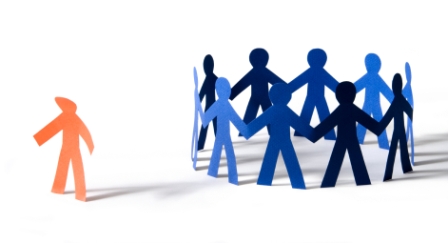
Exclusion happens at different levels in the societal space. In the Indian context people are marginalised on the basis of caste, class, gender (male and female), culture, region, religion and so on. But the whole question is why? The process of marginalisation or social exclusion is to systematically keep individuals and communities away from the resources, opportunities and their rights. As a result of this the individuals and communities are kept away from socio, political, economical and cultural activities. So the society sees to that the power is restored with one individual or one community so that they have the extreme control over the others and resources. So technically majority of the Indian people are kept away from the productions because of varied forms of social exclusion/marginalisation.
One such exclusion is exclusion of the TRANSGENDER communities across the globe as well as in India. They have been the subject of mockery and social rejection. At the same time they are subjected to violence. Transgender people face staggering levels of discrimination and violence. In 2012, 53% of anti-LGBT homicide victims were transgender women. Transgender people are four times more likely to live in poverty because of non-employability and unemployment. 90% of transgender people report experiencing harassment, mistreatment or discrimination on the job. Many transgenders are harassed by the police. Many of them commit suicide because of reject at multiple levels.
Transgender people, particularly transgender women of color, face shockingly high rates of murder, homelessness, and incarceration. Most states and countries offer no legal protections in housing, employment, health care, and other areas where individuals experience discrimination based on their gender identity or expression.
Definition:
Transgender is involving partial or full reversal of gender. In a simpler understanding the female body trapped in a male body and male body trapped in a female body. They are not comfortable with the existing physical body. They strongly believe that they are trapped in a different body. It’s a strong feeling that they should be the other gender.
Terms referring to transgender in the society:
Chakka: a term used for hijras; She-male: a transsexual person; Sissy- a man who other men or boys laugh at for being interested in things girls like; Kothi: again referring to transgender; No.9: referring to transgender
Understanding the transgender person:
We have been taught that there are only two genders in the world and anything beyond is considered as abnormal. We have stories of swamijis treating them saying they are possessed with evil spirits and so on. One swamyji was saying that this could be cured. I had a chance of interacting with few college girls few days ago. One of them was strongly opposing that this is against our religion because god has created humans as male and female. There are references of transgender in different religious texts.
Early recognition of their gender:
When does one come to know that they are not what they are? One could recognise the change as early as childhood when they start their socialisation process. They would be playing with or behaving just the opposite of what is expected of their gender. The boys would pick up so called girls stuff and the girls would pick up boys stuff. We need to recognise that there are high possibilities of them withdrawing from this kind of switch over of behiaviour depending on the reaction from the close circles.
As they grow they go one step further to pick up things like walking like girls, talking like girls, behaving like girls and they also start associating with the girls, and this also the time when they become the object of mockery. When they are between 12-15, it is the time when they really identify their sexuality and gender. Their body development starts. The boys find that their breast starts growing and for the girls there is no development of the breast. Once the bodily difference is visible they start isolating themselves to avoid getting ridiculed and laughed at.
It is not the regular life that the transgender lead once they identify and associate themselves with the other gender. Humiliation and mockery becomes part of their life.
After the identity change:
It is not the regular life that the transgender lead once they identify and associate themselves with the other gender. Humiliation and mockery becomes part of their life. There are different types of reactions from different actors in the society. As Ms. Kalki Founder/Director, Sahodari Foundation, writes in her article, My Story, sharing her experience…
“When I was 13, one day my mom found my poems in a bunch of papers in which I had written about my feelings of femininity and my struggles with the world. She was upset and began to watch and care more for me. As a child, I was definitely feminine, I was so sure that I would be a complete woman one day. I used to think often One day I will make the world turn on me”.
Family: Looks at the identity change of their boy or girl as a social humiliation. The family is not ready to accept them as they are with their present identity. Some parents employ violence to change the behaviour of their kids. Few take them to the doctor to be treated for the illness. And most of the families in India take them to the poojaries/priests because they believe that their sons and daughters are possessed. The family doesn’t want their daughters and sons to be a transgender. The denial from the family forces them to run away from their home. Most often the families do not file a missing complaint in the police stations for the fear of being insulted by the community members.
Friends: The friends’ circle that is supposedly to be the support group insults and humiliates them for what they are. The teachers insult and laugh at them in front of other students, thereby bringing down the curtain on their studies. They discontinue their studies and move in search of people like them. There are at times they face sexual violence from the friends and other youth from the communities.
Community: Community looks at them as a social deviant who have some serious problems. Community insults the family for having a transgender child in their family thereby curtailing the social interaction of the families with the community.
There is no acceptance from the families, friends and community and being a matter of mockery in the society the transgender moves away from their own village or town or area to a new place in search of new life. They associate themselves with people like them so that there is a sense of security. The GURU leads the communities of transgender persons.
Socio, economic, cultural and political aspect of Transgender:
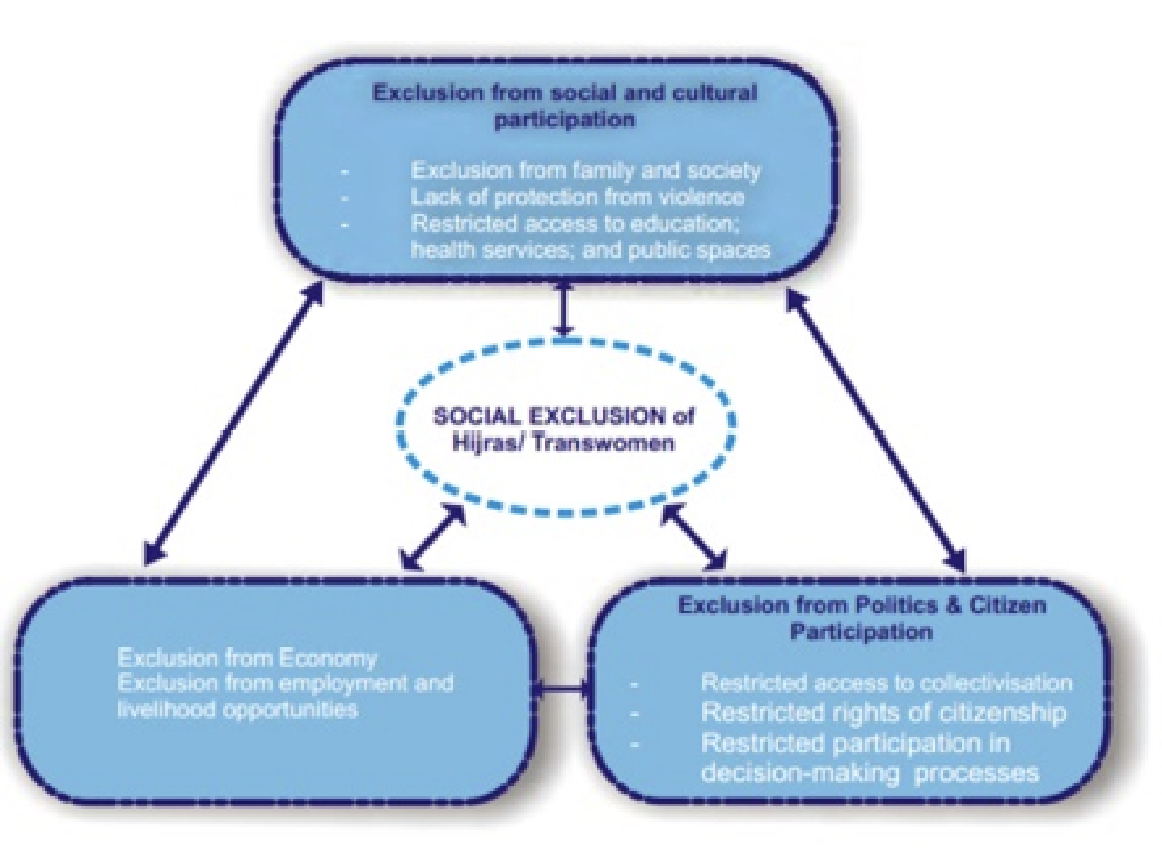
 The transgender communities are discriminated at all levels. They perform at birth and naming ceremonies. And we also need to recognise that they are considered to be equal to that of god in certain North Indian communities. Since they are not qualified to be employed most often end up in taking up begging in the streets and in the inter sections in the streets. While begging in the train they face sexual abuse and verbal abuse. There were cases of them being gang-raped and pushed from the trains.
Apart from begging, the entire community is forced into sex work. The one reason for being forced into sex work is because unavailability of livelihood resources. The job sector is not ready to employ them even if they are qualified, because of the stigma attached with them. As a result of this they are pushed to lead their life in poverty or end up taking refuge in beggary and sex work.
The other major area of concern is the constant denial of housing in housing societies and other areas leading them to being housed in slums. There are lots of implications to this. One of them is that being looked as criminals because of the stigma attached to the slums being a place of criminals. The police treat them as criminals and also at times arrest them for being involved in sex work. The violence in police stations never gets reported.
Their political participation is nil. We can’t really expect them to have an active political participation when 33% of reservation for the women is distant dream. Now parties like Praja Rajya Vedike is giving political space for the transgenders to participate.
Responsibilities of civil society:
- Stop discriminating people just because they are transgender
- Respect their identity
- Let us not subject them to dehumanizing treatments
- Let the families accept their individuality
- Everyone has the right to life and freedom of expression
- Every one has the right to participate in the political engagement. Let us encourage transgender in participating in the political discourse.
- Lets us be more inclusive and lets not exclude them
- Everyone has the right to education. Lets us work towards getting the transgenders too under the Right to Education act
Suggested Documentaries on Transgender:
- Jareena, Portrait of a Hijda (1990);
- Bombay Eunuch (2001);
- The Hijras: India’s Third Gender (2001);
- India’s Ladyboys (2003);
- Between the Lines: India’s Third Gender (2005);
- Middle sexes (HBO documentary includes segment on modern Hijda) (2005);
- Shabnam Mausi (2005);
- The Hijras of India (BBC radio documentary);
- Kiss the Moon (2009);
- Call me Salma (2009).
References:
- http://news.naij.com/64488.html
- http://ai.eecs.umich.edu/people/conway/TSsuccesses/Kalki/Kalki.html
- My Story by Ms. Kalki, Founder/Director Sahodari Foundation, Web :http://www.sahodari.org, Email : aurokalki AT gmail.com



How come without proper knowledge you write and Article on Hijras community and Transgender Individuals. And the terms you mentioned are wrong and why are mis representing them?
Hijra* community