The father of Nirbhaya, the 23-year-old victim of an indescribably brutal rape episode, was a migrant from a village in Bihar. He moved to Delhi because he wanted a better future for his children. He was poor, but he wanted his two sons and only girl child to enjoy the fruits of education and urban exposure, especially his daughter. In the end, he lost the same daughter to the city. But her sufferings and her death elicited a reaction of the level rarely seen in the country on matters of women’s rights. Men and women took to the streets, and their demands for justice poked even the rusted legal machine into some action.
If he had stayed back in his village, and his daughter had still been raped and murdered, she would not have been the icon she is today. Hardly anybody would have heard of her story, much less cared. The national newspapers might have given her a little space in the corner of the inside page. Or maybe not, if they have other ‘more important’ stuff.
The time for the national conscience to wake up against this heinous crime called rape was long overdue, but it would not have been Nirbhaya who would have caused the stir. It might have been the photojournalist who was raped in Mumbai in 2013, or the MNC employee who was raped by a cab driver in Delhi in December, or any other similar episode that is bound to come out sooner or later, considering that the underlying circumstances for such crimes remain unchanged.
Rapes in rural India are invisible, but not because they do not happen. One exception in the recent times has been the Badaun episode in Uttar Pradesh. It took something as in-your-face as two young girls left hanging on a tree after being allegedly gang raped for the nation to sit up and take notice. Even then, the incident elicited hardly any protest outside the state.
As far as rape is concerned, more than the levels of penalties, a foundational change in the way women are perceived in the society needs to change.
The plights of rural women, like most things rural, go unnoticed by the national media. Most rape victims in villages are from the so-called lower castes, and the alleged perpetrators are mostly from the other end of the caste spectrum. In a country like India, whose so-called cultural varieties often have the undercurrents of a much stronger “rape culture”, victim blaming is more often than not the immediate form of reaction to any form of sexual assault. And in rural areas, the stigma associated with a violated woman is even greater, and women do not come forward to talk about their experiences of harassment. In any case, with a conviction rate of less than 30% in 2011, a figure that has steadily come down since 1973, hope of any justice for rape victims has been long lost. Even in a case as sensationalised as the Nirbhaya’s, final judgement on the fate of the perpetrators has still not come out, two years past the fateful day of December 16, 2012. Pressure for an outcome is infinitely less in millions of other cases, whose fate hangs in a balance.
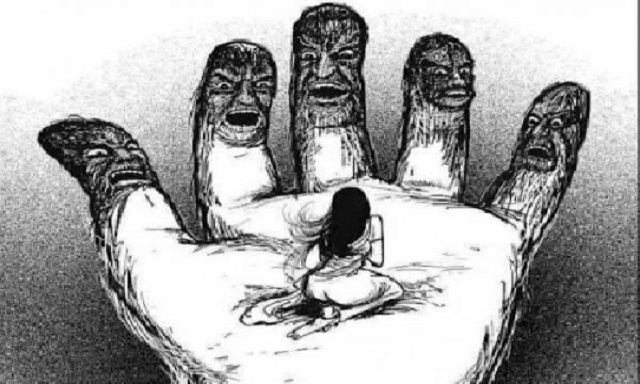
The villages have always remained out of the glare of media, but there is a much more hidden, scarier reality about rape in India. According to the National Crime Records Bureau statistics, as much as 98% of women who were subjected to rape knew their assailants. In other words, inside our homes, schools, colleges and workplaces, women face sexual harassment in all forms and intensities, often from people they love and trust. Fathers, grandfathers and uncles, neighbours and professors- these become their threat sources. Even children are not spared. Their age and innocence, instead of protecting them, only increase their vulnerability. The reality is indeed terrifying.
Strict punishment is necessary, but the problem of rape, like the problem of corruption or poverty, has complicated solutions. As far as rape is concerned, more than the levels of penalties, a foundational change in the way women are perceived in the society needs to change. Women should be seen as a natural counterpart of men, who complements them, but have their own existence and roles outside the men in her life. There needs to be a fundamental change in the way our cultural practices, literature, media and entertainment industry portray women. She is not an object of pleasure but an individual of utility to the world and others around her, a beautiful being whose appearance is not the only yardstick of their worth.
‘Nirbhaya’ is not a real name. It was given to her by others who saluted her brave attempts at survival, people who took her name up as a symbol of women’s right to life and protection. It means “fearless”. But in millions of homes across the country, women and people who love them live in constant trepidation, fearing that someday, something similar might happen to them too. The fear needs to be wiped out, and the symbolism of her name turned into a much more palpable emotion of peace.