

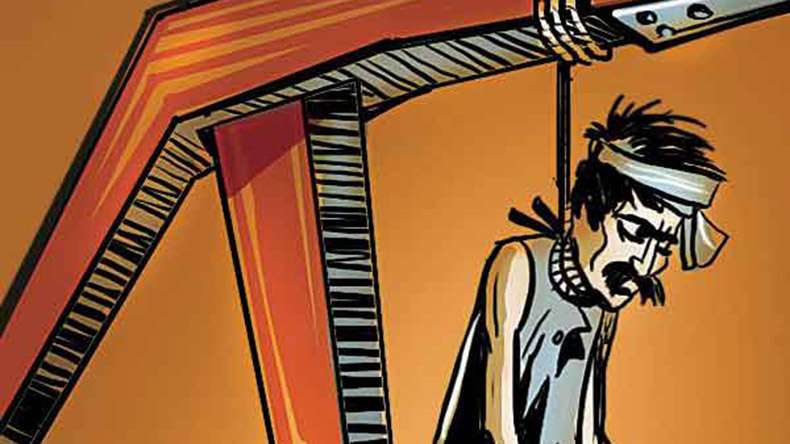
Farmers are those who work by acres, not by hours. Their day starts with the earliest rays of the sun and ends when it sets beyond the western horizon. But for many of them, no matter how hard they work, monetarily they will always be deceived. Sometimes hit by men or else by nature, they still continue to plough the earth and provide us food.
Farmers in India have neither proper infrastructure nor the government’s support. They are continuously struggling for survival. But they continue to cultivate food as they have no other option. They have no right to determine the price of their produce. In fact, they are not even permitted to sell their goods where they want. Is it not an irony that one doesn’t even have such rights in a so-called liberal economy? Also, they are compelled to sell their commodities only through the local Agricultural Produce Marketing Committee (APMCs).
India is an agrarian economy and currently, the livelihood of 836 million people is dependent on agriculture. Farmers of India belong to the most marginalised section of the economy, earning less than 40 rupees a day. More than three lakh suicides by farmers have been reported by the National Crime Records Bureau (NCRB) since India liberalised, privatised and globalised its economy. In a single day, 46 farmers give up their life; that means every 30 minutes, a suicide is reported. Please note that the data doesn’t include farmers whose lands are not registered in their names and women farmers. As per 68th round survey conducted by the National Sample Survey Sample Office (NSSO) nearly 70% of rural women are engaged in agriculture, but our country doesn’t recognise women as farmers.
Among all the economic sectors, agriculture is the most undeveloped. Drought, declining productivity and debt are factors which vastly affect the livelihood of farmers. Agriculture sector needs strong reform in policies to increase productivity of land
Agricultural infrastructure is so bad in India that even after 68 years of independence, 61% of agricultural land receives irrigation solely through rain. Employment in agriculture is continuously shrinking as farmers are employing a lesser number of workers to minimise their cost of production. In an answer to students at Aligarh Muslim University, Yogendra Yadav, a renowned social activist and academician said that “due to mechanisation of agriculture, unemployment in rural India is rising high which is a very serious issue, further causing migration and social disturbances in rural as well as in urban areas”. Pressure of debt and continuous loss in farming is forcing farmers to either migrate to cities or to commit suicide. No proper policy of government till today has been made to combat the agrarian crisis in India. P. Sainath, a well-established development journalist in his book “Everybody Loves a Good Drought” has pointed out on several occasions that the government is quite responsible for the prevailing agrarian crisis as its policies are never effective to counter the challenges being faced by farmers. According to him, policies are made by those people who know nothing about farmers or farming. At the inaugural ceremony of the Viibgyor Film Festival in 2012, he spoke about how the government put all its efforts to saving the Kingfisher Airlines from bankruptcy and similarly spent millions in granting subsidies and tax waivers for the corporate honchos, but at the same time did nothing for millions of farmers in Karnataka or other states who were under acute economic crises.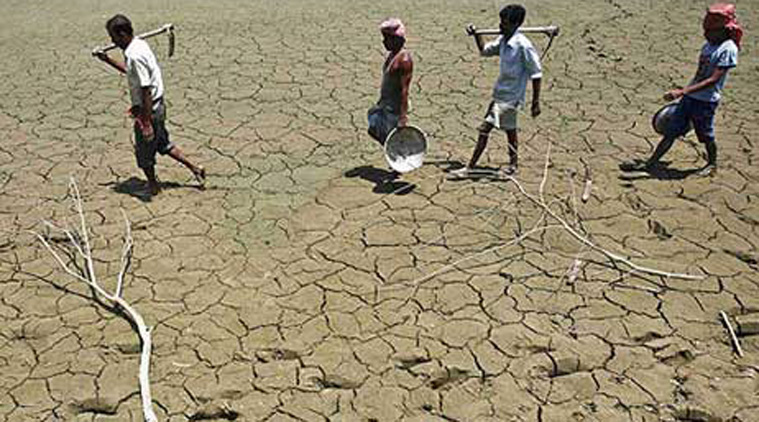
Late Sharad Anantrao Joshi, an economist, a farmer leader and an activist established that the root cause of rural poverty was dry land farming- land which contains less water and depend mostly on the monsoon. In the absence of any other irrigational infrastructure, its productivity gets severely diminished leading to massive loses for those dependent on them.
Indian farmers were most exploited during the British regime but even then, suicidal tendency among farmers was not prevalent to this extent. Then what has driven Indian farmers to this limit?
There are basically two factors responsible for the prevailing agrarian crisis in India. The first one is internal: after the Green Revolution in the 80s, suddenly farmers realized that their lands have become less productive due to excessive use of fertilizers and pesticides and ironically, they required even more to continue farming. At the same time, massive increment in the price of agricultural goods like fertilizers, pesticides and other agricultural chemicals has been reported due to high market demand. That minimised the gap between profit and cost of production and certainly agriculture became less profitable and less productive at the same time. The second factor is external and pertains to the prevailing geo-political scenario of the 1990s, especially the 1995 WTO agreement and neo-liberalization of Indian economy. After the 1991 reforms, agriculture sector was exposed to the global economy and now local farmers have to directly compete with global farmers and markets, which they were not ready for.
Among all the economic sectors, agriculture is the most undeveloped. Drought, declining productivity and debt are factors which vastly affect the livelihood of farmers. Agriculture sector needs strong reform in policies to increase productivity of land. There is a need for public investment to modernise this sector. Price mechanism and market structure should be reviewed and there is a need to establish provisions to eliminate the middleman, who eats up all possible profit of farmers.
There is also a need for large-scale public discussion and debate on issues pertaining to agrarian issues and rural India at large. The mainstream Indian media has a largely urban bias and it requires an enmasse suicide of farmers for some news to be made. India as a nation cannot expect to attain holistic development and progress, if such a huge multitude of its population continues to remain in stark deprivation.